
The week ran from a police lockup in Islamabad’s F-6 to a graveyard in Garhi Yasin where someone had dug up a tomb looking for gold. Between those two points: two men shot dead at a peace council in a canal colony with a number for a name, a crowd gathering around a woman in Peshawar at night while the police statement addressed only what she was not, and a development authority moving to evict working-class families from H-9 in the same week its own plots were being illegally sold for Rs 1.2 billion. At Daraza Sharif, forty kilometers southwest of Khairpur, the 205th Urs of Sachal Sarmast opened on the 14th of Ramadan. No government made that happen. No government stopped it either. Six signals. Four shadows, two lights.
1. Women’s Day, Women’s Station
Dr Farzana Bari was walking toward the National Press Club on the morning of March 8 when police stopped her near Super Market in Islamabad’s Sector F-6. Two of her daughters were taken with her. Human rights defender Tahira Abdullah was detained at the same location. The Women’s Police Station released a list of 19 Aurat March activists in custody by midday. Civil society activist Tariq Mehmood Ghouri told Dawn that more than 25 men and women had been arrested overall. The district administration had denied the march an NOC, citing the Peaceful Assembly and Public Order Act 2024. It had also noted that the Lal Masjid management had publicly threatened to block the demonstration, which the administration used as a law-and-order justification for pre-emptive arrests. When the wife of HRCP Secretary General Haris Khaliq arrived at the station to inquire about those inside, she was detained and told to sit in a separate lockup. The march had been organised to highlight gender-based violence.
2. Pond, Panchayat, Dead
Local elders in village 401/EB in Punjab called a panchayat for March 13 to mediate a dispute over a government pond. Two groups had been in conflict over the water body for months. The elders called the gathering so the matter could be resolved peacefully. Nadeem Shahid and Zahid, both of the Arain community, arrived. Their rivals arrived shortly after. The rivals opened fire. Nadeem Shahid was killed on the spot. Zahid was killed on the spot. Nisar Ahmed was shot and injured. The name 401/EB is a canal colony designation, one of hundreds of identically numbered plots across Punjab’s irrigated belt, each carrying unresolved land and water claims that trace back to the original colonial allotments. Punjab police registered a case. No arrests had been reported by the time of this Radar. The pond remains in dispute.
3. The Witch of Guldara Chowk
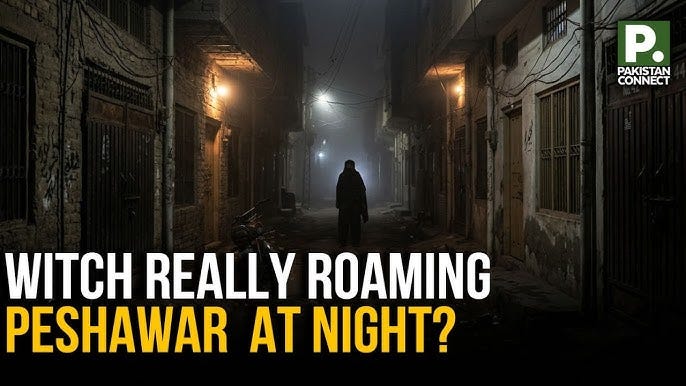
For several days before March 11, rumors had been moving through the outskirts of Peshawar, particularly around Mohmand Abad and Guldara Chowk, that a mysterious woman or creature was appearing in the streets at night near Bejo Qabar. Residents in surrounding streets told each other they had seen an unknown figure after dark. The fear accumulated until a group of local men decided to organize their own patrols to find her. They found a woman. Videos of a crowd surrounding her, claiming she was the same figure people had been describing for days, spread across social media platforms and reached significant circulation. Peshawar police issued a public statement on March 11 denying any evidence of a witch or supernatural creature. They urged residents not to believe the rumors and warned against taking the law into their own hands, asking instead that any suspicious activity be reported to the station. The police statement did not address the woman in the videos, who she was, or what happened to her after the crowd gathered. (Source: Lead Pakistan, March 11, 2026; Peshawar police statement, March 11, 2026.)
4. The Colony and the Allotments
On March 12, the Human Rights Commission of Pakistan issued an alarm: the Capital Development Authority was attempting to evict working-class families from the Rimsha and Akram Gill colonies in Islamabad’s Sector H-9. The CDA classifies the area as a green zone. No public explanation for the timing was offered by the CDA or the district commissioner’s office. In the same week, separate Dawn reporting documented suspected illegal allotments of 43 plots across various Islamabad sectors, with estimated losses of Rs 1.2 billion to CDA’s own treasury. The CDA press office issued no statement addressing the two items together. The families in H-9 had not relocated as of publication.
5. The Architect and the Scavengers’ Work
Naveed Sangah is a young architect. In the first week of March he was in Garhi Yasin taluka, thirty kilometers north of Shikarpur along the Indus Highway, supervising preservation work at Thaheeman Ja Quba, a graveyard containing four eighteenth-century tombs from the Kalhora dynasty. The tombs belong to Shah Sahib Khan Thaheem, Jalal Khan Thaheem, Dilawar Khan Thaheem, and a Sufi figure named Jaffer Shah. For decades the structures crumbled from weather and official neglect. Locals told Dawn that at least one tomb had been dug open by scavengers searching for gold. Several government preservation efforts had been announced and abandoned before any work was completed. Sangah told the Dawn correspondent M.B. Kalhoro on March 9 that the complex reflects the architectural traditions of the Thaheem tribe, who oral accounts record as having resisted the very Kalhoras in whose dynasty the tombs are classified. The Sindh culture department has restarted the work. Whether it survives the current budget cycle is not yet known.
6. Daraza Sharif
The 205th annual Urs of Hazrat Sachal Sarmast began on the 14th of Ramadan at his shrine in Daraza Sharif, Khairpur district, forty kilometers southwest of the city. Deputy Commissioner Altaf Ahmed Chachar declared a public holiday across Khairpur district for March 4. Sachal Sarmast, born Abdul Wahab Farooqi in 1739 in the same village where he is buried, composed poetry in Sindhi, Siraiki, Persian, Urdu, and Punjabi. His shrine has historically drawn Hindu and Christian devotees from surrounding villages alongside Muslim ones. That breadth of attendance is the particular tradition his custodians maintain and the one the Sindh state has never managed to replicate or replace. The Urs includes three days of sama and mushaira. Mian Abdul Haq Farooqui, custodian of the shrine and descendant of the saint’s family line, received the visitors. They came.


