
Thirsty Ground, Hungry State
How Pakistan’s mining ambitions in Balochistan are colliding with a deepening water crisis and a legacy of neglect
Pakistan’s push to turn itself into a global mining hub is unfolding on a fault line of water scarcity, political resentment and historical neglect. Nowhere is that tension sharper than in Balochistan, a province that sits atop some of the country’s richest mineral deposits yet struggles to supply its own people with safe drinking water. As the race for copper, gold and other strategic minerals accelerates, the promise of resource-driven growth is colliding with the hard limits of a deepening water emergency and the anger of communities who feel they are being sacrificed in the name of national development.
Over the past decade, Pakistan has shifted from warning of a future water crisis to living through a present emergency. Climate change has disrupted river flows and intensified droughts, while decades of mismanaged irrigation, leaking canals, unchecked groundwater pumping and poorly regulated urban growth have pushed the country into extreme water stress. Per capita water availability has plunged from once-comfortable levels to thresholds experts describe as “water scarce.” In practical terms, the competition for every unit of water is intensifying across farms, cities and industry, and the political consequences of that competition are getting harder to contain.
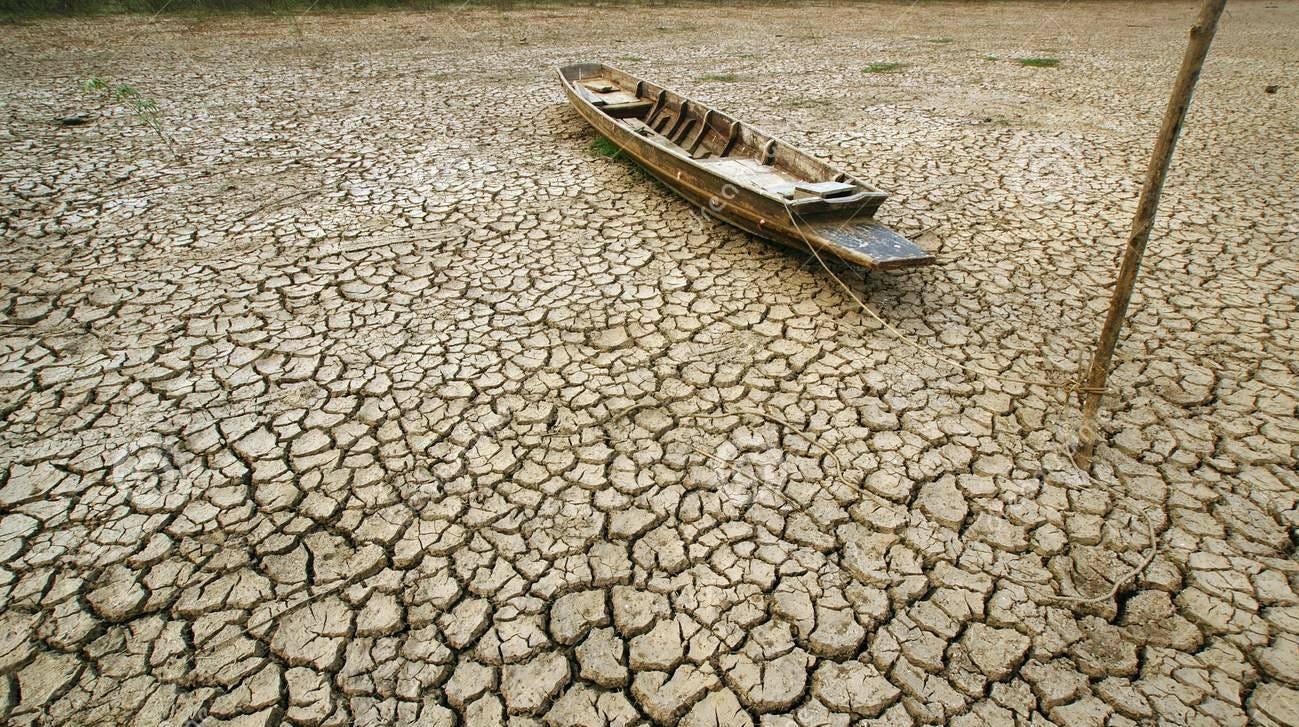
This national crisis does not fall evenly across the map. Balochistan, Pakistan’s largest but least populated province, is among the hardest hit. Much of its landscape is arid or semi-arid, with low and highly variable rainfall, minimal surface storage and a heavy dependence on underground aquifers. Traditional systems such as karezes, carefully engineered underground channels that once carried water from the hills to fields, have been drying up or falling into disrepair. Borewells have multiplied, often without regulation or planning, and in many areas the water table has dropped so far that poorer households simply cannot afford to drill deeper. For pastoralists and small farmers, the fading of springs, wells and seasonal streams translates directly into shrinking herds, failed crops and rising debt.
Yet this same province has long been framed as the future backbone of Pakistan’s mining economy. Balochistan hosts major copper and gold deposits, most notably at Reko Diq, along with other minerals that are increasingly valuable in a world hungry for energy-transition metals. Successive governments have presented these deposits as a way out of Pakistan’s fiscal bind: a source of export revenue, foreign exchange and geopolitical leverage. In speeches and glossy presentations, mining appears as a silver bullet, promising to bridge budget deficits, fund infrastructure and recast Pakistan as an attractive destination for global capital.
The reality on the ground is far more complicated. Industrial-scale mining, particularly for copper and gold, is intensely thirsty. Large volumes of water are needed at almost every stage: crushing and grinding ore, running flotation circuits, suppressing dust on haul roads, and storing and managing tailings. In arid regions, these demands can swallow a significant share of what little water is available, especially when operations draw from local aquifers. When those same aquifers provide the only reliable source of drinking water and irrigation for surrounding communities, the potential for confrontation is built in from day one.
People in Balochistan understand this intuitively because many already live at the edge of water insecurity. Villages rely on hand-dug wells, tanker deliveries or long walks to distant sources. A failed monsoon, an extra-hot summer or a broken pump can turn inconvenience into crisis. Against that background, the arrival of a mega-project promising to pull vast quantities of water from the ground feels less like development and more like a direct threat to survival. Local farmers ask how their orchards will survive if groundwater levels drop further. Herders worry about losing grazing routes and access to traditional watering points. Parents wonder whether their children will grow up drinking water that is safe.
Those worries are not simply technical or abstract. Previous exploration and early-stage activities in Balochistan have left behind a residue of distrust. Residents speak of ponds turning strange colors, of livestock falling sick after drinking from polluted pools, of dust settling on crops and changing the taste of the soil. Scientific proof is often hard to obtain, but the lived experience is powerful. Once people believe their land has been poisoned, it is almost impossible to persuade them that the next project will be different, no matter how many assurances are offered.
All of this unfolds against the backdrop of Balochistan’s long and often bloody political history. The province has endured multiple insurgencies since Pakistan’s creation, each fueled by grievances over autonomy, militarization, enforced disappearances and the extraction of natural resources without meaningful local consent or benefit. Gas from Balochistan has powered factories and homes elsewhere in the country for decades, yet many parts of the province still lack basic services, paved roads or functioning health centers. This experience has shaped a collective memory in which “development” is something done to Balochistan, not with it.
In such a context, a giant mining venture is never just a business proposal. It is read as a continuation of an old pattern: resources taken out, soldiers brought in, locals excluded from decisions and profits. When people see security checkpoints rise faster than schools or clinics, when they watch heavy vehicles and water tankers line up for the mine while their own taps run dry, every truckload of ore becomes a symbol of unequal power. Water, in particular, turns into a potent marker of who counts and who does not. A pipeline serving a mine can be seen not as a feat of engineering, but as a deliberate act of dispossession if neighboring villages still rely on decaying pipelines or sporadic tankers.
Pakistan’s broader water governance weaknesses make these tensions even harder to manage. Agencies tasked with allocating and regulating water are often fragmented, under-resourced and vulnerable to political interference. Data on groundwater levels and quality is patchy, outdated or kept away from public scrutiny. Environmental impact assessments tend to be treated as paperwork hurdles rather than serious tools to shape decisions. Communities have few trusted forums where they can contest water allocations or challenge over-abstraction and pollution. When formal channels fail, disputes spill into the streets, the courts or the shadows where armed groups operate.
Faced with criticism, officials and company representatives commonly reach for technical solutions. They talk about closed-loop processing systems, water recycling, desalination plants or pipelines bringing water from far away. Some of these ideas, if genuinely implemented, can ease pressure on local aquifers. But technology alone cannot answer the more human questions at the heart of the conflict: Who gets to decide how water is used? Who is listened to early, and who is informed only when the deal is done? Who gains if the project succeeds, and who is expected to live with the dust, noise and risk if it fails?
This is where the danger of recurring insurgency or chronic unrest becomes real. When people feel they have no meaningful say over decisions that will define their access to water, land and livelihoods, and when the state appears mainly through checkpoints and uniforms, opposition to mining hardens. What begins as petitions and protests can, over time, shift into sabotage of pipelines, attacks on infrastructure or blockades of access roads. Each incident then becomes a justification for heavier securitization, which in turn deepens the sense of occupation and alienation on the ground.
The trajectory is not inevitable. There is still time to imagine and build a different model of resource development in Balochistan and other water-stressed regions of Pakistan, one that treats water security and community rights as the starting point, not an afterthought. That would mean putting hydrology at the center of planning, not in the annexes. Before any contract is signed, there should be clear, publicly accessible assessments of local water availability, existing uses and the combined impact of multiple projects in the same basin. No mine should be allowed to proceed if it cannot show that people’s drinking water and essential livelihoods are safeguarded.
It would also mean changing how decisions are made. Free, prior and informed consent cannot remain a slogan in presentation slides; it has to become a practice. That involves meeting people where they live, sharing information in languages and formats they understand, listening to their fears and adjusting plans accordingly. It means accepting that some communities may say no, and that their refusal should carry real weight. For those who agree, it means ensuring that commitments are written into enforceable agreements, not left to vague promises and corporate goodwill.
Equally important is rethinking who benefits. If Balochistan is asked to shoulder the environmental and social risks of large-scale mining, its people should see more than temporary jobs and token compensation. They should see reliable water supply systems designed for their needs first, not as a byproduct of industrial infrastructure. They should see sustained investment in schools, clinics and alternative livelihoods that will outlast the life of any single mine. They should see a fair share of revenues reaching local governments that can be inspected, questioned and voted out.
Above all, there needs to be an honest recognition that in a hotter, drier future, water will be the line that divides sustainable development from slow-burn disaster. Pakistan’s ambition to build a mining-powered economy cannot be separated from the reality of its shrinking rivers and sinking water tables. Choices made in Balochistan will echo far beyond the province, shaping not only fiscal balances but also the country’s social cohesion and security. An extractive model that treats water as expendable and communities as obstacles will accelerate fracture and unrest. A different model, one that sees water as a shared lifeline and people as partners, offers a harder, slower, but ultimately safer path.
Pakistan stands at a crossroads. Its mineral wealth could help finance a fairer, more resilient future, or it could entrench a familiar pattern of dispossession and conflict. In Balochistan, the dividing line between those two outcomes runs through every well, every spring and every aquifer. How the state, companies and communities negotiate that line will determine whether the province becomes a genuine story of shared prosperity, or another chapter in a long record of promises written in dust.


