The Useful War
Pakistan's austerity plan was written long before the bombs fell on Iran
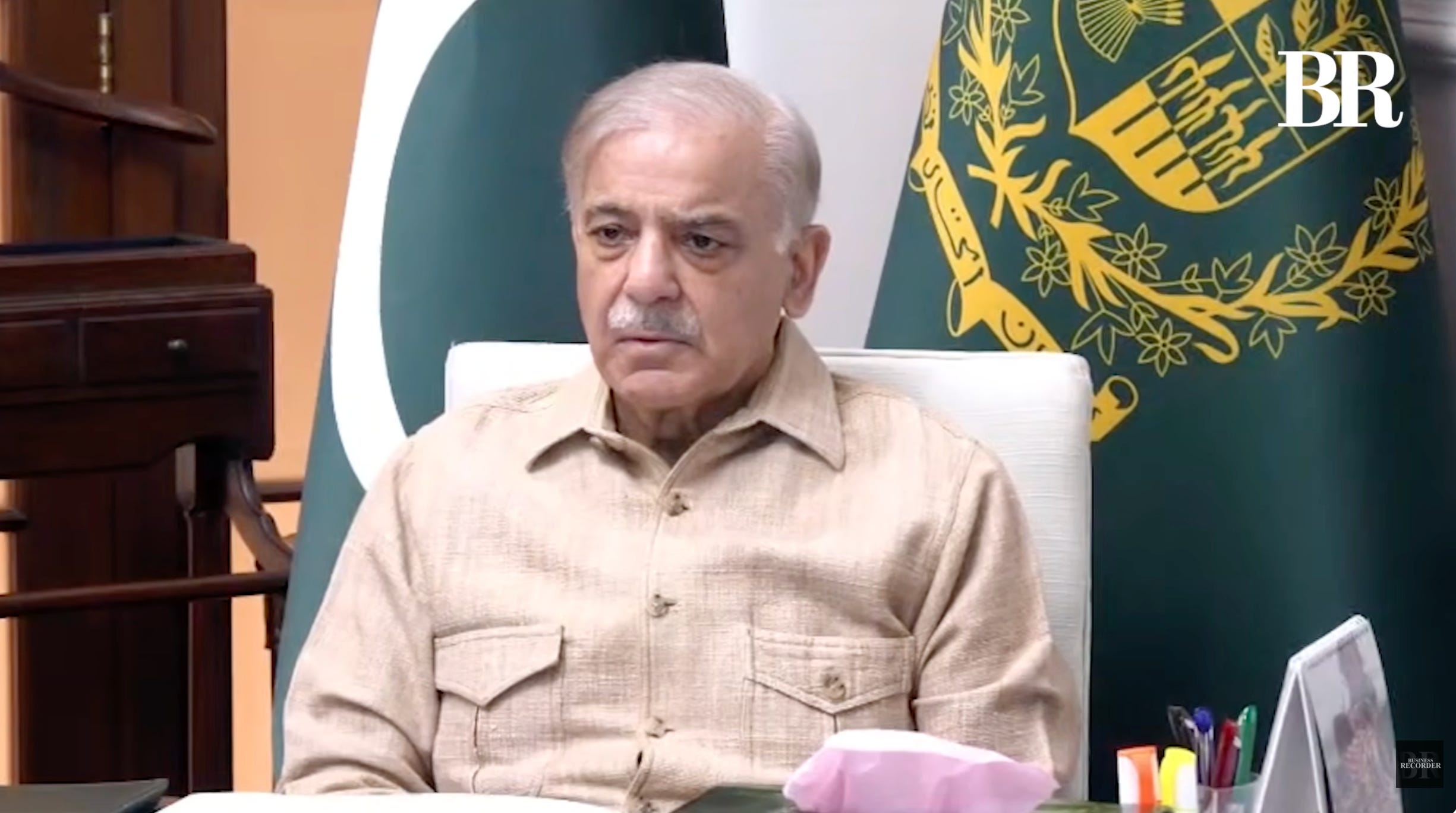
The prime minister directed a committee to formulate a plan of action focusing on economic development, austerity and saving in the wake of the current global economic uncertainty.
- Business Recorder
The Prime Minister has ordered an actionable austerity plan in forty-eight hours. The framing is already written: the war in the Middle East, the Strait of Hormuz, the fire over Iran. A government in visible crisis has found, at last, a crisis it did not cause. That distinction will be worked hard in the coming days.
Pakistan’s economy did not arrive at the emergency room on February 28, when American bombers lifted off from Al Dhafra and the first strikes hit Iranian air defense infrastructure. It was already there. The forty-eight-hour austerity order is not a response to the war. It is a political maneuver that the war has made available.
Pakistan’s circular debt in the power sector crossed Rs. 2.7 trillion before a single missile landed on Isfahan. The figure is not a secret. It has been documented in successive IMF reviews, State Bank quarterly reports, and the government’s own economic surveys going back to 2019. Each administration inherited it. Each administration added to it. The subsidies that built it were not distributed to the poor. They were distributed to protect industrial consumers, politically connected distributors, and a generation of capacity payment agreements signed at sovereign guarantees that the state now cannot honor.
The International Monetary Fund’s Extended Fund Facility, the twenty-third arrangement in Pakistan’s relationship with the Fund, was already binding the government’s hands before the war began. The primary surplus targets, the tax revenue benchmarks, the energy sector reform conditions: none of these were imposed by Operation Epic Fury. They were negotiated in Washington and Islamabad across months of quiet diplomacy while the government told the public the worst was behind them.
LNG prices were already structurally exposed. Pakistan’s terminal infrastructure, built for a world of cheap spot cargoes, was priced against a market the Russo-Ukrainian war had already restructured. The deferred payment facilities with Qatar, which kept the lights on during the worst months of 2022 and 2023, accumulated liability on the sovereign balance sheet that finance ministers discussed in language carefully calibrated not to alarm. The Hormuz closure has now converted that structural exposure into an acute one. The exposure was always there. The war did not build it.
A government that has been unable to pass meaningful tax reform through a parliament it nominally controls, that rolled back solar net metering policy when distributed generation threatened the revenue base of the distribution companies it was already subsidizing, that has watched the FBR repeatedly miss its quarterly targets and responded with retroactive accounting adjustments rather than institutional reform: this government has ordered an austerity plan in forty-eight hours.
The forty-eight-hour timeline is the tell. Genuine fiscal restructuring does not have a forty-eight-hour timeline. It has years of political negotiation, institutional preparation, and legislative work. What can be produced in forty-eight hours is a document: one that announces sacrifice without specifying whose, that invokes emergency without naming the authors of the emergency, that positions the sitting government as the responsible party managing a crisis rather than the inheriting party that deepened it.
The question the document will not answer is the one that matters: austerity applied to which expenditure lines, and borne by which population?
Pakistan’s defence budget has grown in real terms through every period of IMF conditionality. The tax-to-GDP ratio, one of the lowest among comparable economies, reflects not poverty of the taxable base but the systematic exemption of the agricultural sector, the retail sector, and the real estate sector, all of which are politically protected. The elite that negotiated those exemptions is the same elite that will design the forty-eight-hour plan. The people who will absorb its cost are the ones who never benefited from the exemptions in the first place.
Pakistan’s government has been approaching this reckoning for years. The IMF programme was always going to require measures that were politically costly. The energy sector restructuring, the subsidy removal, the broadening of the tax base: these were the conditions of the bailout, known from the beginning. Implementing them in peacetime, when the opposition could point directly at the government as the author of the pain, carried a specific political cost. Implementing them under cover of a regional war, when the government can point at the Strait of Hormuz, redistributes that cost onto an external actor.
The precedent runs through every administration. Musharraf used September 11 to reposition Pakistan from pariah to indispensable ally and purchased a debt restructuring that no domestic reform could have achieved. The PPP government used the 2010 floods to renegotiate IMF timelines. The current government is using a war it did not start, in a country it shares no border with, to implement an austerity programme it has been avoiding since it took office.
The difference between those precedents and this one is that the present government has more to hide. The FBR numbers are not a natural disaster. The circular debt is not a flood. The deferred LNG liabilities are not an earthquake. They are the residue of decisions made by people who are still making decisions.
The Hormuz closure has added real and serious cost to Pakistan’s already compromised position.
Approximately 30 percent of Pakistan’s oil imports transit the Strait. LNG spot prices have responded to closure risk with the speed commodity markets always respond to supply shock. The Iran-Pakistan pipeline, which would reduce that exposure, remains unbuilt on the Pakistani side under sustained American diplomatic pressure that no government in Islamabad has been willing to formally resist. The force majeure exposure on existing supply contracts is now being calculated by legal teams who would prefer not to be calculating it.
These are real costs. They will fall on real people: the factory worker whose employer cannot afford fuel at the new import price, the household that loses twelve hours of electricity per day instead of eight, the small trader whose margins were already destroyed by the last round of inflation and will now absorb another.
The government did not arrive at this moment of vulnerability by accident. It arrived here through thirty years of deliberate decisions to protect elite interests, defer structural reform, and borrow against a future that has now arrived. The war is the occasion. The choices are the cause.
The forty-eight-hour plan will announce some reduction in government expenditure that does not touch defence, some increase in utility tariffs presented as unavoidable, some version of the word “sacrifice” directed at the public without specifying the sacrifice of the powerful.
What it will not contain: a serious tax on agricultural income, the removal of exemptions for the export sector that have been in place since the 1990s, a renegotiation of the capacity payment agreements that are bleeding the power sector, a genuine accountability framework for the FBR officials who have been managing a system designed to fail its collection targets.
Those measures would require the government to act against the interests of the class that sustains it. A forty-eight-hour deadline protects against that possibility. There is not enough time to think that carefully.
Pakistan is paying for a war it did not choose. The government will use that sentence often. It omits the one that matters: Pakistan was already paying for a peace it failed to build.
The forty-eight hours will produce a document. The document will reference the war. The debt will remain.
What forty years built, forty-eight hours will now blame on Iran.


