
The Man Who Beat the World and Came Home to Silence
Sultan Khan The Chess Prodigy From Sargodha - A Look Back Into History
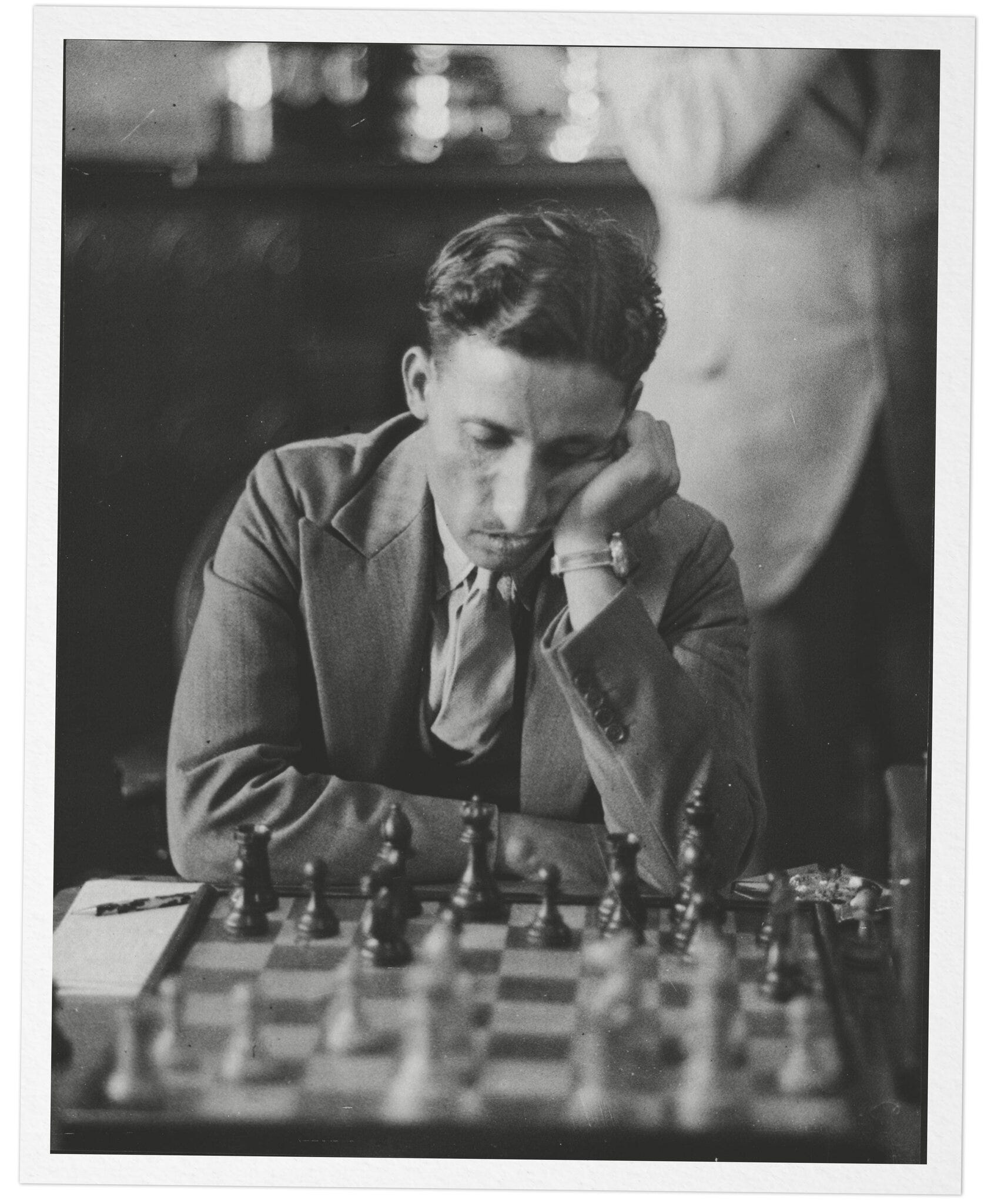
Sultan Khan was born in 1905 in Mittha Tawana, a village in the Sargodha district of Punjab. His father was a religious leader, a man of local standing, and also a strong chess player. Sultan learned the game from him at the age of nine. The game he learned was Indian chess, shatranj, which runs on different rules from the Western version: the pawn moves only one square at a time from its starting position, promotion is constrained, the logic of the board favors patience over aggression. Sultan absorbed this game so completely that by his early twenties he was the strongest player in Punjab. By 1928, when Colonel Nawab Sir Umar Hayat Khan Tiwana organized the All-India Chess Championship, Sultan won it without losing a single game.
That tournament was not a modest club affair. Punjab in the 1920s was densely populated, chess was taken seriously, and the people who came to that board had been playing their whole lives. Sultan finished eight wins, one draw. Nobody beat him.
Sir Umar and the Arrangement
Sir Umar Hayat Khan Tiwana ran an estate in Kalra, a short distance from where Sultan Khan’s family lived. He was an aide-de-camp to King George V and an advisor on Indian affairs to the British Government. He was the kind of man whose social utility to the colonial administration depended on performing a certain cultivation, hosting Alekhine at dinner, sitting at receptions with Vera Menchik, presenting India to London as a place of refined talent. He had recognized Sultan’s family as religious leaders for years before he recognized Sultan as a chess genius. The relationship had a texture the mythology always collapses.
When Sir Umar traveled to London in 1929 for the Round Table Conferences on Indian parliamentary reform, he brought Sultan Khan with him. He engaged an English tutor to teach Sultan the Western rules of the game, the differences from shatranj. Sultan learned them. He had been playing chess since he was nine years old; the rules were a surface adjustment to a deeply formed spatial intelligence.
Sir Umar entered Sultan Khan in the 1929 British Championship at Ramsgate. The British Chess Magazine reported in September of that year that Sultan, unfamiliar with the language and tournament procedures, was accompanied by Syed Akbar Shah, who interpreted press reports to him and managed logistics. Sultan played the games himself.
What London Saw
The chess establishment’s first reaction was documented by the British Chess Magazine: he was described by Gerald Abrahams in 1952 as “an obscure Indian from a Punjab village” who “held his own with the best players in Europe without ever making a surprising move.” The condescension and the compliment are packed into the same sentence, which is its own kind of instruction about how London processed what it had witnessed.
What London had witnessed was this: Sultan Khan won the British Championship in 1929. He won it again in 1932. He won it again in 1933. In 1931, the year he did not win, he finished at Hastings in third place. The two players ahead of him were Max Euwe, who would become World Champion in 1935, and José Raúl Capablanca, the former World Champion and widely considered the most naturally gifted player the game had produced. Third, behind those two men, in a tournament in England, playing in his second year in Europe.
At Bern in 1932 Sultan played alongside Alekhine, Euwe, Bogoljubov, and Flohr, and scored ten wins, three losses, two draws. He played first board for Britain at the Chess Olympiads in Hamburg 1930, Prague 1931, and Folkestone 1933. He beat Capablanca in a game at Hastings in the 1930-31 tournament. He beat Tartakower in a match at Semmering in 1931. He was ranked among the ten best players in the world.
He did this without having read a European chess book. His scorecards during tournaments were kept in Hindustani, with a companion helping him record moves. He could not read European algebraic notation with any fluency. He had no access to the annotated game collections that every European player of his era had studied for years. He was building his play from inside himself, from forty-year-old Indian chess reflexes transplanted onto a slightly different board, and the result was a style that baffled his opponents before it defeated them.
William Winter, the English player who paradoxically was almost the only competitor Sultan consistently lost to, wrote in his memoirs about Sultan’s first reaction to seeing the Alekhine-Bogoljubov World Championship games: Sultan looked at the moves and said, without knowing who had played them, that both players were “very weak.” Winter explained it precisely. Sultan’s Indian chess background prized long positional maneuvering; the sharp tactical contact of the European championship style looked, to his formed eye, like impatience. He was not being arrogant. He was reading the game through a different lens, one that European theory had not built.
Reuben Fine, who met Sultan Khan at the 1933 Folkestone Olympiad, wrote in Lessons from My Games (1958) that Sultan was “probably the biggest chess genius the world has ever seen.” Fine was eighteen at the time and already one of the strongest young players in America. The observation was not hyperbole. He had watched Sultan play across multiple sessions and came away with a conclusion he spent decades standing behind.
The Dinner Party
At Folkestone in 1933, after the Olympiad concluded, the American team was invited to Sir Umar’s London residence at 10 Prince Albert Road, Regent’s Park. Fine recorded what happened when they arrived. Sir Umar greeted the guests with the remark: “It is an honor for you to be here; ordinarily I converse only with my greyhounds.” He produced a four-page printed biography of himself. His greatest documented achievement, Fine noted dryly, appeared to be that he had been born a maharajah.
Sultan Khan, the man whose chess had earned the Americans an invitation to that house, spent the dinner serving food and drinks to the guests.
Fine wrote: “Sultan Khan was treated as a servant by the maharajah, which in fact he was according to Indian law, and we found ourselves in the peculiar position of being waited on at table by a chess grand master.”
The Austrian player Hans Kmoch, who had played Sultan Khan at Hamburg in 1930, described a different kind of encounter. When he offered Sultan a draw and received only a quiet smile in response, he demanded to know what language Sultan Khan spoke. The reply, according to the story as it circulated for decades, came from Winter: “Chess.” The game ended in a draw, which complicates the legend, but the exchange captures something true about how Sultan occupied his environment. He communicated in the only idiom in which he had been given full authority. At the board he was equal to anyone in the room. At the dinner table he was a servant.
The Question of What He Could and Could Not Read
The mythology about Sultan Khan collapses his relationship to literacy into a single gesture: he couldn’t read or write. His granddaughter Atiyab Sultan, who reviewed Daniel King’s 2020 biography Sultan Khan: The Indian Servant Who Became Chess Champion of the British Empire, has pushed back on this. Sultan kept notebooks and diaries. They exist. He could read Urdu and Arabic. He had been raised by a religious leader in a household where Quranic literacy was not optional.
What he could not do was read European chess notation fluently. A correspondent writing to CHESS magazine in 1960, Mohammed Yusuf of Lahore, who said he had known Sultan Khan since 1918, put it plainly: “Sultan Khan’s knowledge of English does not go beyond his ability just to read a game-score. The secretary of the late Sir Umar used to help him to a certain extent to study annotations.”
So the accurate picture is this: Sultan Khan had restricted access to European chess theory, not because he was uneducated, but because his education was in a different language and a different tradition, and the infrastructure of European competitive chess was built entirely in the European languages he did not read. Every annotated game collection, every opening manual, every tournament report that his competitors absorbed from childhood was inaccessible to him without an intermediary. He competed, and won, at the highest level against men who had spent decades saturated in that literature.
A photograph from the Berne 1932 tournament book shows Sultan Khan engrossed in a document. A postcard from the same tournament carries his signature in the Latin alphabet. The story of the illiterate servant is a story that was useful to certain people and has been repeated accordingly. His granddaughter has his diaries. They are with the family, not in an archive.
Going Home
Sir Umar Hayat Khan Tiwana died in 1944. By the time of his death Sultan had already been back in Punjab for eleven years. The photograph published in The Times of India on 16 January 1934 showed Sir Umar at Tilbury docks, bidding farewell to Sultan Khan and Miss Fatima, who had won the British Ladies’ Championship in 1933, as they boarded the ship for home.
Sultan Khan was twenty-eight years old.
He had been the British Champion three times. He had beaten Capablanca, Tartakower, Rubinstein. He had played alongside Alekhine at the world’s highest tournament tables. He had represented Britain at three Olympiads. He went back to Sargodha district and became a small landlord. Mohammed Yusuf, writing in 1960, reported that even then Sultan was “distinctly better than the best active player in Pakistan or even in India.” He said this as a direct observation, not as nostalgia. Sultan was in his mid-fifties, had not played competitive chess in over two decades, and was still better than anyone active in the subcontinent.
He told his children to find something more useful to do with their lives than play chess.
He died on April 25, 1966, in Sargodha. There was no national ceremony. The government issued no statement. The chess world, which had been trying to locate him for years, running stories in British and South African chess magazines wondering if he was alive and whether he might return to international play, had to piece together confirmation of his death through secondary correspondence.
The British Championship records from 1929, 1932, and 1933 list his name. The European tournament books archive his games. His win against Capablanca is in the databases. The record exists. It exists in London, in Edinburgh, in the chess history files of Europe. What it does not exist in, at any institutional level, is Pakistan.
Fatima
There is one more thing the standard account omits.
Sultan Khan was not the only member of Sir Umar’s household who came to England and won a British title. Miss Fatima, a young woman from the same estate, eighteen years old in 1932, also played in the British Ladies’ Championship that year, finishing sixth in her first tournament. In 1933, she won it. She won the British Ladies’ Championship with an unbeaten record and three points clear of the field.
The Hastings and St Leonards Observer reported on August 12, 1933: “History was made at Hastings Chess Club this week when the British Chess Championship and the British Women’s Championship were each won by Indian competitors.” The paper noted she spoke little English and was “very modest about her success.” She had been given coaching by Vera Menchik, the dominant women’s player of the era, and had reportedly given chess instruction to Queen Mary, the wife of George V.
Her full name is not in the record. Not her family name, not her village, not what happened to her after 1933 when she boarded the ship at Tilbury alongside Sultan Khan and went back to Punjab. She won the British Ladies’ Championship and then disappeared from every documented account. Sultan Khan at least has a death date, a grave, a granddaughter who defends his record. Miss Fatima has a first name and a photograph in the Edwin Smith archive.
Two people from Sir Umar’s household in Sargodha won British titles in the same week in August 1933. Both returned to Punjab. One was forgotten for decades. The other was forgotten entirely.
The Architecture of Not Remembering
FIDE awarded Sultan Khan the Honorary Grandmaster title posthumously on February 2, 2024. The ceremony was in Islamabad. FIDE President Arkady Dvorkovich presented the award to caretaker Prime Minister Anwaar-ul-Haq Kakar. Sultan Khan had been dead for fifty-eight years.
The ceremony was not nothing. The recognition meant something to people who had spent years arguing for it. But ceremonies in Islamabad do not build institutional memory in Sargodha. The award did not place Sultan Khan in a school curriculum. It did not commission an archive of his games and papers in Pakistan. It did not fund a biographical research project, a national monument, or even a verified account of where Miss Fatima is buried.
Pakistani public memory is not accidentally selective. It is produced by institutions that hold the power to sustain commemoration and, more importantly, by institutions that hold the power to let it lapse. Sultan Khan had no connection to the military, to political office, to the Lahori or Karachi elite, to any institution whose commemorative apparatus was functioning. He was a chess player from a district of northern Punjab whose access to international competition ran entirely through one colonial landlord’s patronage. When that patronage ended, so did his institutional life. The European archives preserved his games because European archives preserved European chess history, and for a few years Sultan Khan was European chess history. Pakistan preserved nothing because nothing was built to preserve it.
This is not unique to him. It is the operating logic of how Pakistan’s official memory works. The people it cannot use, it does not keep. Sultan Khan was usable in 2024, at a diplomatic ceremony, as a symbol of historical achievement, a line in a speech. That is a different thing from being remembered.
His diaries are with his granddaughter. The European chess databases have his games. His grave is in Sargodha district, the same soil he was born on, and the precise location is not in any national register that a researcher could consult without already knowing where to look.
The question the record cannot answer is about Miss Fatima. She is in one photograph. She won one championship. She went home. Where she is buried, what she said about what she had done, whether anyone in her family knows that she won, what the winter was like when she came back from England in 1934: none of it is documented. The archive ends at Tilbury docks, with Sir Umar standing on the quay in his coat, and the two of them boarding the ship. After that, silence.


