
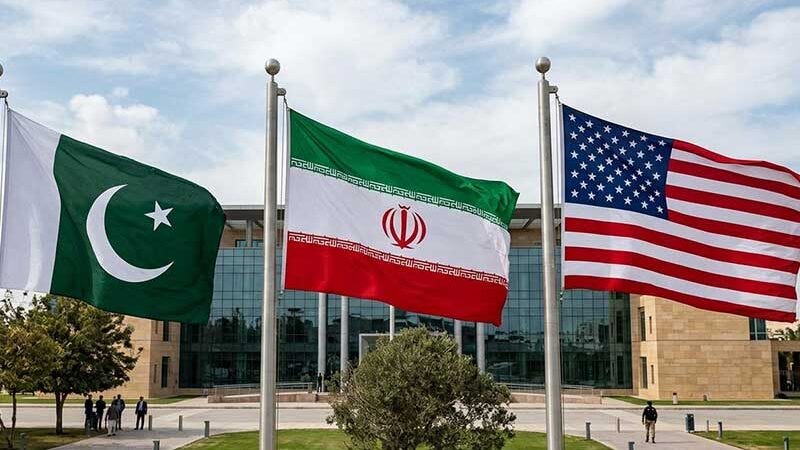
The Islamabad Accords
Pakistan did not start this fire. It is being paid in flattery to carry water for the man with the match.
As of Monday evening they are a two-page memorandum of understanding that Pakistan drafted overnight, shared electronically with Washington and Tehran, and named after a capital whose petrol queues have not moved in three weeks. The framework proposes an immediate halt to hostilities, followed by fifteen to twenty days of negotiations toward a permanent settlement, with final in-person talks in Islamabad as the endpoint. Field Marshal Asim Munir spent Sunday night on calls with JD Vance, Steve Witkoff, and Iranian Foreign Minister Abbas Araghchi. Iran said it received the proposal and was reviewing it. The United States has not responded officially. Trump, hours before Pakistan submitted its framework, posted on Truth Social that time was running out, that forty-eight hours remained before “all Hell will reign down on them,” and signed off with “Glory be to GOD.” He has since set a hard deadline of Tuesday at 8 PM Eastern, and it is in that environment, with an active bombing campaign on one side and a government burying its dead on the other, that Islamabad decided to name a document after itself.
Here is what happened on Monday while the Accords were under review. Israel killed Iran’s IRGC intelligence chief. US-Israeli airstrikes killed at least thirteen people in residential buildings in Baharestan County, southwest of Tehran. Israel struck the South Pars petrochemical complex, rendering the Jam and Damavand facilities inoperative, by Israel’s own account eighty-five percent of Iran’s petrochemical exports and tens of billions of dollars in losses. Iranian-linked militias attacked US diplomats and facilities in Iraq. Iran struck a residential building in Haifa, killing four. When Pakistan’s Foreign Office spokesperson Tahir Andrabi was asked to confirm the framework his government had submitted overnight, he said: “We do not comment on these individual, specific incidents.” Pakistan drafted a ceasefire document that its own foreign ministry will not acknowledge, on a day when both parties to the ceasefire were killing each other’s people, and called it diplomacy.
The problem with the Accords is not procedural. It is that the two positions they are meant to bridge are not procedurally different; they are the war itself, and the war did not pause to consider Pakistan’s paperwork.
Iran’s position has not changed since February and will not be moved by an overnight memorandum. Tehran wants a permanent ceasefire with binding guarantees against future US-Israeli strikes, war reparations, and formal recognition of its sovereignty over the Strait. It has already rejected Washington’s fifteen-point plan as “excessive.” On Monday, its foreign ministry spokesperson said that negotiations are “incompatible with ultimatums and threats to commit war crimes.” Its parliament speaker, Qalibaf, has said the negotiations are cover for a ground invasion. Iran’s posture on Monday was not that of a government reviewing a memorandum with an open mind; it was that of a government under active aerial bombardment that killed thirteen of its citizens before noon and whose IRGC intelligence chief was dead by evening.
Washington’s position is equally fixed. It wants the Strait of Hormuz open as a precondition, not an outcome. It wants Iranian commitments to abandon nuclear weapons, and the Accords reportedly include this as a final-phase demand, meaning Pakistan is being used as the vehicle for a nuclear disarmament framework, not a ceasefire. It has an operational bombing plan for Iran’s energy facilities that Axios reports is ready to execute. Trump is not negotiating. He is running a countdown clock and outsourcing the paperwork to Islamabad, and when the clock expires Tuesday night, the paperwork will not stop what follows.
What Pakistan mistakes for leverage is ownership of the failure. Being the sole communication channel does not give you power over the outcome; it assigns you the liability when the outcome does not come. When these talks collapse, as the structure of the disagreement and the events of Monday make near-certain, it will be the Islamabad Accords that failed, in the record, in the headlines, in the diplomatic ledger. Washington’s maximalism will carry no byline. Tehran’s refusal to negotiate under bombardment will carry no byline. The document with Pakistan’s name on it will, and Islamabad will have authored it for free.
The Accords are also not Pakistan’s idea of a settlement. They are Washington’s preferred terms, translated into Pakistani diplomatic packaging and submitted to Tehran. Pakistan did not write this framework from a position of independent analysis. It wrote it under pressure from a White House running a forty-eight-hour deadline and a president who calls its army chief his “favorite Field Marshal” as a management technique.
Pakistan imports more than eighty percent of its energy needs. Its petroleum minister has raised petrol forty-three percent and diesel fifty-five percent since the war began. LNG shipments collapsed from twelve a month in January to two in March. Five million Pakistanis in the Arab Gulf send home remittances each year roughly equal to the country’s total export earnings, and all of that sits inside the blast radius of a conflict their government is now managing on Washington’s behalf. Pakistan is on its twenty-fifth IMF bailout and simultaneously fighting the Afghan Taliban across its northwestern border. The war it is mediating is the direct cause of the worst energy crisis in its history, and its response has been to draft a framework for the parties responsible, without a single documented concession extracted in return. Trump extended his deadline by ten days citing “diplomatic progress,” and the progress he cited was Pakistan’s mediation. Pakistan’s fuel prices did not fall during those ten days. There is no public record of what Pakistan received for providing the cover that bought Washington time.
Mediation requires leverage over at least one party. Pakistan has none over Washington, which is running the war, and none over Tehran, which is fighting it and being bombed while reviewing the proposal. What Pakistan has is access, and access without leverage is not a seat at the table; it is an errand. If the Accords somehow hold, the credit will be shared across the coalition of mediators, diluted through Egypt, Turkey, China, and the United States itself. If they fail, the name on the document is Islamabad’s. That asymmetry is not an accident. It is the terms Pakistan accepted when it agreed to be useful.


