
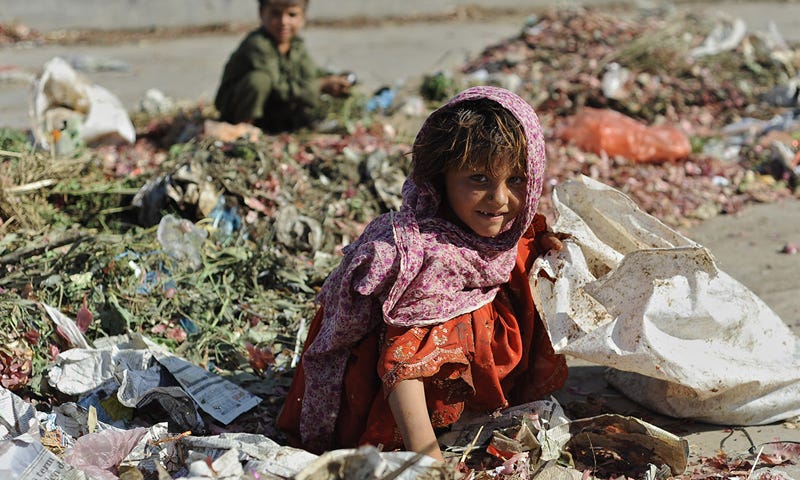
The silence of the Pakistani public is not contentment. It is the silence of people who have been stripped of every avenue to push back.
When a dhaba wala in Lahore raises his price and lets his assistant go on the same day, he is not being passive. He is surviving. When a factory worker in Faisalabad skips a meal to cover the electricity bill, he is not endorsing his government. He is managing a crisis that was handed to him.
Pakistan’s elites do not just own wealth. They own the mechanisms through which wealth is distributed. They sit in Parliament. They write the tax exemptions. They control hiring, tenancy, and credit in communities where the state never arrives. The people at the bottom do not have the luxury of protest. Protest requires time, security, and the knowledge that the system will not simply destroy you for trying.
This is not a country where people love their rulers. It is a country where poverty has been engineered so comprehensively that the poor are too busy surviving to organise against the people engineering it.
Silence in Pakistan is not a vote. It is the price of staying alive.
But there is something more precise and more deliberate happening beneath that silence than most analyses acknowledge. The silence is not simply the byproduct of poverty. It is poverty’s primary political function. And understanding that function is the only way to understand what Pakistan is actually becoming, and where it is going.
What extreme inequality does to a society, at its most effective, is not produce anger. It produces isolation.
The dhaba wala who raises his price does not raise it in solidarity with the roti wala down the street who is doing the same calculation. He raises it alone, in the privacy of his own crisis, managing his own specific version of a disaster that is happening to every person in his neighborhood simultaneously without any of them experiencing it as a shared condition. The factory worker who skips the meal does not skip it alongside his colleagues in a gesture of collective refusal. He skips it quietly, privately, in the way that shame operates, because economic suffering in a society without structural analysis is experienced as personal failure rather than systemic consequence.
This is the actual genius of what has been built in Pakistan over seventy years of elite consolidation. The extraction system does not simply take money. It takes the social connective tissue that would allow the people being extracted from to recognise each other as allies rather than competitors. It takes the collective.
When every family is fighting for survival individually, every other family becomes a potential threat to that survival. The neighbor who gets the contract, the cousin who secures the government job, the man from the next street whose son got into the good school through someone’s reference: these are not sources of solidarity. They are evidence that the scarce resource went somewhere else. Scarcity, engineered and maintained at precisely the level where it consumes all available attention and energy, does not radicalize people against the system that produced it. It turns them against each other for the scraps the system leaves behind.
A society capable of collective resistance requires certain conditions. It requires people who have enough security to think beyond tomorrow. It requires shared physical spaces where grievances can be articulated and compared. It requires institutions of civil life, unions, press, independent courts, political parties with actual ideological content, that translate individual complaint into political demand.
Pakistan’s ruling class has spent decades systematically dismantling each of these conditions, not through a single conspiracy but through the accumulated effect of thousands of individually self-interested decisions that together produced the same outcome a conspiracy would have produced.
Labour protections were never seriously enforced, keeping workers individually atomized and replaceable. The press operated freely until it said something that mattered to someone with the power to close it, which trained the press to identify in advance what it could and could not say, which produced a media landscape that performs controversy without threatening power. Political parties became vehicles for elite families moving between arrangements rather than organisations that trained citizens in collective political action. The judiciary’s independence was extended and retracted according to whether it was being useful or inconvenient at any particular moment.
What remained after all of this was a population with grievances it could not articulate in any forum that carried consequences, and a public sphere that reflected those grievances back as entertainment rather than politics. The talk show that screams about corruption every night and changes nothing is not a failure of the media. It is the media functioning exactly as the system requires it to function. Outrage that goes nowhere is not dangerous. It is a pressure valve.
Pakistan’s median age is 22. In a country with functioning institutions and a growing economy, this demographic fact is called a dividend. In Pakistan, it is something else. It is 130 million people under the age of 30 who were born into a social contract that was never extended to them, who grew up watching the gap between what was promised and what was delivered widen with each passing year, and who now occupy a present tense with no clear future attached to it.
These young men, and it is disproportionately young men who bear the sharpest edge of this condition, are not radicalized by ideology in the first instance. They are radicalized by arithmetic. A young man in Orangi or Muzaffargarh or Quetta’s Satellite Town does not reach for an alternative framework because someone persuaded him of its merits. He reaches for it because the formal framework, the education that was supposed to lead to the job that was supposed to lead to the life, produced nothing he could use. The informal structures that actually deliver, whether that is a local patron, a criminal network, a militant organization, or a religious institution that functions as a welfare provider: these are not chosen over the state out of preference. They are chosen because they work, and the state does not.
This substitution is catastrophic and it is invisible in the data. It does not appear in GDP figures. It does not surface in IMF reviews. It registers eventually in security reports when the substitution has progressed far enough to produce violence, at which point the state responds with the only instrument it has fully invested in, which is force. Force applied to a population that turned to alternative structures because the state never arrived in any other form confirms, for everyone watching, that the state’s relationship to poor communities is exclusively punitive. Which drives the next generation further from formal institutions. Which produces the next security report.
Here is what is almost never said directly, because saying it requires acknowledging something about power that power prefers to leave unexamined.
The fragmentation, the atomization, the communities turned against each other over scraps, the young men whose energy has been redirected into survival and informal structures and occasional violence: none of this threatens the people at the top of Pakistan’s system. It protects them.
A fragmented population cannot organize. A population busy managing individual crises cannot build collective political power. A country in which whole communities have been turned against each other along ethnic and sectarian and economic lines cannot produce the solidarity that a genuine challenge to elite power would require. The chaos that outside observers read as evidence of state failure is, from the perspective of the people whose wealth and position depend on the existing arrangements, a form of state success.
The Pakistani elite has never needed a functional country. It has needed a country functional enough to extract from and fragmented enough not to push back. That is precisely what it has built. The roads do not need to work for the man whose family flies. The public hospitals do not need to function for the family with the private clinic. The public schools do not need to teach for the children in Aitchison and Karachi Grammar. The system does not need to be fair for the people who wrote the rules of the system.
What the elite needs the state to do, it does. It maintains the military that protects the property. It services the debt that keeps the international creditors cooperative. It processes the paperwork that allows the money to move. Everything else, the education, the health, the infrastructure, the rule of law for people without the right connections, is optional. It has always been optional. The proof is that it has always been the first thing cut.
Nature does not tolerate a vacuum and neither do societies. Where the state does not arrive, something else does.
In Pakistan’s neglected peripheries and urban margins, what has arrived is a complex ecosystem of substitutes. The mosque that runs the school the government never built. The local strongman whose connections get the neighborhood’s drainage problem addressed after three years of failed official requests. The informal credit market that charges 40% because the bank will not lend to someone without a salary slip from a registered employer. The militant organisation that provides a salary, a brotherhood, a sense of purpose, and an enemy to explain why the life turned out this way.
None of these substitutes are interested in building the Pakistan that its founding documents described. They are interested in filling the specific gap the state left behind, which means they replicate the state’s extractive relationship with the communities they serve, because that is the logic they inherited and the only model available. The mosque school teaches, but it also shapes. The strongman solves problems, but he builds obligation. The informal lender provides credit, but he owns the borrower. The militant organization gives purpose, but it consumes the person.
This is what a generation of state absence produces. Not a power vacuum. A power substitution, in which the formal institutions that at least theoretically answer to democratic pressure are replaced by informal ones that answer to no one and are subject to no accountability that the community can enforce.
What is coming to Pakistan is not a revolution. Revolutions require the thing that seventy years of engineered atomization was designed to prevent, which is a population that experiences its suffering as collective and its power as shared. That population does not currently exist in Pakistan at the scale a revolution requires.
What is happening instead is something slower and in many ways more total. It is the progressive withdrawal of whole communities from any relationship with the formal state. The expansion of the informal into every domain the formal has vacated. The transfer of loyalty, one family at a time, one neighborhood at a time, from institutions that never delivered to networks that at least sometimes do. The quiet, unannounced, undramatic decision of millions of people to stop waiting for a country that was never coming for them.
This process does not make headlines. It does not produce a single event that analysts can point to as the moment things changed. It accumulates instead into a demographic and social fact that one day becomes impossible to ignore, when the census figures no longer make sense, when the tax rolls no longer reflect anything resembling the actual economy, when the official map of the country no longer corresponds to the actual map of where power operates and decisions get made.
Pakistan is not approaching collapse. Collapse would be a resolution, and what is happening here is not heading toward resolution. It is heading toward a permanent condition in which the country continues to exist as a geographic and administrative category while ceasing to exist, for increasing numbers of its own people, as a shared project.
The elites can live with that. They have always lived with that. They have houses elsewhere.
The 240 million who do not have houses elsewhere are the ones who will live inside whatever Pakistan actually becomes.
And they are still silent. Not because they have accepted it. But because the price of speaking has always been higher than the price of endurance, and endurance is the only resource that has never been taxed, because you cannot extract what is not visible, and silence, after all, is invisible.
Until it isn’t.


