
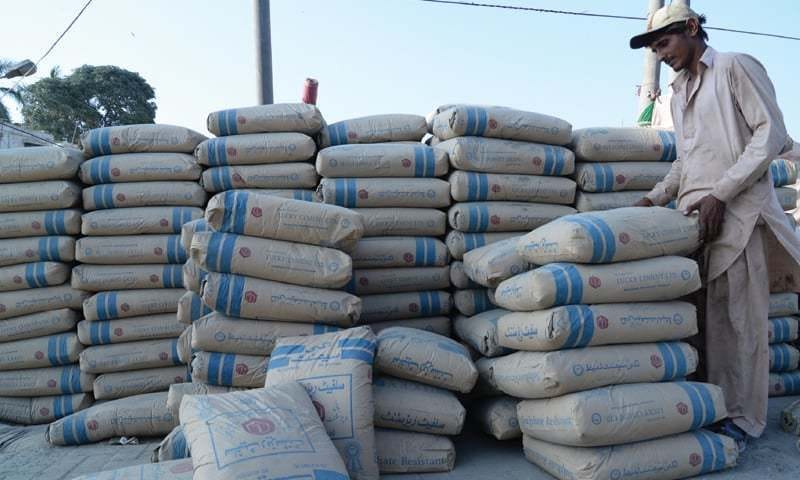
The Cement Cartel
Thirty Years on the Rack: Pakistan’s Cement Cartel, the CCP, the Khaki Conglomerate, and the High Cost of Collusion.
Over roughly three decades, Pakistan’s cement industry has moved from nationalized shortage to private surplus, but its defining constant has been cartelization: coordinated price-fixing, quota-setting, and market allocation under the umbrella of the All Pakistan Cement Manufacturers Association (APCMA). Regulators have repeatedly documented collusion, imposed landmark fines, and mounted dawn raids, yet legal bottlenecks and structural features of the market have allowed the cartel dynamic to re-emerge in cycle after cycle.
Since the early 1990s, at least four major cartel episodes have been formally investigated by the erstwhile Monopoly Control Authority (MCA) and its successor, the Competition Commission of Pakistan (CCP), culminating in a 2009 decision fining 20 cement firms and APCMA a total of PKR 6.352 billion for quota-based collusion, and a fresh inquiry in 2020 that uncovered “hardcore evidence” of coordinated price hikes and territorial allocations via WhatsApp groups and APCMA-managed quota systems.
The CCP’s new research study on the cement sector, prepared by its Centre of Excellence in Competition Law, situates this history in a broader structural and regulatory context: an oligopolistic market where the top four players control over 56 percent of capacity; regional markets (particularly the South) that are moderately concentrated; chronic under-utilization of capacity (utilization falling from over 94 percent in FY2017-18 to about 53 percent in FY2024-25); and a cost structure in which taxes and duties can account for nearly half the final price of a cement bag.
An additional layer to this story is the military-industrial angle. One of Pakistan’s largest cement producers, Fauji Cement Company Limited, operates under the umbrella of the Fauji Foundation, a vast conglomerate predominantly managed by the Pakistan Army; in 2021 it merged with Askari Cement, a subsidiary of the Army Welfare Trust, further consolidating khaki-linked control over cement assets. Army-linked business groups, including the Fauji Foundation, Army Welfare Trust, Shaheen Foundation and Bahria Foundation, collectively form what many analysts describe as Pakistan’s largest business house, with interests in fertiliser, cement, oil, banks, housing and more, a conglomerate whose political clout shapes how regulation, including competition enforcement, is applied.
The cement study argues that, alongside classic cartel-prone features (homogeneous product, high fixed costs, excess capacity), Pakistan’s sector is further distorted by non-competition policies: axle-load enforcement, provincial royalty disparities, a coal-handling monopoly at Port Qasim, volatile federal excise and sales tax policy, energy levies on captive power, weak border controls facilitating smuggled (often untaxed) Iranian and Afghan cement, and pervasive counterfeiting of cement brands.
It recommends a comprehensive reform package: harmonizing logistics and mineral policies, opening up coal handling to competition, stabilizing the tax regime, rationalizing energy pricing, tightening border and quality enforcement, and strengthening the CCP’s ability to act swiftly on evidence of collusion and deceptive practices. International experience from South Africa, India, Brazil, Europe and elsewhere underscores that cement cartels are a global phenomenon and that only sustained, well-resourced enforcement combined with structural reforms can curb them.
1. Historical Evolution of Pakistan’s Cement Industry
1.1 From colonial plants to nationalization
Cement was one of the few industrial sectors present in what became Pakistan even before Partition. The first cement plant was set up at Wah in 1921; by 1947 there were four plants—Wah, Karachi, Rohri and Dandot—with a combined installed capacity of 470,000 tonnes per year. These early plants reflected the region’s abundance of limestone and clay.
Post-independence, the Pakistan Industrial Development Corporation (PIDC) led capacity expansion with new plants at Daudkhel and Hyderabad in 1956, bringing the total number of units to nine by 1968 as economic growth and urbanization fuelled construction demand.
The 1970s brought sweeping nationalization under the Economic Reforms Order of 1972. All private cement plants were merged with state-owned facilities into the State Cement Corporation of Pakistan (SCCP), which exercised strict control over production and pricing. This regime discouraged private investment, constrained capacity, and produced chronic shortages; by 1976-77 Pakistan, despite its raw material endowment, was importing cement to plug gaps.
1.2 Deregulation, privatization and the 1990s demand boom
Between 1977 and 1988, policy shifted towards denationalization and a renewed emphasis on housing and construction. Seven new private plants (total capacity 2.54 million tonnes) and four public plants were commissioned, raising the number of plants to 24 by the late 1980s. However, private plants were forced to compete against SCCP-fixed prices, limiting profitability and investment appetite.
The 1990s marked a decisive shift: economic liberalization, privatization of SCCP plants, and deregulation of prices. As SCCP’s control over pricing waned and new private capacity came online, surplus capacity emerged—rising from about 1.6 million tonnes to 6.34 million tonnes by 2000. Yet the early 1990s were paradoxical: demand, growing roughly 8 percent annually, still outpaced local supply in the North, forcing expensive imports of a heavy, freight-intensive commodity and keeping prices high.
The 2000s then saw Pakistan’s cement industry ride successive waves of construction and infrastructure spending, including housing booms and later CPEC-related infrastructure. Capacity expanded from 45.62 million tonnes in FY2015-16 to 84.58 million tonnes in FY2024-25—an 85 percent increase in less than a decade.
1.3 Recent performance: from capacity boom to utilization slump
Despite massive capacity additions, the cement sector has struggled with demand volatility and macroeconomic headwinds. According to the Pakistan Economic Survey 2024-25, local dispatches stagnated or declined in recent years while exports recovered from earlier lows. Capacity utilization, which peaked at 94.4 percent in FY2017-18, fell to just 52.97 percent in FY2024-25 (July–March), reflecting weak construction activity amid high input costs and macro instability.
Over the same period, total production capacity rose from 45.62 million tonnes (2015-16) to 84.58 million tonnes (2024-25), local dispatches hovered around the 38–48 million tonne range, and exports fluctuated between about 4.6 and 9.3 million tonnes. Pakistan’s per capita cement consumption remained at about 191 kg, far below the global average of 550 kg, indicating both under-development and latent demand.
Exports have increasingly acted as a pressure valve: in FY2024-25, cement exports reached 6.53 million tonnes with a value of around USD 267 million, up 40.5 percent in value terms compared to the previous year. Afghanistan is the largest export destination, followed by Bangladesh and Sri Lanka.
2. Market Structure and Cartel-Prone Features
2.1 Oligopoly, regional segmentation and concentration
Pakistan’s cement sector is structurally oligopolistic. Sixteen companies operate 27 plants with a combined production capacity exceeding 83 million tonnes; the top four players account for over 56 percent of total market share, with the largest firm alone controlling around 20 percent and the next three around 11–14 percent each.
At the national level, the Herfindahl-Hirschman Index (HHI) is around 1051, which by traditional competition thresholds appears moderately unconcentrated. However, this masks substantial regional and provincial concentration. The market is effectively segmented into two geographic zones—North and South—by freight economics and distribution patterns. In the North, the HHI is approximately 1222, suggesting a relatively competitive but still concentrated structure; in the South, the HHI is about 2357, pointing to a moderately concentrated market dominated by a small number of firms.
These structural patterns overlay classical cartel-prone conditions: a homogeneous product (Ordinary Portland Cement accounts for about 95 percent of output), high fixed and sunk costs, high capital intensity, low value-to-weight ratio, significant transport costs, and limited storage possibilities due to low shelf life. Such conditions make it easier to sustain collusion and harder for fringe rivals or new entrants to discipline prices.
2.2 Demand and supply fundamentals
On the demand side, cement has low price elasticity: there are no close substitutes for most construction uses, and demand is derived from the health of the construction and infrastructure sectors rather than from cement pricing per se. Housing accounts for over 60 percent of demand, with the remainder tied to public sector development (PSDP) projects and industrial/commercial construction. Consequently, macroeconomic conditions, government spending, and financing costs strongly influence cement sales.
On the supply side, cost competitiveness hinges on access to limestone reserves, proximity to major consumption centres, and energy pricing. Fuel and power constitute the largest component of manufacturing costs, while taxes and duties—particularly Federal Excise Duty (FED) and sales tax—collectively account for roughly half the final price of cement in many scenarios. International coal prices and domestic energy tariffs therefore transmit directly into cement pricing, but as later sections show, price increases have often exceeded what input costs alone would justify.
2.3 The role of APCMA
The All Pakistan Cement Manufacturers Association has long served as the industry’s main trade association. Multiple inquiries by both the MCA and CCP have concluded that APCMA has repeatedly acted as a platform for collusion: convening meetings where production quotas, dispatch allocations, price levels, and market shares were discussed and agreed, and maintaining staff or systems to monitor plant-level compliance with agreed quotas.
In the landmark 2009 CCP case, evidence from APCMA’s offices—including minutes, internal circulars and data on production and dispatch quotas—showed that actual plant dispatches between 2003 and 2008 closely matched agreed quotas, strongly indicating an operational cartel under APCMA’s auspices. A later inquiry in 2020 again found that APCMA was used to coordinate price hikes and quotas, with marketing officials communicating on dedicated WhatsApp groups to synchronize price changes across the North region.
3. Three Decades of Cartelization: A Regulatory Timeline
3.1 Early 1990s: the first modern cartel case (MCA era)
The CCP’s cement study traces cartelization in Pakistan’s cement sector back to at least 1992, when devastating floods triggered reconstruction demand. As demand surged, cement manufacturers reportedly raised prices abruptly and restricted supply.
The Monopoly Control Authority launched an inquiry and found evidence that manufacturers had formed a cartel to exploit the reconstruction boom. It recommended that the Economic Coordination Committee (ECC) intervene; the government responded partly by allowing SCCP’s retail shops to sell cement directly in the market, but the episode revealed both the cartel-prone nature of the industry and the MCA’s limited enforcement powers.
3.2 1998: uniform price hikes and MRTPO orders
In 1998, as demand projections of 8 percent annual growth faltered and macroeconomic conditions worsened, manufacturers allegedly explored cartelization again. An initial attempt reportedly failed after MCA called meetings and signaled scrutiny, but in October 1998, retail cement prices shot up uniformly from about PKR 135 to PKR 235 per bag, a roughly 74 percent increase with no commensurate rise in input costs.
The MCA opened a suo motu inquiry under the Monopoly and Restrictive Trade Practices Ordinance (MRTPO). It concluded that the uniform and abrupt price increase could not be explained by cost factors and amounted to a price-fixing cartel. The authority ordered manufacturers to roll back prices and imposed penalties. However, industry players challenged the decision in the courts; although some fines were upheld, legal proceedings diluted the overall deterrent effect, and the ECC ultimately intervened by capping cement prices below PKR 200 per bag.
3.3 2003: another MCA intervention, limited by weak statute
By 2003, Pakistan again faced rising cement prices and allegations of collusion. The MCA initiated another suo motu inquiry, this time against 18 cement factories. It concluded that the firms were operating as a cartel, manipulating production and prices. The MCA ordered the factories to break up the cartel and reduce prices.
However, when the matter reached the Lahore High Court, the court set aside the MCA’s price-control directives on the grounds that the authority did not have an explicit legal mandate to regulate prices under the MRTPO. This judgment effectively clipped the MCA’s wings and underscored the need for a modern competition law with stronger investigative and remedial powers.
3.4 2007–2008: MCC’s last case, CCP’s emergence
In 2007, cement prices again surged, with retail prices rising from around PKR 220 to PKR 300 per bag. The MCA initiated yet another inquiry and found suspicious patterns consistent with cartel behavior, but stopped short of making a definitive finding due to evidentiary and statutory constraints. Around this time, the Competition Ordinance 2007 replaced the MRTPO, creating the Competition Commission of Pakistan with significantly enhanced powers: unannounced inspections, dawn raids, and substantial administrative fines.
Recognising the cement sector’s history, the new CCP initiated a comprehensive inquiry. In 2008, it conducted raids on APCMA’s offices and several cement companies, seizing documents and electronic records.
3.5 2009: the landmark CCP decision and PKR 6.3 billion fine
The CCP’s 2009 inquiry revealed that APCMA and its members had entered into a formal “marketing arrangement” in 2003 to stabilize prices and utilize capacity through coordinated production and sales quotas. Data showed that actual dispatches of individual plants closely tracked their agreed quotas between 2003 and 2008, suggesting sustained cartel operation.
In September 2009, the CCP issued an order imposing fines amounting to PKR 6.352 billion on 20 cement manufacturers—equivalent to 7.5 percent of their previous year’s turnover—and an additional PKR 50 million on APCMA for facilitating collusion. The order emphasized that over more than a decade, consumer surplus had been systematically converted into producer surplus through anti-competitive agreements.
Industry players immediately challenged the decision before the Lahore High Court and other fora, securing stay orders that prevented the CCP from recovering the fines. This pattern of litigation and interim relief, as later CCP annual reports and studies note, has plagued competition enforcement in Pakistan: between 2007 and 2023, the CCP imposed penalties totalling PKR 74 billion across sectors, but only about 2% has actually been recovered due to protracted legal challenges.
3.6 2020: WhatsApp groups, COVID-19 and the construction package
More than a decade after the 2009 order, cement prices again spiked under circumstances that raised suspicion. During 2019–2020, global coal and oil prices fell significantly, yet retail cement prices in Pakistan rose sharply—by PKR 63 per bag in Islamabad, PKR 101 in Lahore, and PKR 32 in Karachi between June–July 2019, representing hikes of 11.4,18.6 and 5 percent respectively.
This price escalation coincided with the government’s COVID-era construction relief package and the announcement of subsidies for the Naya Pakistan Housing Project, which were meant to spur affordable construction. In the northern region, prices rose further by around PKR 40–45 per 50kg bag between late June and mid-July 2020, despite lower input costs and weak demand.
The CCP launched a new inquiry, conducted raids on APCMA’s offices and northern cement companies, and obtained electronic evidence. It found:
A WhatsApp group named “APCMA Marketing Officials, ” created in November 2018, used by marketing executives of different manufacturers to discuss and coordinate price increases in the North.
Evidence of production and dispatch quotas allocated among members, with APCMA staff posted at plants to monitor compliance.
Territorial allocations and agreements on maximum retail prices, reducing intra-brand price competition.
In December 2020, the CCP announced that it had unearthed “hardcore evidence” of cartelization, including involvement of leading firms such as Lucky Cement, Bestway Cement, DG Khan Cement, Attock Cement, Kohat Cement, Cherat Cement, Dewan Cement, Fecto Cement, Askari Cement and Fauji Cement, and that it would issue show-cause notices to APCMA and its member companies.
As with the 2009 case, legal challenges ensued. The Sindh High Court restrained the CCP from using material seized in raids on southern region companies pending adjudication, while proceedings related to the northern region continued. As of 2025, the CCP remains engaged in litigation related to the cement cartel cases, and has publicly lamented that stay orders and procedural delays have blunted enforcement impact.
3.7 2025–2026: CCP’s new study and continuing price concerns
In 2025 and 2026, the CCP has kept up rhetorical and analytical pressure. In a 2025 Business Recorder story, officials stressed that cement prices had risen from about PKR 272 per bag in 2009 to roughly PKR 1,500 per bag by 2025, and that the sector’s history of price-fixing and market manipulation demanded tougher enforcement and policy reform.
The CCP’s new assessment study on the cement sector, prepared by its Centre of Excellence in Competition Law and circulated as a draft in 202425, synthesizes three decades of enforcement experience and structural analysis. It emphasizes that Pakistan’s cement sector “has historically experienced repeated episodes of cartelization” and that while the Competition Act 2010 gave the CCP stronger tools, enforcement is still hampered by litigation, regulatory gaps, and structural bottlenecks in adjoining markets (logistics, energy, minerals, ports).
4. The Military-Industrial Cement Angle
4.1 Fauji Foundation, Askari and khaki capitalism
Any honest account of Pakistan’s cement cartel must reckon with the military-industrial complex that sits inside the sector. Fauji Cement Company Limited (FCCL), headquartered in Rawalpindi, is among Pakistan’s largest cement manufacturers and operates under the umbrella of the Fauji Foundation, a conglomerate predominantly managed by the Pakistan Army. In November 2021, Fauji Cement merged with Askari Cement, a subsidiary of the Army Welfare Trust (AWT), bringing two major army-linked cement assets under a single corporate structure.
This merger did not occur in a vacuum. The Fauji Foundation itself is part of a broader web of “khaki” business conglomerates—alongside the Army Welfare Trust, Shaheen Foundation and Bahria Foundation—that collectively form what several analysts describe as Pakistan’s largest business house. These entities hold stakes across fertiliser, cement, oil and gas, banking, housing, shipping, telecoms, food and education, generating estimated annual revenues exceeding PKR 1.1 trillion in 2025, more than the federal government’s entire development budget.
Originally justified as welfare vehicles for ex-servicemen, these foundations have evolved into sprawling corporate empires. Their boards and senior management are dominated by serving and retired military officers, and they operate with privileged access to land, licences and regulatory forbearance. Cement is a crucial node in this empire: Fauji Cement, Askari Cement and their associated assets embed the Pakistan Army directly into one of the country’s most cartel-prone, rent-rich sectors.
4.2 Khaki firms inside the cartel cases
The CCP’s enforcement record shows that military-linked cement firms have not been bystanders in cartel episodes. In the 2009 decision, Askari Cement and Fauji Cement were among the 20 manufacturers fined for participating in APCMA-orchestrated collusion; contemporary reporting notes that each of these firms faced penalties of around PKR 266 million, reflecting their share of the collusive gains.
In the 2020 inquiry, the CCP’s own press release lists Askari Cement and Fauji Cement among the “major companies” whose officials were active in the “APCMA Marketing Officials” WhatsApp group used to coordinate price hikes in the North, alongside DG Khan, Lucky, Cherat, Pioneer and others. Electronic evidence obtained from APCMA offices and company devices showed that all major players, including these army-linked firms, participated in discussions on prices, production quotas and territorial allocations.
This does not mean that the Army as an institution formally ordered cartel behavior. It does, however, show that businesses directly owned by military welfare conglomerates were embedded in the same cartel structures as private business groups and benefited from the same supra-competitive pricing. In a political economy where the army is both regulator and market participant, the line between public interest and corporate interest becomes blurred.
4.3 Regulatory deference and conflict of interest
The presence of khaki-owned firms inside cartelized sectors raises deeper questions about regulatory deference and conflict of interest. Analysts who study Pakistan’s “military-corporate complex” argue that the army’s dual role—as a dominant political actor and as owner of vast business interests—creates structural incentives for state institutions to tread lightly when enforcement would hurt military-linked conglomerates.
While there is no smoking-gun evidence that the CCP has been directly pressured to go soft on Fauji or Askari, the broader context matters. Parliamentary briefings and investigative journalism show that Pakistan’s armed forces run over 50 commercial entities worth over USD 20 billion, including cement plants, and that their commercial footprint has grown steadily over decades. In such a setting, competition authorities, tax bodies and sectoral regulators operate under an implicit shadow: pushing too hard against cartels that include khaki businesses risks institutional confrontation.
This shadow helps explain why, despite clear documentary evidence of cartelization and landmark fines, enforcement has remained fragile. When powerful political families and the country’s most powerful institution are both on the beneficiary side of cartel rents—whether in cement, sugar, fertiliser or real estate—the chances of decisive, sustained de-cartelization are slim.
5. Price Dynamics, Profits and the Cost Structure
5.1 Price hikes versus input costs
One consistent theme in CCP inquiries is the divergence between input cost movements and retail cement prices during suspected cartel periods. For example, in the 2019–2020 episode, international coal prices and domestic fuel prices declined substantially, yet cement prices rose sharply in key cities, even before the COVID-era construction boom fully materialized.
The CCP’s 2020 inquiry report and related government briefings noted that although global coal prices dropped due to excess supply and lower demand, and petrol and diesel prices were cut domestically by PKR 15 and PKR 27 respectively between April and May 2020, manufacturers still increased cement prices and did not pass on cost savings, suggesting coordinated profit-taking rather than cost-driven pricing.
Earlier, the 2009 CCP order also pointed out that the long-running cartel had operated for years in an environment where capacity constraints did not justify sustained high prices: firms collectively restricted capacity utilization and managed supply to maintain elevated price levels, thereby converting consumer surplus into producer surplus “for over a decade.”
5.2 Profits and margins under cartel conditions
While firm-level profit data are dispersed, some press coverage of CCP findings has highlighted extraordinary profitability during suspected cartel periods. In 2020, CCP officials briefing the media on the latest inquiry noted that cement companies’ gross profits rose between 100 and 800 percent over a year in which input costs fell, and estimated that consumers paid an additional PKR 40 billion due to coordinated price increases of PKR 45–50 per bag.
Earlier studies and commentaries argue that the cartelization in cement, like that in sugar and other sectors, has allowed a small number of politically-connected business groups to reap windfall gains at the expense of both ordinary consumers and the state (through reduced tax compliance and smuggling leakages). Analysts have pointed out that cement price spikes feed directly into higher costs for housing and infrastructure projects, slowing down investment and job creation.
5.3 The tax wedge and fiscal distortions
The CCP’s cement study devotes substantial attention to the tax wedge in cement pricing. It finds that taxes and duties—primarily Federal Excise Duty (FED) and General Sales Tax (GST)—can account for nearly half of the final price of a bag of cement. FED alone, levied at a rate of around PKR 4,000 per tonne in some recent years, represents a significant component of cost, especially when combined with energy taxes, provincial royalties and other levies.
The study’s cost breakdown shows that fuel and power represent the single largest share of manufacturing costs (over 50 percent), but that taxes, duties and levies, when aggregated, are comparable in magnitude to core production costs. This makes cement particularly sensitive to fiscal policy volatility: frequent changes in FED and GST rates, especially when used as short-term revenue tools, create uncertainty and provide cover for price increases that may exceed what tax changes alone would warrant.
6. Structural and Regulatory Distortions Beyond the Cartel
6.1 Logistics: axle-load enforcement and transport costs
One of the CCP study’s key themes is that non-competition regulations can unintentionally foster anti-competitive outcomes by raising barriers to entry and entrenching incumbents. The enforcement of National Highway Authority (NHA) axle-load limits is a case in point.
Cement is a bulky, low-value-to-weight product; transport costs are a large share of delivered cost. The strict enforcement of axle-load limits on some routes, combined with lax enforcement elsewhere and limited availability of multi-axle trucks, has increased per-unit freight costs for compliant operators while leaving room for non-compliant trucking and informal operators to undercut them. Because cement plants are often located far from consumption centres, these cost asymmetries can significantly affect competitive dynamics.
The CCP recommends synchronizing axle-load enforcement with a broader logistics modernization strategy: incentivizing multi-axle fleets, ensuring uniform enforcement across provinces, and integrating these policies with a long-term freight transport plan so that environmental and safety objectives are met without arbitrarily penalizing certain producers.
6.2 Mineral royalties and provincial disparities
Limestone, the main raw material in cement production, is subject to provincial royalties. The CCP study notes large disparities in royalty regimes across provinces—for example, Punjab’s use of an ad valorem rate (a percentage of value) versus fixed per-tonne royalty rates elsewhere. These differences create cost differentials that are not always justified by geology or infrastructure factors and can distort investment decisions and inter-provincial competition.
The study recommends harmonizing limestone royalty regimes through a transparent, uniform framework that preserves competitive neutrality, potentially using a fixed per-tonne royalty adjusted periodically for inflation rather than variable ad valorem rates that amplify price swings.
6.3 Coal handling: the PIBTL bottleneck
Pakistan’s cement industry is heavily reliant on imported coal, much of which is handled through the Pakistan International Bulk Terminal Limited (PIBTL) at Port Qasim. The CCP study argues that PIBTL’s position amounts to a de facto monopoly in coal handling, and that handling charges have risen dramatically since the terminal’s initial concession period, increasing cement producers’ input costs.
According to the study, coal handling charges, which were initially around PKR 330 per tonne under concession terms, have reportedly risen to over PKR 2,000 per tonne in some recent years, creating a significant cost burden. Because manufacturers have limited alternatives for coal imports (particularly in the South), this bottleneck can be exploited to the detriment of downstream users.
The CCP recommends facilitating the introduction of alternative coal handling terminals at ports to inject competition into this upstream infrastructure market, thereby reducing costs and improving service quality for cement and other coal-using industries.
6.4 Energy pricing and levies on captive power
Cement plants are energy-intensive; many rely on captive power plants (CPPs) using natural gas or furnace oil to ensure reliable supply. In recent years, the government has imposed additional levies on fuels used for captive power, significantly increasing energy costs for cement producers.
The study estimates that levies on natural gas and furnace oil used in CPPs can add over PKR 2,000 per tonne to cement production costs in some configurations, undermining competitiveness relative to imports and smuggled cement, and potentially exacerbating incentives for coordinated pricing to maintain margins.
The CCP recommends rationalizing energy pricing through cost-reflective tariffs and time-of-use (ToU) structures that encourage off-peak consumption and investment in efficiency, while reviewing the structure and rationale of CPP levies to avoid double-taxing industrial users.
6.5 Smuggling and informal cross-border trade
Smuggled and informally traded cement, particularly from Iran and sometimes Afghanistan, constitutes another distortion. Such cement often evades domestic taxes and duties and may not comply with Pakistani quality standards set by the Pakistan Standards and Quality Control Authority (PSQCA). This creates an uneven playing field: compliant domestic manufacturers face both formal competition and informal, untaxed competitors, while consumers risk lower-quality or unsafe products.
The CCP study calls for strengthened border compliance measures, including enhanced coordination between customs, border forces and tax authorities, and better tracking of cement movements through digital systems. It also emphasizes the need for rigorous enforcement of PSQCA standards on all cement sold domestically, regardless of origin.
6.6 Counterfeiting and trademark abuse
Brand counterfeiting and trademark misuse are pervasive problems in the cement sector. Counterfeiters produce low-quality cement in bags bearing the logos of established brands, eroding brand value, exposing consumers to substandard products, and diverting market share from compliant manufacturers.
The CCP positions trademark misuse and deceptive marketing practices as competition issues when they mislead consumers and distort market signals. It recommends strengthening enforcement mechanisms against such practices and establishing a clear channel for undertakings to report counterfeiting to the CCP, which can then coordinate with intellectual property and consumer protection authorities.
7. Global Context: Cement Cartels as a Worldwide Phenomenon
7.1 International enforcement against cement cartels
Pakistan’s experience with cement cartelization is not unique. Competition authorities worldwide have repeatedly acted against cement cartels, highlighting the sector’s structural propensity for collusion.
Examples include:
India: The Competition Commission of India (CCI) has imposed multi-billion-rupee penalties on cement manufacturers and the Cement Manufacturers Association for price-fixing and limiting production, with fines as high as Rs 6,306.59 crore on 11 major firms in one case. The CCI has noted that company associations often serve as platforms for sharing sensitive information and coordinating conduct.
South Africa: The competition authority imposed penalties totalling R124.8 million on cement firms for collusive conduct and has pursued further investigations, often relying on leniency applications from cartel members.
European Union: Authorities in Germany, Spain and Poland have levied multimillion-euro fines on cement producers for market allocation and price-fixing agreements; in one German case, fines reached over €660 million.
Brazil: The Brazilian competition authority has imposed fines exceeding US$1.4 billion on cement firms for cartel conduct, including not only price fixing but also exclusionary practices aimed at foreclosing rivals.
These cases underscore common themes: high concentration, homogeneous product, excess capacity, and the central role of trade associations in facilitating collusion. They also demonstrate the importance of robust investigative powers (including dawn raids and digital forensics), leniency programmes that encourage whistle-blowing, and judicial backing for competition authorities’ decisions.
7.2 Lessons for Pakistan
The CCP’s cement study explicitly draws lessons from these jurisdictions. Key takeaways include:
The necessity of strong, well-resourced competition authorities with powers to conduct unannounced inspections, analyze digital evidence, and impose meaningful sanctions.
The critical role of leniency programmes in destabilizing cartels by incentivizing early confession and cooperation.
The need to limit the ability of trade associations to collect and disseminate granular, firm-level data that can be used to monitor cartel compliance.
The importance of judicial support and the timely resolution of appeals to ensure that fines are collected and deterrence is maintained.
For Pakistan, the main challenge is not the absence of a legal framework—the Competition Act 2010 is broadly aligned with international standards—but the interplay between enforcement, litigation, and broader governance. Prolonged stay orders, institutional capacity constraints, and political economy pressures weaken the CCP’s ability to translate investigations into lasting behavioral change.
8. CCP’s New Study: Key Findings and Policy Recommendations
8.1 Overview of the CCP cement study
The CCP’s Centre of Excellence in Competition Law undertook a comprehensive assessment of the cement sector under Section 28(1)(b) of the Competition Act 2010. The study covers the industry’s historical evolution, market structure, global comparisons, regulatory framework, and a detailed competition assessment, culminating in a set of policy recommendations.
While the study is explicitly labelled as not necessarily reflecting the Commission’s views in ongoing enforcement cases, it is intended to inform policymakers, industry stakeholders and the public about structural and regulatory issues that affect competition in the sector.
8.2 Principal findings
The study’s principal findings include:
Pakistan’s cement industry is a key component of large-scale manufacturing, contributing around 1% to GDP and holding a weight of 4.65 in the Quantum Index of Manufacturing in FY2024-25.
Capacity has expanded dramatically, from 45.62 million tonnes in FY2015-16 to 84.58 million tonnes in FY2024-25, but capacity utilization has fallen from 94.4 percent in FY2017-18 to 52.97 percent in FY2024-25 (July–March), largely due to macroeconomic slowdown and high input costs.
Per capita consumption remains low (191 kg vs global 550 kg), indicating potential for future demand growth, making it crucial that such growth is not stifled by anti-competitive practices.
Market structure is nationally moderately unconcentrated (HHI 1051) but regionally concentrated, especially in the South (HHI 2357). The top four firms control over 56 percent of capacity.
Taxes and duties—particularly FED and sales taxtogether can constitute nearly half of final cement prices, making fiscal policy a major driver of price dynamics alongside energy costs and freight.
Structural and regulatory barriers—water scarcity in mineral-rich areas, high transport costs, seasonal demand fluctuations, axle-load enforcement, royalty disparities, coal-handling bottlenecks, energy levies, smuggling, and counterfeiting—collectively constrain competition and distort market outcomes.
8.3 Recommendations in detail
The CCP study proposes a wide-ranging reform agenda aimed at restoring competitive neutrality and easing structural constraints. Key recommendations include:
Develop the minerals sector: Promote the development of limestone resources in under-served regions (e.g., Balochistan) and evaluate the feasibility of plants that can use sea water and alternative logistics options, thereby reducing geographic concentration and encouraging new entrants.
Synchronize axle-load enforcement with logistics modernization: Implement uniform and predictable axle-load enforcement across provinces while incentivizing multi-axle truck adoption (for example, through reduced tolls and financing support), to lower per-tonne freight costs without compromising road safety.
Harmonize provincial limestone royalty regimes: Move towards a uniform, transparent royalty framework for limestone, preferably with fixed per-tonne rates indexed to inflation, to reduce arbitrary cost differences and ensure competitive neutrality.
Introduce competition in coal handling at ports: Encourage the development of additional coal-handling terminals at ports (beyond PIBTL), and review concession terms to ensure that handling charges remain cost-reflective and non-discriminatory.
Ensure tax policy stability through a medium-term framework: Establish a medium-term roadmap for FED and sales tax rates on cement, limiting ad hoc changes and providing predictability to investors and consumers.
Rationalise energy pricing: Implement cost-reflective, time-of-use electricity tariffs that support industrial competitiveness and energy efficiency; review levies on fuels used for captive power to avoid double-taxing cement producers.
Strengthen border compliance: Enhance customs and border force coordination, adopt digital tracking of cement shipments, and strictly enforce PSQCA quality standards for all domestic sales to curb smuggling and informal imports.
Tighten enforcement against counterfeiting and trademark misuse: Establish clear reporting mechanisms for firms to lodge complaints with the CCP regarding deceptive marketing and trademark abuse, and coordinate with intellectual property and consumer protection bodies for swift action.
Promote green cement and alternative fuels: Provide fiscal and non-fiscal incentives for investments in waste-heat recovery, alternative fuels, and low-clinker cements, noting that Pakistan’s clinker-to-cement ratio (around 0.95) remains higher than global best practice (around 0.72), implying both environmental and competitive disadvantages.
Reckon with khaki capitalism in cartelized sectors: Acknowledge that military-linked conglomerates such as the Fauji Foundation and Army Welfare Trust are not neutral bystanders but major players in sectors prone to cartelization, including cement, fertiliser and sugar. Policy reform must therefore include transparency on military-owned commercial entities, clear conflict-of-interest rules, and a level playing field where army-linked firms face the same enforcement and disclosure standards as private business groups.
9. Political Economy and Enforcement Challenges
9.1 Cartels, mafias and Pakistan’s broader economic structure
Analysts have long argued that Pakistan’s economy is dominated by powerful cartels, mafias and monopolies across sectors—sugar, flour, fertilisers, telecoms, automotive, oil and gas, power, pharmaceuticals, and essential commodities like wheat and edible oil. The cement sector is emblematic of these broader dynamics: a small number of politically connected business groups, including military-linked conglomerates, wield significant influence, often straddling multiple sectors and leveraging regulatory and judicial bottlenecks to shield themselves from accountability.
Between 2007 and 2023, the CCP imposed penalties totalling around PKR 74 billion across sectors, but only about 2 percent of this has been recovered due to court injunctions and prolonged litigation. This gap between legal provisions and real-world enforcement weakens deterrence and encourages repeat offences.
9.2 Judicial delays and stay orders
Both the 2009 and 2020 cement cartel cases illustrate how judicial delays can blunt competition enforcement. In 2009, industry players obtained stay orders that prevented the CCP from enforcing its fines; in 2020, the Sindh High Court restrained the CCP from using material seized in raids on southern cement companies. These legal obstacles can last years, during which time collusive practices may continue or morph into new forms.
The CCP has responded by advocating for reforms to appellate procedures, early hearing mechanisms for competition cases, and clearer statutory provisions that balance due process with the need for timely enforcement. Its newsletters highlight steps taken to clear backlogs and secure clearer jurisprudence from higher courts affirming its investigative powers, such as the Supreme Court’s decision in CCP v. Dalda Foods upholding the CCP’s authority to initiate inquiries and gather information.
10. Implications for Consumers, Housing and Infrastructure
10.1 Burden on ordinary consumers
Cement price inflation driven by collusion, tax wedges and structural bottlenecks ultimately lands on ordinary consumers. Higher cement prices raise the cost of self-build housing, especially for lower- and middle-income households who build incrementally over years. When cement prices jump by PKR 45–50 per bag without cost justification, as the CCP documented for 2019–2020, the cumulative burden can amount to tens of billions of rupees in extra spending by households and small builders.
In a context where housing shortages are acute and formal mortgage markets underdeveloped, such price spikes can delay construction, shrink floor space, or force compromises on structural quality as households attempt to economise on materials.
10.2 Cost escalation for public infrastructure
Public sector infrastructure projectsroads, dams, schools, hospitalsare likewise sensitive to cement prices. When cartels push up prices during high-demand periods (e.g., post-flood reconstruction, housing schemes, mega infrastructure projects), they not only raise project costs but can also slow disbursement and execution, undermining growth and employment multipliers.
The CCP has explicitly criticized the cement cartel’s behavior during the COVID-era construction relief package as sabotaging government efforts to stimulate the economy, noting that the industry “took undue advantage” of the situation for private gain at the expense of broader public interest.
10.3 Competitiveness and export potential
Despite its cartel history, Pakistan’s cement industry does have genuine competitive strengths: abundant raw materials, established manufacturing capacity, and geographic proximity to high-growth markets in South Asia, the Middle East and East Africa. Exports to Afghanistan, Bangladesh, Sri Lanka and beyond suggest that Pakistani cement can be price-competitive internationally when structural and policy distortions are minimized.
However, persistent domestic distortionshigh energy costs, tax volatility, cartels, logistics bottlenecks, and the privileged position of military-linked conglomeratesundermine the sector’s ability to fully exploit these opportunities. When domestic prices are artificially high and input costs inflated by monopolistic upstream providers, the incentive to focus on domestic rent-seeking rather than export-driven competitiveness intensifies.
11. Conclusion: Breaking the Cycle
Three decades of regulatory history in Pakistan’s cement sector tell a consistent story: a structurally cartel-prone industry; a trade association that has repeatedly served as a hub for collusion; a competition authority that has gradually acquired stronger powers but remains hampered by judicial delays and political economy pressures; and a state whose own fiscal and regulatory policies often exacerbate rather than mitigate anti-competitive dynamics.
The addition of the military-industrial angle sharpens this picture. When one of the country’s most powerful institutions is also a major player in cartel-prone sectors, the stakes of enforcement rise, and the room for genuine market discipline shrinks. Cement cartels in Pakistan are thus not just a story of private greed and weak regulation, but of khaki capitalism embedded inside a wider system of elite capture.
The CCP’s latest study underscores that breaking this cycle requires more than sporadic cartel busts and headline fines. It demands a coordinated strategy that combines:
Sustained, well-resourced enforcement with digital forensics, dawn raids and leniency tools.
Judicial reforms that ensure timely resolution of appeals and limit the misuse of interim stay orders.
Structural reforms in logistics, energy, mineral policy, ports and taxation that remove distortions and level the playing field for incumbents and entrants alike.
Stronger consumer and quality protection, including measures against smuggling and counterfeiting.
Transparency and accountability for military-linked business conglomerates, including public disclosure of holdings and subjecting them to the same competition and corporate governance standards as private firms.
A shift in political economy, where the costs of collusion for elites—including khaki elites—outweigh the benefits.
Pakistan’s cement story is thus not just about one industry; it is a lens on the broader contest between entrenched economic power and the promise of competitive markets. Whether the next three decades look different from the last will depend on how seriously policymakers, courts, the CCP and, crucially, the country’s most powerful institution pursue the agenda now laid out in detail.


