
The Borrowed State
Pakistan’s Iran war survival problem, and why the government asking for sacrifice has no standing to ask
What follows works through four registers. The first maps Pakistan’s actual exposure to the 2026 Iran war across energy, food, and remittances, using documented figures rather than official framings. The second is a war-gaming exercise: given the constraints Islamabad operates under, the IMF floor, the Saudi pact, the two-front border, the American relationship, what can the government actually do, and what does the sequence of consequences look like if it does nothing structurally different? The third identifies what a government serious about survival would prioritize: the solar buffer already in place, the fertilizer emergency with no fast solution, the CPEC leverage Pakistan has not yet used, and the Gwadar refinery idea that is geographically coherent but legally unverified. The fourth register is the one the government cannot fix with policy: the legitimacy problem. A state asking its people to endure a wartime economy needs standing to ask. This one does not have it, and the analysis shows why that absence is not incidental to the crisis but central to it. The recommendations are addressed to anyone in Islamabad with the authority and the honesty to act on them. Whether that person currently exists is a separate question.
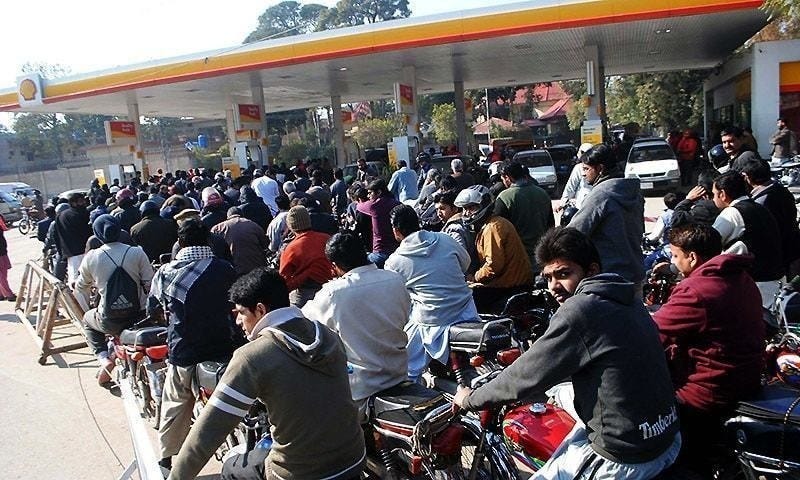
Muhammad Zubair is a plumber. He works in Islamabad and sends money home to Muzaffarabad, where his family lives. He travels by motorbike, which matters because in March 2026, fuel prices in Pakistan recorded the largest single-week jump in the country’s history, petrol crossing Rs. 320 per litre, a 20 percent increase in seven days. Zubair told Al Jazeera that the cost was eating into his savings and that his plans to go home a week before Eid had collapsed. He might have to stay in the city. The strait between him and his family is not water. It is price.
On February 28, 2026, the United States and Israel launched joint airstrikes on Iran, killing Supreme Leader Ayatollah Ali Khamenei and several senior officials. Iran retaliated with missiles and drones across the Gulf. On March 2, Iran declared the Strait of Hormuz closed. The government of Pakistan called it a tragedy. That same government was assembled, in the weeks following February 2024, after an election in which the counting was stopped on election night, resuming hours later with results that bore little relationship to the tallies recorded in polling stations across the country.
Both of these things are true simultaneously. They are not two stories. They are one story about a state being asked to survive an external shock it has no capacity to absorb and no political authority to manage.
It is now April 3, 2026. The Strait has been effectively closed for thirty-two days. The International Energy Agency has called this the largest supply disruption in the history of the global oil market. For countries like South Korea and Japan, it is a severe shock requiring emergency reserves and rationing. For Pakistan, which imports more than 80 percent of its energy from the Gulf and had, until February, just managed to pull its economy back from the edge of default after three years of crisis, it is something closer to an audit: a sudden accounting of every dependency the country built and never found a way out of. The war did not create those dependencies. It made them simultaneously visible and catastrophic.
This piece is filed today. The war is not background. The machines harvesting Pakistan’s wheat crop this week are running on diesel that has doubled in price in thirty days. Six LNG shipments expected in April will not arrive. More than four million Pakistanis working in the Gulf are watching drone footage on their phones and calculating how long their jobs will last. These are not separate crises requiring separate responses. They are the compound consequence of a single structural failure, accelerated by a war Pakistan did not start and cannot stop.
The Energy Arithmetic
The numbers that explain Pakistan’s exposure to the Strait closure require some disaggregation, because the official framing, that Pakistan is managing the crisis, conceals the depth of the structural problem underneath the immediate shortage.
Qatar and the UAE together supply 99 percent of Pakistan’s LNG, according to energy analytics firm Kpler. The country received between eight and twelve LNG shipments a month through 2025 and into early 2026, with twelve arriving in January alone. In March, the month the war began, two arrived. The six scheduled for April are not coming. Qatar’s QatarEnergy, which supplies Pakistan through two long-term government-to-government agreements covering nine shipments a month, has halted output at the world’s largest urea plant and cut LNG production following attacks on its Ras Laffan facilities. At a public hearing of the National Electric Power Regulatory Authority, Central Power Purchasing Agency chief executive Rehan Akhtar confirmed that LNG supplies to Pakistan are under force majeure.
What makes the current situation particularly difficult to manage is the baseline from which Pakistan entered it. The country had been running an LNG surplus through early 2026. Demand had fallen for three consecutive years, from a peak of 8.2 million tonnes in 2021 to 6.1 million tonnes by late 2025, as cheap Chinese solar panels reduced industrial consumption and grid load. The government was quietly selling excess cargoes to other countries and shutting domestic gas wells to prevent pipeline overpressure. Pakistan’s energy planning, as one analyst told Al Jazeera, had been “bound by long-term contracts with very little flexibility.” Those contracts were designed for a world in which the Strait of Hormuz stayed open. The war rendered them irrelevant inside four weeks.
Prime Minister Shehbaz Sharif went on television in March and announced emergency measures. A four-day workweek for government employees. School closures for two weeks from March 16. All in-person government meetings moved online. Fuel allowances for government offices cut. Wedding guest lists capped at two hundred people, with one main dish. The Pakistan Navy launched Operation Muhafiz-ul-Bahr on March 9, deploying naval assets to escort Pakistani merchant vessels through Gulf shipping lanes. Finance Minister Muhammad Aurangzeb chaired emergency cabinet sessions and directed the State Bank to explore expanded Letters of Credit and consortium-based financing arrangements for fuel cargoes. The government said diesel stocks provided approximately 24 days of cover as of mid-March.
Furnace oil, the primary backup fuel for Pakistan’s power grid, more than doubled in price after the Strait closure. Freight operators in Karachi report that trucking costs have doubled since February, a figure that feeds directly into the price of every good moved by road in the country, which is most of them. In the first days of March, fuel pumps in Lahore ran dry and motorcyclists queued for hours. The Washington Post reported this week that petrol station workers in Pakistan have been killed in rage-driven assaults over fuel shortages, a detail that does not appear in the government’s public statements about the situation.
Energy analyst Amer Zafar Durrani, a former World Bank official and chief executive of the advisory firm Reenergia, was direct with Al Jazeera about the limits of what has been announced. The austerity measures could work in the short term, he said, but they leave the main driver of fuel demand largely unaddressed. Salary cuts and procurement freezes mainly affect public finances and do little to reduce national fuel consumption. “The biggest risk does not come from oil prices alone,” he said. “The real macroeconomic trigger is currency depreciation, which amplifies the impact of higher oil prices on domestic inflation.” Without structural changes, he added, every global energy shock will continue to threaten Pakistan’s economy. That last sentence is not a prediction about the future. It is a description of what has happened repeatedly across the past three decades.
The Remittance Cliff Nobody Is Talking About
While the fuel shortage commands headlines and government press conferences, a second shock is building more slowly and will prove, in the medium term, more dangerous. It threatens the one income stream that stabilized Pakistan’s economy across 2025, and it cannot be replaced by any domestic mechanism on any realistic timeline.
Pakistan received $38 billion in workers’ remittances in fiscal year 2024-25, a record, according to data cited by Al Jazeera and the Times of Oman. That figure represents roughly 10 percent of the country’s GDP, and the Gulf accounts for more than half of it. Approximately 96 percent of Pakistan’s migrant workers are based in Gulf Cooperation Council countries, according to research cited by AGBI. Saudi Arabia and the UAE alone contribute between $1.5 billion and $1.8 billion in remittances per month. There are currently 4.9 million Pakistanis working in Gulf countries, the second-largest South Asian migrant workforce in the region. The Pakistan Institute of Development Economics has warned that no fresh migration of Pakistani workers to the Gulf is likely this year, and that up to half a million may return home as the conflict continues and Gulf economies contract.
The economists have put numbers to what this means. Shahid Anwar, senior director at the Institute of Cost and Management Accountants of Pakistan, has warned that a 15 percent decline in remittances would represent a shortfall of around $3 billion, widening the current account deficit and adding sustained pressure to the rupee. “Families relying on these funds could face tighter budgets, delayed education, and reduced access to healthcare,” he said. Khaqan Najeeb, a former adviser to the Ministry of Finance, noted that the effects on expatriate employment will take time to show fully in the aggregate data, which means the worst of the remittance shock has not yet arrived in the numbers. Some analyses put the potential monthly loss, under a prolonged Gulf economic slowdown, approaching $1.5 billion per month.
To understand what these numbers mean at the household level, consider what remittances have actually done for Pakistan in the past two years. They financed, alongside IMF tranches and tight fiscal policy, a current account surplus for the first time in fourteen years in 2025. The Diplomat described that achievement, in a piece published this week, as the country’s most significant economic stabilization in a generation. That surplus is now exposed to a threat that the IMF program and fiscal discipline have no mechanism to address, because the threat originates in Gulf employment conditions and drone strikes on Saudi infrastructure.
The Pakistan Institute of Development Economics notes that Gulf employment absorbs more than a third of all new entrants to Pakistan’s workforce each year. When that channel contracts, when half a million workers come home and another half a million cannot leave, the domestic unemployment pressure combines with the inflation pressure combines with the currency pressure in a sequence that has no internal solution. It can only be waited out, and the waiting has a cost that falls on the people with the least capacity to absorb it.
There is a human dimension to this that aggregate data cannot hold. Murib Zaman was a Pakistani driver in his forties working in the Gulf. He was among the civilians killed during Iranian attacks on Gulf infrastructure, according to Foreign Policy magazine’s reporting from March 30. He was not a combatant. His income was the primary economic connection between his family and whatever stability they had. The missiles were not aimed at him, and the Strait was not closed to inconvenience him, but the architecture of Pakistan’s economy, built around his labour and his monthly transfer, contained no circuit breaker for the war now unfolding.
Karachi port has provided the one genuinely unexpected positive signal in the current picture. As shipping lines redirect routes away from the Gulf, the port has seen an extraordinary surge in transshipment traffic. In the first 24 days of March alone, it handled a volume of transshipment containers roughly equal to what it processed in all of 2025, according to the Diplomat. The Diplomat described this as a possible signal of Pakistan’s potential role as a regional logistics hub in an unstable neighbourhood. It is also, more precisely, a demonstration of what Pakistan’s geography is worth when circumstances force the calculation. The address has value that is not being systematically monetized.
The Food Emergency That Is Still Arriving
The energy crisis is measurable today. The food crisis will be measurable in October, when autumn prices reflect what was not planted in April, and again in January, when the second-order consequences of the compromised harvest reach the urban poor who are least able to absorb them. It is building now, in the fields where tractors are running on expensive diesel and in the warehouses where urea bags cost what the farmers buying them cannot afford.
Pakistan describes itself as an agrarian economy. The accuracy of that description depends on how insulated the agriculture is from global energy markets, and the answer in April 2026 is that it is not insulated at all. Diesel is the backbone of Pakistan’s agricultural and freight economy, as Khalid Waleed of the Sustainable Development Policy Institute in Islamabad told Al Jazeera. Combine harvesters, threshers, tractors, and the trucks moving grain from field to flour mill all run on high-speed diesel. Pakistan’s wheat harvest begins in April. It is beginning now, this week. The machines working the fields this month are consuming fuel that costs more than it has ever cost, and the farmers operating those machines are making decisions about consumption that will determine yields that will determine bread prices that will determine whether the urban poor in Orangi Town and Lyari eat what they ate last year.
The fertilizer crisis runs alongside this and is in some respects the more serious emergency, because it operates on a longer lag and has fewer short-term alternatives. More than a third of globally traded fertilizer transits the Strait of Hormuz, according to the International Food Policy Research Institute. Qatar’s QatarEnergy has halted output at the world’s largest urea plant. Bangladesh has closed four of its five fertilizer factories. Some fertilizer plants in Pakistan have also been forced to cut or halt production, NPR reported, as domestic natural gas prices spiked in response to the LNG supply collapse. Urea export prices from the Middle East rose by roughly 40 percent between February and mid-March, from under $500 to above $700 per metric tonne, according to Argus, a commodities pricing agency.
The Morningstar analyst Seth Goldstein has warned, according to Reuters, that nitrogen fertilizer prices could roughly double from current levels and phosphate prices could climb by about 50 percent. The UN Food and Agriculture Organization’s chief economist, Máximo Torero, has been direct about the absence of any quick remedy. “The loss of Gulf exports creates an immediate global shortfall with no quick substitutes,” he said. He added that unlike oil, for which countries maintain strategic reserves, there are no strategic international fertilizer stockpiles. Countries that found alternatives after Russia’s 2022 invasion of Ukraine disrupted that market did so partly by increasing imports from the Middle East. That option is unavailable this time. The Middle East is the disrupted source.
The northern hemisphere sowing season runs from mid-February through early May. What is not applied to fields in this window will not appear in yields in autumn. What does not appear in autumn yields will appear in food prices in winter, and it will appear hardest in the cities, where the connection between a farmer’s decision about urea and a family’s budget for flour is invisible until it isn’t. Waleed told Al Jazeera that once the wheat harvest gets under way fully in April, food prices could spike well beyond their current levels. The harvest is under way now.
The government announced emergency austerity measures. It did not announce an emergency fertilizer strategy. That distinction is not a technicality.
The Roof That Saved Pakistan from Itself
Against all of the above, Pakistan has one structural buffer, and it exists not because the state planned for it but because the market found a way around state failure.
Since 2022, Pakistan has imported approximately 42 gigawatts of Chinese solar panels, according to Carnegie Endowment for International Peace. Renewables now generate roughly 30 percent of the country’s power, up from 3 percent in 2020. Between 2021 and February 2026, the solar build-out is estimated to have avoided more than $12 billion in oil and gas import costs, according to a report cited by the New Republic. Solar panels do not pass through the Strait of Hormuz. The ones already fixed to rooftops in Lahore and factory roofs in Sialkot generate electricity independent of what happens in the Gulf, what rate the rupee trades at, or what the IMF says about the next disbursement. According to the National Electric Power Regulatory Authority’s State of Industry Report 2025, solar panels now generate between 9,000 and 10,000 megawatts daily during winter months, substantially reducing demand on the gas-fired grid.
This happened because Chinese panels became cheap and Pakistani consumers and businesses, facing escalating electricity bills and chronic load-shedding, bought them. The government did not design a solar strategy. It tolerated an import that served its people’s material interests, and that tolerance produced, almost by accident, the single most useful buffer against the exact crisis now unfolding. The New Republic, in a piece published this week, described Pakistan as having “enjoyed a stunning solar boom” and observed that countries which invested in renewables since 2022 are now seeing the value of those investments as the Strait crisis bites.
The buffer is real and it has a limit that the government has not yet acknowledged publicly. Winter electricity demand stands at around 15,000 megawatts. Peak summer demand last year exceeded 33,000 megawatts. The gap between what solar can produce and what the country needs in July is filled by furnace oil-based and gas-fired backup generation. Furnace oil now costs more than double its pre-war price. When summer arrives, in June and July, the buffer that saved Pakistan from the worst of this winter will not be sufficient for the load, if the Strait remains closed and LNG deliveries continue to fail. This is the central energy planning fact of the next twelve weeks, and it is not being treated with the urgency it deserves.
The War-Gaming: What Islamabad Can and Cannot Do
The question of what Pakistan actually does from here requires setting aside the language of official statements, which are calibrated to perform stability for multiple audiences simultaneously, and working through the real constraints.
Official neutrality is the correct posture for Pakistan, but correct for a specific and limited reason: any deviation from it threatens something the country cannot afford to lose. The IMF program is the fiscal floor under everything. The Saudi Strategic Mutual Defence Agreement, signed in September 2025, creates the visual appearance of alignment with Riyadh without mandating automatic military intervention, a distinction that Pakistani diplomats have been carefully maintaining in every public statement. Defence Minister Khawaja Asif has explicitly ruled out military participation in any campaign against Iran. Sharif met Crown Prince Mohammed bin Salman in Jeddah around March 12, expressed “full solidarity and support” for Saudi Arabia, and then continued engaging Iranian officials the same week. Analysts have described this as “limited alignment without military entanglements.” It is also the only combination of moves that keeps all the necessary relationships alive simultaneously.
The three-border exposure problem structures every decision Islamabad makes. To the west, the 900-kilometer border with Iran is the perimeter of a war zone. Cross-border community ties in Balochistan, the sectarian militia presence that predates this war, and the history of communal violence mean that the conflict does not stay tidily at the border. To the northwest, Pakistan is fighting a separate kinetic conflict with Afghan-based militant groups while attempting to hold neutrality in the Iran war. These two conflicts have different causes but share geography and share the security forces trying to manage them. If one escalates, it draws from the capacity managing the other, and the state has limited reserves of either.
On March 20, Chief of Army Staff Field Marshal Asim Munir met Shia clerics in Rawalpindi and warned that “violence in Pakistan, based on incidents taking place in another country, will not be tolerated,” asking the clerics to maintain social harmony and counter sectarian narratives. The meeting was necessary because public sentiment in Pakistan has run strongly in sympathy with Iran, complicating the government’s official neutrality and creating a domestic environment in which the state is perceived as privately aligned with Riyadh while telling its population something else. Videos of Sharif previously praising Donald Trump and nominating him for the Nobel Peace Prize resurfaced in March and drew significant criticism on social media. Managing the gap between the diplomatic posture required for survival and the public sentiment of the people being governed is itself a full-time job for this administration, on top of the energy crisis, the food crisis, and the remittance threat.
The grey-market energy corridor through Taftan and Panjgur is not improvised. Under current conditions it is state-tolerated survival infrastructure. Iranian fuel is moving through those crossings because the alternative is that industries shut down faster than they already are. The United States knows this. The question of whether secondary sanctions follow is one Washington has not yet answered, and the delay is almost certainly deliberate. Pressing Pakistan on the Taftan corridor forces a binary choice: Pakistan’s fiscal stability, which the IMF program underwrites and which Washington broadly supports for its own strategic reasons, or a sanctions enforcement posture that makes no sense when Islamabad is simultaneously the most useful deniable interlocutor in the Iran conflict available to the United States.
Pakistan’s value to Washington in this moment is its address. It shares a border with Iran. It has functional relationships with both Tehran and Riyadh. It has nuclear weapons and has not used them. It has a military the United States has been transacting with for seven decades. That value disappears the moment Pakistan takes a side openly, and it also disappears if Pakistan becomes too internally destabilized to function as an interlocutor at all. The United States has a material interest in keeping Pakistan governable. That interest is not altruistic, but it is currently operative, and Pakistan’s diplomats should be explicit about using it.
The survival scenario that follows from all of this, worked out from Islamabad’s perspective: hold the neutrality, hold the IMF program, hold the borders, survive the summer. If the Strait reopens before peak electricity demand in June and July, the solar infrastructure may be sufficient to prevent full-scale power collapse. If it does not reopen, the scenario changes in ways the government has not been honest with the public about. Furnace oil-based backup power becomes unaffordable at the required scale. Industrial load-shedding extends beyond the current disruption into something closer to production shutdown in the textile and manufacturing sectors. The rupee comes under sustained pressure from multiple directions at once: oil import costs, the beginning of measurable remittance decline, a widening fiscal deficit as energy subsidies become impossible to sustain while tax revenues from a slowing economy fall. Food inflation from the compromised harvest season begins feeding into retail prices in earnest. The IMF quarterly review, with its targets and conditionalities, arrives in this context.
At that point, the question of whether this government can ask its people to bear the cost of what is coming becomes not a political question but a governing one. A government the country does not believe in cannot mobilize the country. And mobilizing the country is what surviving this summer requires.
What a Government Serious About Survival Would Do
There are structural interventions available to Islamabad. Some require political will that this government has not displayed. Some require only administrative decision, which is a lower bar. All of them require urgency that the current posture has not produced.
The solar infrastructure already on the ground is the most important asset Pakistan has for the coming summer. The problem is that it sits on rooftops and is not yet adequately connected to industrial load or to battery storage that could extend its usefulness into the evening hours when solar generation drops and grid demand peaks. Emergency procurement of grid-scale and household battery storage, which unlike solar panels is not yet widely deployed in Pakistan, would extend the hours during which solar generation reduces demand on oil-fired backup capacity. Removing remaining import duties on solar equipment and storage technology would accelerate what the market is already doing without government support. This is an administrative decision. It can be made this week and take effect within days.
Durrani’s suggestion that Pakistan shift more freight from road to rail is structurally correct and chronically underimplemented. Road freight runs on diesel. Rail is electrifiable. The diesel crisis has created an economic incentive for the shift that has not previously existed at this magnitude, and the harvest season, when grain moves from fields to mills to storage, is precisely the moment when the volume of diesel-dependent freight is highest. Subsidizing or mandating rail for bulk commodity transport this season would reduce fuel demand at its heaviest pressure point without requiring any energy import or technological development that doesn’t already exist.
The fertilizer shortage is the emergency with the longest lag and the fewest short-term substitutes. Pakistan could, as some other countries are beginning to do, use domestic coal as a feedstock for ammonia and urea production, reducing dependence on Gulf LNG for fertilizer manufacturing. This is not a clean solution. It carries environmental costs and requires facility retrofitting. The alternative is farmers applying less fertilizer to the 2026 crop than agronomists recommend, with consequences that will materialise in yields in October and in food prices in the winter, falling hardest on the households least able to absorb them.
The CPEC corridor is the most underutilized negotiating asset available to Pakistan in the current crisis, and the war has made its value legible in a way that peace never quite did. If the Strait of Hormuz remains closed, the Karakoram Highway and the western alignment of CPEC represent the only reliable overland route through which China can access Gulf energy supplies. China is currently benefiting from Pakistani geography without compensating Pakistan adequately for the provision. The proposal that Pakistan formalize a transit arrangement, paid not in debt instruments but in infrastructure investment, technology transfer, or direct commodity support, is a fair market rate for an irreplaceable service. The current arrangement has China benefiting from the corridor while Pakistan services the Chinese debt accumulated building it. That asymmetry does not require a war to correct, but the war has made the correction overdue in a way that is now visible to everyone.
A related idea, circulating in policy circles but not yet subjected to legal scrutiny, deserves serious attention and a clear flag about its status. Gwadar, already designated a special economic zone, sits outside the main Pakistani customs territory. The argument being made informally is that a refining facility in Gwadar could process Iranian crude on Pakistani soil, with the resulting petroleum product re-entering domestic or export markets as a processed commodity rather than a sanctioned import, providing a legal buffer between the feedstock and the finished good. The geographic and economic logic is coherent: Gwadar’s SEZ status, its proximity to the Iranian border crossing at Taftan, and Pakistan’s severe shortage of domestic refining capacity all point in the same direction. Whether that legal buffer holds under US secondary sanctions law, specifically under the Iran Freedom and Counter-Proliferation Act and related executive orders, is a question that requires a qualified sanctions attorney and a careful State Department reading. What the idea represents, if it holds legally, is a way to convert Pakistan’s most politically sensitive geographic liability into a productive economic asset. That possibility is worth examining with full seriousness rather than institutional caution.
The governance intervention that none of the above can substitute for is the simplest to state and the least likely to happen. A national emergency of this magnitude requires a government with the political authority to ask its people for things. That means creating an emergency national council that draws on technical expertise and civic leadership beyond the existing coalition. It means being honest with the public about what the summer will bring, which no government that fears its own people can bring itself to do.
The Legitimacy Problem Has No Technical Solution
When a government asks its people to endure wartime sacrifice, to pay more for petrol and less for food and keep their children home from school, it needs standing to ask. The standing comes from one source: the reasonable belief of the governed that the government making the request was formed by their decisions.
The Shehbaz Sharif government does not have that standing, and the reasons are part of the public record. The February 2024 election was conducted with the internet shut down on polling day. Vote counting was stopped on election night in multiple districts and resumed hours later with results that differed significantly from the tallies recorded at polling stations. The Commissioner of Rawalpindi admitted in public that the results in his division were manipulated under his watch. The US, UK, and UN Secretary-General António Guterres all called for investigations. The Brookings Institution’s analysis of the election noted that Pakistan had been downgraded to authoritarian regime status for 2023 by the Economist Intelligence Unit, and that the incoming coalition would function as a junior partner to the military establishment. The election commission went silent.
The coalition that emerged from that process is now the government asking Muhammad Zubair the plumber to cancel his Eid plans and asking farmers in Punjab to absorb fuel prices that make the harvest barely viable. The political economy of shared sacrifice requires a government that people believe made decisions on their behalf. This one was not formed by those people’s decisions, a fact that has not been forgotten by the people being asked to sacrifice, whatever the government’s communications strategy implies.
There is a harder version of this problem that goes beyond the specific circumstances of one election. Pakistan’s governance failure is not an anomaly produced by 2024. The military’s role in the formation and removal of successive governments, the systematic weakening of civilian institutional capacity, the hollowing out of state competence across seven decades of rotating power, the dependency on the IMF that requires keeping the population fiscally constrained enough to manage the current account — none of this began with the current administration and none of it will end with it. The current crisis is acute precisely because the chronic conditions left no margin for a shock of this magnitude. The hard-won current account surplus of 2025 took fourteen years to produce. The war in Iran threatened it in five weeks.
A government with genuine popular authority could ask its people to bear this together. It could mobilize civic energy rather than suppress it, build national consensus rather than manage public perception, and create the conditions under which sacrifice feels collective rather than extracted. This government cannot do that. It can manage the logistics of the crisis, which it is doing with variable competence. It cannot manage the political dimension of the crisis, because the political dimension requires a relationship with the population that was foreclosed before the crisis began.
When Sharif tells the nation “the entire region is currently in a state of war,” he is stating a fact. When he asks Zubair the plumber to stay in Islamabad instead of going home for Eid, he is asking someone who has watched fuel prices record the largest single-week jump in Pakistani history in the middle of Ramadan, someone whose candidate won the most seats in February 2024 and was not allowed to govern. The distance between what is being asked and the authority of the person asking it is not a communications problem. It is a structural condition. No press conference resolves it.
The Sequence, Filed Today
Here is what the next four months look like if the Strait stays closed and nothing structural changes, laid out with the plainness the situation deserves.
April: the wheat harvest proceeds on expensive diesel. Fertilizer application is lower than agronomists recommend because urea costs what it costs. The six LNG shipments expected this month do not arrive. The power grid runs on backup fuel that more than doubled in price last month. Pakistani workers in the Gulf continue sending money home, but the pipeline of new migrants has effectively stopped and the first wave of returnees is beginning.
May: food prices begin reflecting the full diesel cost of harvesting and transporting the wheat crop. Industrial load-shedding extends as gas reserves deplete and the furnace oil required to fill the gap remains unaffordable at the necessary scale. The rupee comes under pressure from multiple directions at once: energy import costs, the beginning of measurable remittance decline, and a widening fiscal deficit as energy subsidies become unsustainable while tax revenues from a slowing economy decline. The IMF quarterly review, with its targets and conditionalities, arrives in this context and cannot be wished away.
June and July: peak electricity demand exceeds 33,000 megawatts against a grid that cannot reliably cover the gap without LNG that is not arriving. This is when the solar infrastructure, which performed well enough through winter, proves insufficient for summer load, and when the gap between what the country has and what it needs becomes impossible to manage quietly. Food inflation from the spring crop decisions starts feeding into retail prices in earnest. If half a million Pakistani workers have returned from the Gulf by this point, domestic unemployment adds to the political temperature of a country already asking questions its government cannot answer.
August: either the Strait has reopened and the LNG cargoes are moving again, and this account becomes a record of a crisis that was survived rather than a description of one that wasn’t, or it hasn’t, and Pakistan is in a crisis of a magnitude that its institutions, in their current condition, cannot manage from the top down.
The window between now and summer is real and it is closing. The structural interventions described above, battery storage procurement, rail freight for the harvest, coal-based fertilizer production, CPEC renegotiation, the Gwadar legal analysis, are not quick fixes that produce results next week. They are medium-term changes that require decisions made now to have any effect before the summer peak. Each week that passes without those decisions is a week subtracted from the time available to make them useful.
Muhammad Zubair is still in Islamabad. The wheat is being harvested on expensive diesel. Six LNG shipments will not arrive this month. The Finance Minister is in emergency meetings about Letters of Credit. Four million Pakistani workers in the Gulf are watching videos of missile strikes and calculating, with the specific arithmetic of people who cannot afford to be wrong, how long their jobs will last.
Pakistan can survive this without imported oil, for a time. It has 42 gigawatts of solar panels on its rooftops and factory ceilings to prove the point. What it cannot survive is a crisis of this scale managed by a government the country does not trust, administering sacrifice it has not earned the right to administer, without the technical urgency the narrowing window requires.
The trap was not set abroad. The energy dependency was built across seventy years of choosing imports over investment. The legitimacy deficit was built in the counting rooms of February 2024. The fertilizer exposure was built into every year of agricultural policy that treated Gulf gas supply as a permanent fixture. The remittance dependency was built into every decade of failing to generate enough domestic employment for a young and growing workforce. The war in Iran compressed all of these failures into a single season, in the final days of Ramadan, while a plumber in Islamabad calculated whether the fuel price left him enough money to go home.


