


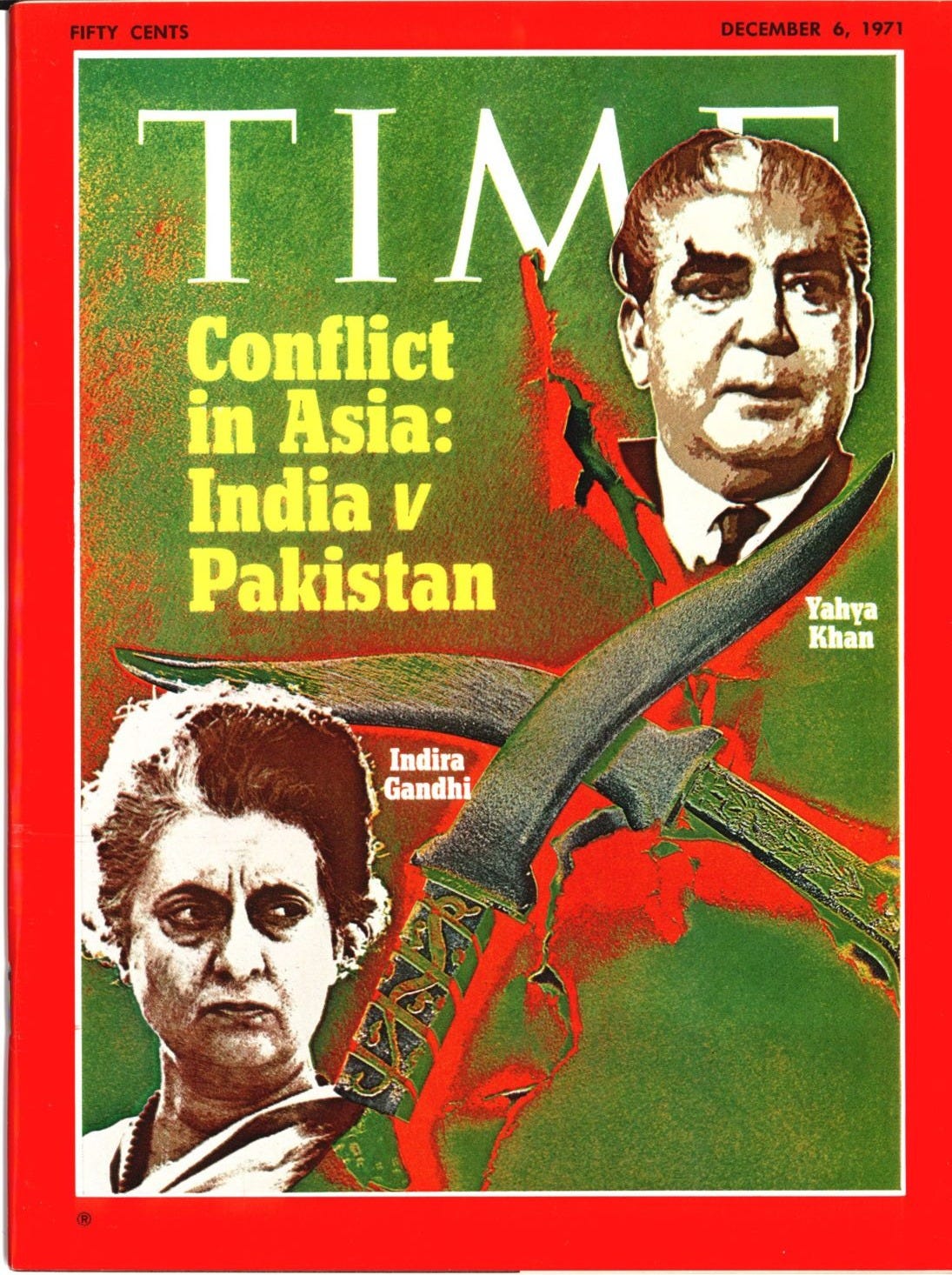
On the morning of 17 December 1971, readers of Dawn in Karachi opened a newspaper from a country that no longer existed. The banner across the top carried the president’s promise: WAR TILL VICTORY. Further down, squeezed into two columns and a couple of sentences, sat the only news that mattered. The headline read “Fighting ends in East Wing.” It could have been written for a cricket match called off for rain.
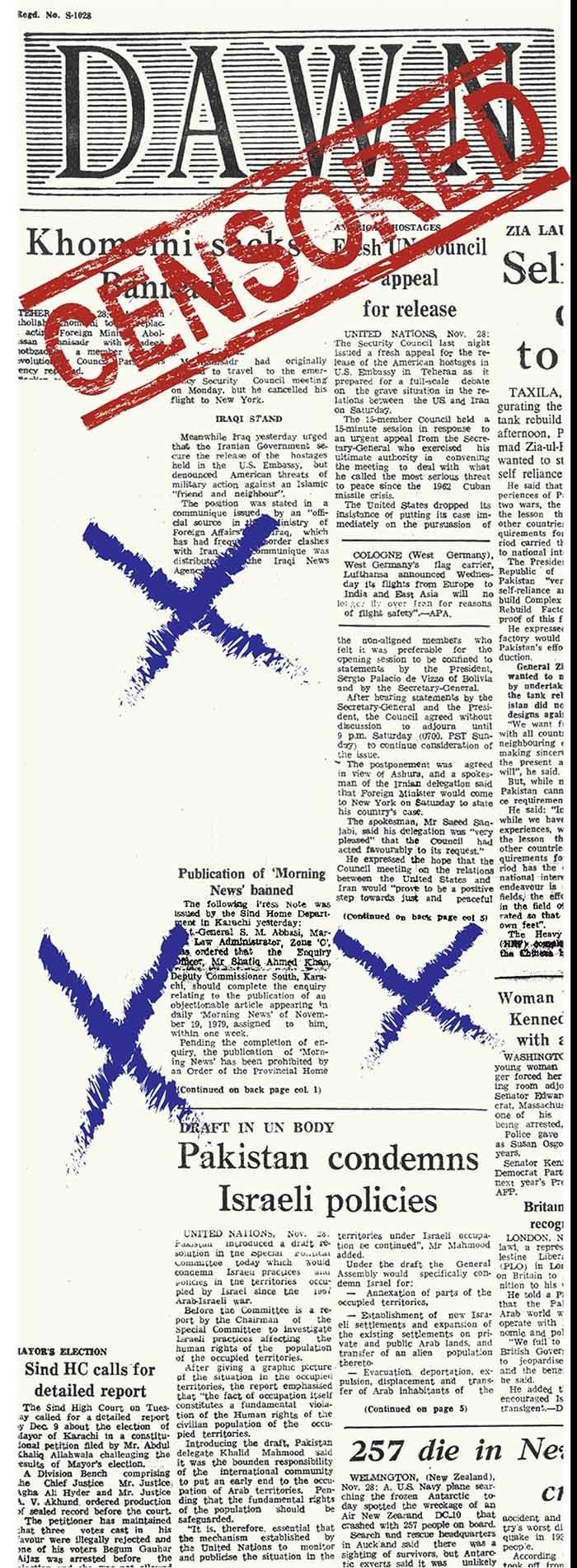
The report had been cleared in Rawalpindi. It said fighting had ceased in East Pakistan and Indian troops had entered Dacca. It did not say surrender or Bangladesh. It left out that the afternoon before, at the Race Course in Dhaka, Niazi had signed away the Eastern Command while photographers from half the world took pictures. Inter Services Public Relations had issued a statement of 27 words to cover the end of a united Pakistan. The key phrase was “following an arrangement between the local commanders of India and Pakistan.” An army of tens of thousands had laid down its arms, and the state called it an arrangement.
Four days earlier, Radio Pakistan had told the nation that “the question of any surrender is ruled out because our troops are determined to lay down their lives.” Families who wanted the truth that week did what Pakistanis would learn to do for the next half century. They tuned a shortwave set to the BBC, which reached them for about an hour in the morning and an hour at night, and listened to foreigners describe their own country to them.
The lie on that front page began nine months earlier, in the same city, on the night the army moved.
On 25 March, 35 foreign correspondents were staying at the Hotel Intercontinental in Dhaka. They had come to cover the talks between Mujib, Bhutto and Yahya. Around midnight they heard tanks and machine guns. When they asked the soldiers posted at the hotel what was happening, they got threats. One captain ordered a group of reporters back inside and shouted, “I can handle you. If I can kill my own people, I can kill you.” Soon after the firing picked up, the hotel’s telephones went dead. From the windows the journalists could see fires spreading across the city. They could not reach the streets, their sources or their editors.
The next day the army ordered every foreign newsman out of Dhaka by 6:15 in the evening. Major Siddiq Salik, the army’s public relations officer in the East, put it politely: “Some advice is obligatory.” A lieutenant colonel explained the departure was for their own safety, because it “will be too bloody.” The convoy of five trucks left after Yahya’s speech that night, with soldiers in front and behind. At the airport the luggage was searched. Television film, including the BBC’s, was confiscated. Soldiers carried out full body searches so that no notebook, photograph or sound recording of the killing could leave the province.
Simon Dring of the Daily Telegraph was 27 years old. He hid on the roof of the Intercontinental while his colleagues were loaded onto the trucks. When the curfew lifted he walked through the university, Rajarbagh police lines and the old city, and saw what the army had done. He was caught two days later and put on a plane. His report ran in London on 30 March. Almost nobody in Lahore, Karachi or Rawalpindi ever read it.
The army cut the wires and removed the witnesses. For the next nine months it was the only voice left telling West Pakistan a story about itself. The front page of 17 December was the last chapter of that story.
The machine
The blackout was planned like any other part of a military operation. Major General Khadim Hussain Raja, who helped draw up Operation Searchlight, later wrote that internal and external communications were to be shut at the start and reopened selectively under army control. Telephone exchanges, telegraph offices, the radio station and the teleprinters were targets in the same way the police lines and the student halls were targets. The point was to separate a population from its own country before the killing started, so that the killing would happen in a sealed room.
On the evening of 26 March, Yahya went on the radio. He imposed complete press censorship across all of Pakistan, East and West. He banned all political activity. He banned the Awami League outright and called Mujib’s non-cooperation movement “an act of treason.” In the same breath he said his aim was still the “transfer of power to the elected representatives of the people.” Those elected representatives had just been declared traitors. Martial law regulations followed, banning meetings, processions and demonstrations. Bhutto flew back from Dhaka and told the crowd at Karachi airport, “Pakistan has at last been saved.” Dawn printed it.
Censorship in Pakistan was nothing new. Ayub had built the Press and Publications Ordinance, seized the Progressive Papers group and turned the National Press Trust into a stable of obedient titles. In 1971 the censor’s office under Yahya stopped trimming the news and started writing it. Every story about the East passed through military hands before it reached a reader in the West. The army ran the operation, approved the reports on the operation and supplied the officers who explained the operation. Nobody else was allowed near the story.
The army also chose the words. Bengali students and policemen who resisted became “miscreants.” The Awami League, which had won the national election outright three months earlier, became a gang of secessionists. A military assault on the majority of the country’s own citizens became the “restoration of law and order.” Refugees pouring into India, eventually around 10 million of them, became props in Indian propaganda. Foreign correspondents became hostile agents. Words like these made the truth sound like treason before anyone heard it.
The state also built its own evidence. Roedad Khan, the civil servant put in charge of the government’s publicity programme and made managing director of Pakistan Television, later admitted in his memoir that he was the man “least qualified” for that job. Under him, Aslam Azhar shot a documentary called Great Betrayal, meant to show the world the crimes of Bengali rebels against West Pakistanis. When it was screened privately for Yahya, the president himself asked whether the ruined buildings on screen had really been destroyed by the rebels and not the army. He asked how anyone could tell the ethnicity of the 60 or 70 skulls shown on screen. Then he advised that the film be shown only to a small, selected audience. Even the general who ordered the crackdown could not believe his own propaganda.
On 5 August the Ministry of Information published the White Paper on the Crisis in East Pakistan. It claimed the Awami League had planned an armed uprising with Indian help and had caused 100,000 deaths during the non-cooperation movement. It said 60,000 Urdu-speaking Biharis had been killed in the months before publication. It said nothing about what the army had done since 25 March. Pakistan’s own war inquiry later complained that the white paper came too late to persuade anyone abroad. Its real audience was at home. Abroad, reporters had already seen the bodies. In Lahore and Karachi, the white paper was the only account most people would ever get.
Then came the guided tours. In April the army invited a handful of trusted Pakistani journalists to visit the East and see the “return to normalcy” for themselves. Foreign correspondents remained banned. The visitors were driven from one cantonment to the next, shown villages that had been “pacified” and filmed at staged “peace meetings” for the evening broadcasts. Most of them filed what they were expected to file. Anthony Mascarenhas did not.
The man they picked to vouch for them
Mascarenhas was assistant editor of the Morning News in Karachi. He was one of eight Pakistani reporters the army allowed into the war zone. The army chose him because it expected him to come back and confirm the official story. For six days he travelled with officers of the 9th Division headquarters at Comilla.
The officers were not careful around him. They assumed he was on their side, so they talked. At Eastern Command he heard the policy stated plainly. “We are determined to cleanse East Pakistan once and for all of the threat of secession, even if it means killing of two million people and ruling the province as a colony for 30 years.” A Major Bashir told him, “This is a war between the pure and the impure.” A Major Iftikhar explained his orders in four words: “We are on kill and burn.” Iftikhar complained that the weather had cheated him. “I burnt only sixty houses. If it hadn’t rained I would have got the whole bloody lot.”
Mascarenhas heard men being beaten to death in the compound of the Comilla Circuit House. At night in the officers’ mess he listened to otherwise ordinary men chew over the day’s kill. He watched a “peace meeting” at Laksham staged and filmed as proof that normal life had returned. The footage was made for Pakistani viewers. It showed them exactly what the army wanted them to see.
He came home shattered. His wife Yvonne later said he told her that if he could not write what he had seen, he would never be able to write another word again. He could not write it in Pakistan. Every line he filed would pass through the same censor who had blessed the tour. So he flew to London and walked into the office of Harold Evans at the Sunday Times. He then went back to get his family out, because once the story ran there would be no going home. On 13 June 1971 the paper printed his account across its pages under a single word: GENOCIDE.
The article helped move world opinion. Gandhi later said it pushed her toward intervention. Inside West Pakistan it might as well have been published on the moon. The Sunday Times did not circulate. Foreign magazines could be banned at will. The one Pakistani journalist the army had trusted to authenticate its war became, overnight, a traitor whose name ordinary readers in Lahore never needed to learn.
The censors filled the space where the news should have been. Through the summer and autumn of 1971, West Pakistani readers got a steady diet of rebels routed, villages returning to normal, Indian plots exposed and loyal Bengalis welcoming the army. When India finally entered the war in December, the diet changed to victory.
The Dhaka papers ran reports of Pakistani advances and heavy Indian losses almost daily, right up to 16 December. While the city was being encircled, the Morning News found room for a feature on miniskirts. Recruitment advertisements kept running. In the West, newspapers carried advertisements framed as a call to jihad, asking readers to send money and even warm clothes for the soldiers. Patriotic songs filled the radio. Niazi called the BBC the “Brahman Broadcast” and told the press that Dhaka would fall only over his dead body, only after Indian tanks rolled across his chest.
The generals came to believe their own bulletins. A Pakistani writer who went through the Morning News and the Pakistan Observer for the last weeks of the war concluded that the surrender came as a huge shock to many military men. When the Indian tanks reached Dhaka there was no chest to drive them over, only a table at the Race Course and a pen.
What the blackout was protecting
The propaganda of 1971 protected an economic arrangement. The money came from jute, the golden fibre grown in the wet fields of Bengal.
Jute was Pakistan’s great export. As late as 1960, roughly 70 percent of the country’s export earnings came from the East Wing, mostly from jute and tea. Bengali peasants grew it, soaked it, stripped it and sold it for very little. The foreign exchange it earned went to the centre, and the centre was in the West. It paid for the machinery that built the textile mills of Karachi and Lyallpur, the dams and canals of the Punjab, the new capital in the Margalla hills. By 1971 the East’s share of exports had fallen below half, as the mills its earnings had paid for in the West began exporting cloth and yarn.
At independence, income per head in the East was 94 percent of the West’s. By 1960 it had fallen to 76 percent. By 1970 it was 67 percent, roughly $160 a year for a Bengali against $240 for a West Pakistani. In the first half of the 1960s, the so-called decade of development, per capita income grew 4.4 percent a year in the West and 2.6 percent in the East. The government’s own Fourth Five Year Plan admitted that “the agricultural break-through was limited to West Pakistan.”
West Pakistanis ran the state that managed this. The civil service was dominated by West Pakistanis. The army recruited overwhelmingly from Punjab and the northwest. Every army division was stationed in the West except one, the 14th, in Dhaka. The air force and navy were headquartered in the West. Bengal produced the surplus and a West Pakistani establishment of generals, bureaucrats and industrialists decided how to spend it.
That establishment did not represent West Pakistan’s poor either. In 1968, Mahbub ul Haq, the chief economist of the Planning Commission, told an audience in Karachi that 22 families controlled about two thirds of the country’s industrial assets, 80 percent of its banking and 79 percent of its insurance. The Punjabi mill worker in Lyallpur and the Sindhi hari on a feudal estate were not getting rich off Bengali jute. Their sons were being recruited to guard the system that took it. The blackout hid this best of all. The West Pakistani public was told it was defending the nation against Bengali treachery. In fact the nation’s poor in both wings were being set against each other to protect the profits of a few dozen families and the budgets of one institution.
Bengalis understood all of this long before 1971. They had fought over language in 1952, when police opened fire on students in Dhaka. They had watched relief arrive late and thin after the cyclone of November 1970 killed hundreds of thousands along their coast. Mujib’s Six Points, first put forward in 1966, were at heart an economic programme. They demanded that each wing control its own foreign exchange and its own taxes. Bengal wanted to keep the money its jute earned.
In December 1970, Pakistan held its first general election based on adult franchise. The Awami League won 160 of the East’s 162 seats and with them a clear majority in the National Assembly. Mujib had won the right to form the government of all Pakistan. The men who controlled the state could not accept a Bengali prime minister writing a constitution that would hand Bengal its own money. On 1 March 1971 Yahya postponed the assembly indefinitely. Three weeks later he sent in the tanks.
None of this economic history reached the West Pakistani public in 1971 in any form they could use. They were told Bengalis were ungrateful, misled by Hindus, and in league with India. The blackout hid the killing and the reason for it.
Twenty-nine years in a locked drawer
The war in the East lasted less than two weeks. Pakistan struck Indian airfields on 3 December. On 16 December Niazi surrendered. He had commanded about 40,000 regular troops, most of them scattered in what his own colleagues called penny packets along the border, with only about 5,000 left to defend Dhaka. Gul Hassan later wrote that around 45,000 soldiers were still fit to fight when the order came. Together with paramilitaries, police and civilians, some 93,000 people went into Indian captivity, the largest surrender since the Second World War.
Yahya was supposed to address the nation on the night of the surrender. He was reportedly too drunk. A recorded speech went out the next day, promising, against all evidence, that the war would go on. That is where Dawn got its banner. Pakistan Television showed footage of the Dhaka ceremony a couple of times and then stopped, reportedly because angry crowds were gathering in the cities. For the first time in nine months the public had seen something the army had not approved, and it was too much to show twice.
The anger was real and it reached the barracks. When the chief of general staff, Abdul Hamid Khan, tried to explain the defeat to a hall of officers, they shouted him down and demanded that Yahya and his generals resign. Within days they did. On 20 December Bhutto took over as president and chief martial law administrator, the only civilian in the country’s history to hold that title. In his first broadcast he promised a “new Pakistan” and mocked the “fat generals” who had dragged the country down. He said nothing about Bangladesh. Officially, Pakistan went on speaking of “East Pakistan” for more than two years.
The new government’s first serious act on 1971 was to set up an inquiry. On 26 December 1971 Bhutto appointed the Chief Justice, Hamoodur Rahman, to head a War Enquiry Commission. Its brief was to examine how the army had come to surrender in the East. It interviewed hundreds of witnesses and, once the prisoners of war came home, the commanders themselves. The supplementary report went to Bhutto on 23 October 1974.
The commission did not spare the army. It found that troops had committed arson, mass killings, the murder of intellectuals and professionals, and the rape of Bengali women as an act of revenge. It found that Hindus had been singled out. It called the surrender premature and said Yahya had “permitted and even instigated” it. It said that the army’s involvement in government since 1958 had bred corruption and rotted the professional competence of its senior officers. It recommended that Yahya and his senior commanders face public trial. It named generals for court martial, Niazi among them.
Twelve copies of the report were made. Bhutto refused to publish it. He reportedly feared it would demoralise an army he still needed. In 1976 he told Hamoodur Rahman that the report was missing. The generals were never tried for what happened in the East. Three senior officers faced proceedings in 1972. The rest retired, wrote memoirs and blamed each other, the politicians, the Bengalis and India. Yahya died in 1980 a free man.
The report stayed buried for 29 years. Pakistanis finally read parts of it in August 2000, when India Today and Dawn published leaked chapters. Only then did Musharraf’s government declassify it, and even then the most sensitive political and military sections reportedly remained marked top secret. The commission’s own estimate of the dead, about 26,000, was absurdly low next to the three million claimed by Bangladesh and the roughly 269,000 calculated by a 2008 independent study. Yet even that low figure, written by a Pakistani judge for a Pakistani government, was kept from the Pakistani public for a generation.
After the war the blackout moved from the censor’s office into the school curriculum. Children in Punjab grew up learning that East Pakistan was lost to a Hindu conspiracy and an Indian invasion. The election of 1970, the cancelled assembly, the night of 25 March, the camps, the refugees and the kill-and-burn orders were left out. Faiz went to Dhaka in 1974 and came back with a poem about returning as a stranger to a place that had been home. Most of his readers had no idea what he was grieving.
The same playbook, new provinces
Fifty-five years later the army runs the same playbook with better technology.
Balochistan is the clearest case. Gas was found at Sui in 1952 and for decades it heated kitchens and ran factories in Punjab while most Baloch towns went without it. Today the prize is Reko Diq, one of the largest copper and gold deposits on earth. Barrick Gold, a Canadian company, owns half of it. Three federal state companies own a quarter. The province whose land it is gets the other quarter. A federal finance minister once claimed the project’s income would exceed $100 billion. Chagai, the district where it sits, remains one of the poorest in Pakistan.
In return Balochistan gets checkpoints and disappearances. The Baloch call the missing their sons and brothers. The state calls them terrorists or says nothing at all. And when something happens that the state would prefer the country not see, the province is switched off. On 6 August 2025 the Balochistan home department suspended mobile internet in all 36 districts until the end of the month, citing “security reasons.” A petitioner told the Balochistan High Court the shutdown had come “without any plausible justification.” Students, shopkeepers and freelancers lost their livelihoods. The court ordered service restored where there was no threat. In November the province went dark again for a week. In February this year, after coordinated attacks in Nushki, Quetta and elsewhere, mobile data was cut for five straight days. Officials promised to restore it because the situation was “returning to normal.”
The army used the same phrase about Laksham in 1971, while Mascarenhas listened to men being beaten to death in the Comilla Circuit House.
Now add Khyber Pakhtunkhwa. On Sunday, 11 October, the president proclaimed an emergency and governor’s rule in the province under Articles 232 and 234 of the Constitution. The army was deployed under Article 245. The law minister announced that the elected provincial government had “ceased to exist.” Its powers passed to the governor, who answers to Islamabad, and to an 11-member advisory council that nobody in the province voted for. One of its seats is held by a retired lieutenant general. Another holds the portfolio of mines and minerals. A separate secretariat will run twelve districts directly from the federal capital. Earlier reports said the list included the former tribal areas, where the army has run operations on and off since 2004.
The reason given is terrorism. The government cited a 196 percent rise in attacks over two and a half years and accused the provincial government of an “unholy alliance” with militants. It offered no public evidence for that charge beyond reports it attributed to its own intelligence agencies. The timing tells a different story. The chief minister, Sohail Afridi, was leading a march on Islamabad to demand the release of Khan, the jailed former prime minister. He had refused to allow new military operations in the province. His assembly had stalled a minerals bill that critics across the political spectrum said would hand control of KP’s mineral wealth to federal bodies, in breach of the 18th Amendment. Afridi says federal governments have imposed military operations on KP since 2004 and that people displaced by them are still waiting for compensation. Now the province’s elected leadership has been removed in a single weekend, and a man appointed from the centre holds the minerals portfolio.
The information war runs alongside. Section 144 is in force across Rawalpindi until 8 November. The amended cybercrime law passed last year makes spreading “false” information a crime punishable by up to three years in prison, and the state decides what is false. X was blocked nationwide for more than a year. Journalists who report from Balochistan and the tribal districts are harassed, charged or worse. Meanwhile, a steady flow of polished posts tells Pakistanis that the people of KP are being rescued, that Balochistan is open for investment and that critics are foreign agents. In 1971 the word was “miscreants.” Today it is “Fitna.” Both words end the argument before it starts.
KP and Balochistan are not East Pakistan. Bengal sat a thousand miles away across India, while these provinces share roads and families with Punjab. The state’s method is the same: take the resource, silence the people who live on top of it, remove the elected representatives who object and tell everyone else it is for their security. In 1971 the generals believed that method would hold the country together, and it cost them half the country.
The blackout stopped working
In 1971 the army’s propaganda worked because it had no competition. There was one radio station, a handful of censored papers and a shortwave set for anyone who knew where to tune. The army held the wires, the newsprint and the airwaves, and for nine months that was enough to keep West Pakistan believing in a war it was losing. When the truth arrived, it came from the BBC and from photographs nobody in Karachi was allowed to print.
The machine is far bigger today. ISPR runs press conferences, television talking points, dramas, films, war songs and a swarm of social media accounts that push the same lines within minutes of each other. In 2024, six judges of the Islamabad High Court wrote that intelligence agencies had pressured them over their cases. Anchors who stray come off air. A notification switches off the internet in a whole province. PECA turns a post into a criminal case. In raw capacity, the army has never controlled more of what Pakistanis can see and hear.
It has also never been believed less. A blackout needs people to have nowhere else to look, and Pakistanis now look everywhere. Videos from Turbat reach Lahore before the ISPR statement does. VPNs carried most of the country around the X ban for the year it lasted. Families of the missing livestream their sit-ins. The Hamoodur Rahman report sits online for anyone to read. Every lie now has a timestamp, and people keep the receipts.
The proof came in February 2024. The army and its allies stripped PTI of its election symbol, jailed its leader and pushed its candidates onto the ballot as independents. Voters found them anyway and made them the largest bloc in the National Assembly. Then millions watched the Form 45 tallies from their own polling stations disagree with the Form 47 results the state announced. No press advice can explain away a result sheet a voter photographed himself.
So who still cheers for the generals? The list is easy to draw up. Retired officers and their families who live off the institution’s pensions, plots and contracts. Businessmen whose deals run through the Special Investment Facilitation Council. Anchors and influencers whose access and income depend on staying on message. Politicians who owe their seats to the arrangement. Behind them stands a much larger crowd of ordinary people who say nothing because they have seen what happens to those who speak, from the missing in Balochistan to the civilians sentenced by military courts after 9 May. The army has supporters on its payroll and supporters who are afraid. It has very few left who believe it.
The generals know this. It is why KP is under emergency rule, why Balochistan keeps going offline and why the cyber laws keep getting harsher. When propaganda stops persuading, force is what remains. In 1971 force without consent cost the army half the country.
Parliament sits today to approve the takeover of KP. Members from Punjab and Sindh must vote no. Restore KP’s elected government. Keep Balochistan’s internet on. Produce the missing in court. Publish every chapter of the Hamoodur Rahman report this year.