Pakistan's Hajj Operators Are Robbing Pilgrims. The Ministry Calls It Under One Percent.
In Makkah this week, the Pakistan Hajj Mission recovered 5.5 million rupees from private tour operators who overcharged pilgrims mid-pilgrimage. Thirty-five companies received notices. The minister praised the arrangements.
While Pakistani pilgrims were circling the Kaaba this week in 45-degree heat, preparing for the most singular act of religious obligation most of them will ever perform, the Pakistan Hajj Mission was running a parallel operation in Makkah. Not a spiritual one. Officials were going company by company through licensed private operators and forcing back money that had already been collected from pilgrims, for sacrificial animal fees and for services that were either never delivered or delivered at a fraction of what had been charged.
On May 23, three days before the Day of Arafat, Radio Pakistan’s correspondent Asad Ullah Khan reported from Makkah that the Mission had recovered 74,455 Saudi Riyals from private tour operators for overcharging pilgrims. The recovered amount, equivalent to more than five and a half million Pakistani rupees, was returned to affected pilgrims on the spot. Show-cause notices were simultaneously served to 35 private companies as part of what the Mission called a crackdown on service violations. A separate set of refunds totalling 73,255 Saudi Riyals had already been processed in the days before the pre-Hajj airlift concluded. That means two rounds of forced recovery, 35 formal notices, and still, the minister for religious affairs was telling reporters that complaints about food, meals and transport from Pakistani pilgrims stood at “less than one percent.”
Nobody asked him for that number. He offered it unprompted, which means a complaint intake exists, and what is in it beyond what the Mission has already made public has not been shared.
The pilgrims now in Makkah under the private scheme paid between PKR 1.15 million and PKR 2 million each, depending on the package. Premium operators advertised five-star accommodation near the Haram, direct transport between holy sites, dedicated group coordinators, and buffet meals. The base packages advertised clean housing, functional transport and the minimum conditions under which a person might focus on worship rather than logistics. These were not holiday packages. For most families, the sum represents years of savings, sometimes a single fixed deposit held for a decade. Some pilgrims took loans. Others sold livestock or land. The journey is the fifth pillar of Islam, obligatory once in a lifetime for every Muslim who possesses the means, and for hundreds of thousands of Pakistanis the means is a one-time, never-repeatable thing.
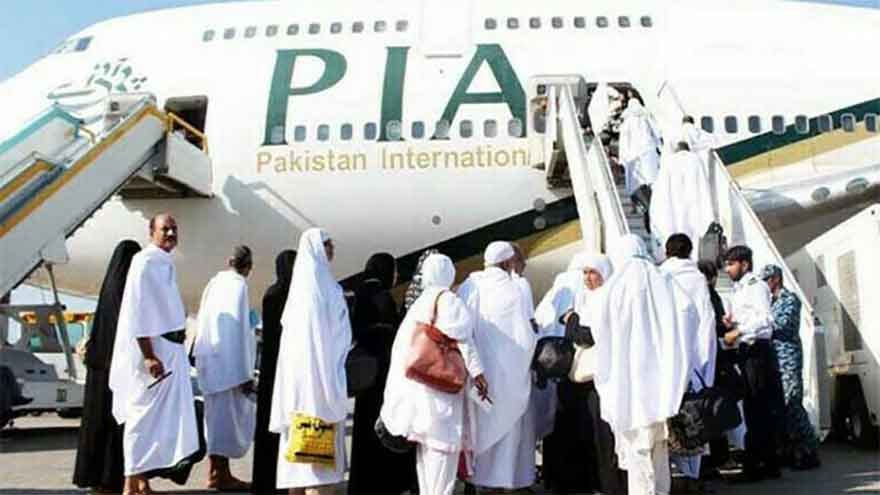
Forty-four thousand, one hundred and forty-six of them are in Saudi Arabia right now under the private scheme. They signed contracts with operators licensed and approved by the Ministry of Religious Affairs and Interfaith Harmony. They paid into official bank accounts. They arrived via the Route to Makkah Initiative at Islamabad and Karachi airports, cleared Saudi immigration before departure and proceeded directly to accommodation. The government’s architecture around this pilgrimage is substantial, bureaucratic and formally accredited. Saudi Arabia gave Pakistan its “Excellence Award” for overall Hajj arrangements in 2025.
And yet the Hajj Mission spent the days before Arafat physically recovering overcharged money from 35 of the operators running those arrangements.
On Pakistani social media this week, pilgrims and their families shared videos and voice notes describing conditions in private-scheme accommodation. The complaints are consistent: overcrowded rooms, poor or irregular food, transport that does not arrive on schedule, and coordinators who are unreachable after check-in. Some videos show accommodation far from what was advertised, with multiple families crammed into spaces intended for far fewer people. These accounts have not been independently verified in their specific details, and it must be noted that some videos circulating more broadly about Hajj overcrowding this season were separately identified by the Khaleej Times as AI-generated content not related to actual conditions on the ground. Pakistani pilgrim-shared footage is a different category from synthetic disinformation, but the inability to verify dates, locations and individual claims in social media content is real.
What social media is doing in this moment, as it has done in every Hajj season since at least 2023, is creating a pressure record that arrives faster than official reporting and faster than institutional acknowledgment. When the Pakistan Hajj Mission’s own Director General dismissed circulating videos during the 2024 Hajj as unverifiable in date and year, he was technically correct and structurally evasive in the same breath. The complaints that eventually produced forced refunds and 35 show-cause notices in 2026 did not originate in Ministry briefings. They originated in WhatsApp groups and X posts from people sitting in accommodation they had paid PKR 1.5 million to occupy.
The Ministry of Religious Affairs’ own monitoring teams, by their own admission, completed interviews with 4,913 private Hajj pilgrims before the airlift closed, and the refunds and notices that followed confirm something was found. The ministry’s assessment of what those 4,913 conversations contained has not been released.
The 2026 overcharging did not arrive without history. It arrived as a continuation.
In 2025, Pakistan’s private Hajj scheme collapsed so completely that Prime Minister Shehbaz Sharif had to personally appeal to the Saudi government for special consideration on behalf of Pakistani pilgrims who had paid and could not travel. Dawn confirmed the direct appeal. The government later acknowledged that 60,000 pilgrims were unable to perform Hajj under the private scheme that year, and confirmed that Rs 3.5 billion had been refunded. Private operators, for their part, blamed a Saudi software crash for missed payment and registration deadlines. The government and operators spent months assigning responsibility in different directions. No operator was charged. No licence was permanently revoked.
The full scale of what happened to pilgrim funds in 2025 remains disputed. Reports circulating via ARY News at the time cited PKR 36 billion in collected funds stuck in Saudi Arabia, with the Saudi government offering only to roll the money forward to the 2026 season rather than issue refunds. This figure has not been independently confirmed by the State Bank of Pakistan, the Auditor General, or any primary financial institution, and should be treated as unverified until documentary evidence exists. What is confirmed, by the government’s own public statements, is that the failure was large enough to require a prime ministerial intervention, a formal inquiry on Shehbaz Sharif’s instructions, and a 50 percent cut to the private Hajj quota for 2026.
The private Hajj quota was reduced from approximately 90,000 slots in 2025 to 60,000 in 2026. Operators who had failed to deliver the previous year were mandated to prioritize 22,097 of those slots for pilgrims left behind in 2025. The ministry announced full digitization of the Hajj process, new service provider agreements, and a strengthened complaints cell. It declared the reforms effective.
Thirty-five companies received show-cause notices inside Makkah during Hajj 2026.
The private Hajj operator market in Pakistan has functioned since 2005 under Ministry of Religious Affairs licensing. The framework is straightforward in design: operators apply for Hajj Group Organiser status, submit service agreements, pay performance guarantees, and operate under Ministry oversight. In practice, the oversight has been sporadic and the accountability has been post-hoc. Companies collect enormous sums, take pilgrims abroad where Pakistan’s writ stops at the airport, and then operate under conditions the Ministry monitors through interviews with a small fraction of total pilgrims and through a complaint cell that receives whatever complaints pilgrims are willing and able to formally submit in a foreign country during the most physically and spiritually demanding week of their lives.
The government package costs between PKR 1.15 million and PKR 1.25 million. Private packages run from that floor to PKR 2 million and above for premium tiers. The differential is supposed to buy comfort, proximity to the Haram, better food, personal coordination. What operators actually deliver against those contracts is the question the Ministry has been unable to answer systematically in twenty years of overseeing this market. The post-Hajj feedback form exists. The Pak Hajj App complaint mechanism exists. The Complaint Disposal Committee exists in Islamabad. None of these instruments work in Makkah on the night before Arafat, when a pilgrim realizes the accommodation she paid PKR 1.8 million for is three families to a room and the coordinator listed in her contract has a disconnected number.
The practice of operators overcharging, under-delivering, using pilgrims’ religious obligation as captive demand and their distance from Pakistan as operational cover, has existed longer than any of those mechanisms. No operator has lost its licence permanently over service violations. The performance guarantees collected at registration are the only financial lever the Ministry holds, and the show-cause notice is the instrument it reaches for when those guarantees prove insufficient. Thirty-five notices in a single Hajj season is the largest such action in recent memory. It is also, by the Ministry’s own framing, a sign that the system is working. The pilgrims who paid and were overcharged might describe it differently.
A pilgrim who discovers mid-Hajj that her accommodation is not what she paid for, that her coordinator is unavailable, that the food service promised in her contract is absent, has no practical recourse in the forty-eight hours before Arafat. She is in Makkah, she has waited years for this, and she will perform Hajj regardless of what was in the contract. The operator has always known this, and the licensing framework has never been designed around the asymmetry it creates.
Sardar Muhammad Yousaf issued a public message to Pakistani pilgrims in Makkah this week urging them to demonstrate “patience, discipline and unity” and to remember that “their conduct reflects the true image of Pakistan.” He said arrangements had been “significantly improved,” that facilities at Mina, Arafat and Muzdalifah were enhanced, and that accommodation, food and transport were “satisfactory.” He urged pilgrims experiencing difficulties to immediately contact Mission officials, and added that the complaint ratio for food, meals and transport stood at less than one percent.
The Pakistan Hajj Mission was simultaneously processing two rounds of forced refunds and serving notices to 35 companies. The minister offered no account of how those two realities fit into the same week.
The structural question that twenty years of private Hajj operator licensing has not answered is this: who, exactly, is being protected by the complaint system that exists, and who is being protected by the one that does not?
A licensing architecture that collects performance guarantees from operators, approves service agreements before departure, deploys monitoring teams on the ground, runs a formal complaint cell, interviews 4,913 pilgrims and then forces refunds from 35 companies mid-pilgrimage without releasing the findings of those interviews is not an accountability architecture. It is a damage-containment architecture. The damage it contains is political. The damage it does not contain is absorbed, as it has always been absorbed, by the people who saved for years and arrived in Makkah and discovered, too late and too far from home to do anything but pray, that the contract they signed in Pakistan was not the service they were receiving in Saudi Arabia.
The Hajj operator lobby, organized through the Hajj Organizers Association of Pakistan, is a registered institutional body with consistent access to the ministry. The pilgrims whose savings it holds are not. The asymmetry in that relationship is not incidental. It is the architecture.
The returned money is real and the 74,455 riyals are documented. Whether that sum represents a fraction of what was overcharged across 44,146 private pilgrims, or whether it captures the full extent of violations this season, is a question the Ministry’s unpublished interview data would answer. It has chosen not to publish it.


