
Pakistan Monthly Roundup: March 2026
Two Wars, One Austerity Order, and the People Who Paid for All Three
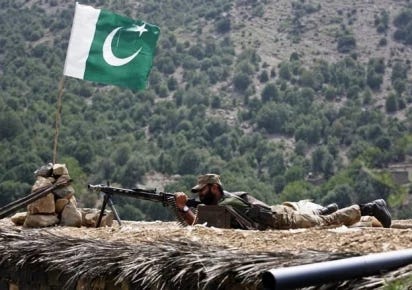
March 2026 arrived with the country fighting one war, mediating a second, and absorbing the economic shock of both simultaneously. The Afghanistan conflict Pakistan’s own defence minister had named it “open war” in February continued through its second month across the Durand Line while Operation Ghazab Lil Haq carried Pakistani airstrikes into Kabul, Kandahar, and Nangarhar. In the third week of February, US-Israeli strikes had killed Iran’s Supreme Leader Ali Khamenei, closing the Strait of Hormuz and cutting off twenty percent of the world’s oil supply. By early March the fuel shock had arrived at every petrol pump in the country, and by mid-month the Prime Minister was on television asking Pakistanis to hold weddings under 200 guests and serve one main dish. Schools closed. Offices went to four days. Delivery riders doing the same kilometres now earned less per trip.
Through all of it, the judicial machinery kept processing PTI leaders. The Baloch missing persons kept disappearing. The women who tried to march on International Women’s Day were put in prison vans before the march could begin. The VBMP protest camp outside the Quetta Press Club passed its 6,120th consecutive day. Pakistan’s political order did not pause for a war. It accelerated.
THE AFGHANISTAN FRONT
1. The Omid Hospital strike, March 17. Pakistani airstrikes hit a target in Kabul that Afghanistan’s government identified as the Omid Addiction Treatment Hospital, a 2,000-bed drug rehabilitation facility. Afghan officials reported more than 400 dead, most of them patients undergoing treatment for addiction. Pakistan denied hitting the hospital, saying it had targeted drone and explosive storage infrastructure at the location. Neither UNAMA nor independent journalists could fully resolve the account. A mass funeral was held in Kabul the following morning. Atlantic Council senior fellow Michael Kugelman told Time it was “the most escalatory moment of the conflict.” Whatever was at that address on the night of March 17, 400 people are dead.
2. The Eid ceasefire, March 19-24. Pakistan and Afghanistan agreed to a five-day pause brokered at the request of Saudi Arabia, Qatar, and Turkey. Information Minister Attaullah Tarar announced it on social media with a warning built into the same sentence: any cross-border attack would trigger immediate resumption “with renewed intensity.” Twenty-two senior clerics, eleven from each country, released a joint Pashto statement calling for a “sustainable and dignified” end. Their appeal was not acknowledged by either government. The ceasefire held for its five days and then ended.
3. Operations resume, March 26. Foreign Ministry spokesperson Tahir Andrabi confirmed at a weekly briefing that operations had resumed and would continue “until the objectives are achieved.” Within hours, artillery exchanges reopened in Kunar and Bajaur. Afghan officials reported at least two civilians killed when Pakistani forces shelled the Narai and Sarkano districts of Kunar. The Torkham crossing, shut since October 2025, had briefly reopened the same day to allow Afghan refugees to cross home. It was closed again by month’s end.
4. Families in the tunnels. Thousands of residents of Bajaur and Khyber districts were displaced or sheltering through the month. TNN reported families taking refuge in British-era railway tunnels along the border, driven out by shelling from the Afghan side. These were people whose homes happened to sit on the geography being contested, who had no say in the operation and no escape route that did not require government permission.
5. Pakistan tops the Global Terrorism Index. The Institute for Economics and Peace’s Global Terrorism Index 2026 placed Pakistan first among 163 countries for terrorism impact, the first time in the index’s history. The country recorded 1,139 terrorism-related deaths across 1,045 incidents in 2025, the highest toll since 2013. Khyber Pakhtunkhwa alone absorbed 637 deaths from TTP attacks. The index traced the resurgence directly to the Afghan Taliban’s return to Kabul in 2021, which gave TTP fighters sanctuary, weapons, and room to expand. Pakistan had spent years supporting the Afghan Taliban’s political legitimacy. The bill arrived in KPK.
6. TTP resumes attacks after its own Eid ceasefire. The Pakistani Taliban announced it had observed a three-day Eid ceasefire and resumed operations on March 24. The announcement was not addressed to any government. It was a calendar update. TTP was treating its own operational schedule as independent of the state-to-state war, confirming that Pakistan was simultaneously fighting the Taliban in Kabul and the Taliban’s ideological cousins along the same border.
7. Afghan journalists deported from Pakistan. Reporters Without Borders documented nearly 20 arrests of Afghan journalists living as refugees in Pakistan in early 2026, with at least six journalists forcibly returned to Afghanistan in the 15 days before RSF issued its March statement. These were journalists who had fled Taliban rule in Afghanistan, who had been given informal protection in Pakistan, and who were now being arrested and returned to the government they had fled. RSF South Asia head Celia Mercier said returning them “amounts to delivering them to obvious dangers: arrest, violence, and worse.” Pakistan used the open war with Afghanistan as the pretext.
8. UN records 143 deaths at Omid Hospital. UNAMA stated in late March that it had recorded 143 deaths in the Omid Hospital strike, a figure lower than Afghanistan’s government claimed but still the single deadliest incident of the conflict. The UN could not independently verify the full toll. Pakistan maintained it had struck military infrastructure, not a hospital. The building treated 2,000 patients at capacity. Both cannot be true.
THE IRAN SHOCK: FUEL, AUSTERITY, THE MEDIATION CALCULATION
9. Petrol at Rs.1.15 a litre. Within days of the Strait of Hormuz closing, petrol reached Rs.1.15 per litre and diesel Rs.1.20, a 20 percent jump in a single week. Al Jazeera reported from Karachi on March 6 with photographs of motorcyclists queuing four lanes deep at filling stations. Pakistan imports more than 80 percent of its oil from the Gulf. The price increase was the largest in the country’s history.
10. Sohail Ahmed, 27, delivery rider, Islamabad. He supports a family of seven. When Al Jazeera asked him about the government’s four-day workweek announcement he said: “There is no benefit to me if they work three days or five days a week. For me, the main concern is the fuel price because that increases the cost of every little thing.” Muhammad Zubair, a plumber in Islamabad, told the same reporter he could no longer afford the trip home to Muzaffarabad before Eid. He was saving whatever remained. Both men appear in the same Al Jazeera report. Neither appears in the Prime Minister’s address to the nation.
11. Emergency austerity, March 9-10. The Prime Minister announced a four-day workweek for federal and provincial employees, a two-week school closure from March 16, a 50 percent work-from-home rotation for government staff, a ban on in-person government meetings, and restrictions on social gatherings capped at 200 guests with one main dish. Energy analyst Amer Zafar Durrani, formerly of the World Bank, told Al Jazeera the measures could work in the short term but left the fundamental driver of demand unaddressed. The real risk, he said, was currency depreciation, which amplifies every oil price rise into a second inflation shock on top of the first.
12. Diesel, the wheat harvest, and what April will cost. Khalid Waleed, research fellow at the Sustainable Development Policy Institute in Islamabad, warned Al Jazeera in late March that Pakistan’s wheat harvest, typically beginning in April, would take the full fuel shock. Combine harvesters, threshers, tractors, the trucks moving grain from fields to mills, all run on high-speed diesel. “Trucking costs have started climbing, and that will feed into everything from flour to fertiliser in the weeks ahead.” The families spending the highest fraction of their income on food will feel this first. They are not the families the government surveys cite when it announces progress on inflation.
13. Operation Muhafiz-ul-Bahr, March 9. The Pakistan Navy launched a naval escort operation to protect oil tankers through Gulf waters and into Karachi port, working in conjunction with the Pakistan National Shipping Corporation. Iran subsequently agreed to allow 20 Pakistan-flagged ships, two per day, through the Strait of Hormuz. The concession was tied explicitly to Islamabad’s role as a message carrier. Pakistan was permitted to buy fuel because it was running diplomatic errands. The arithmetic was not concealed.
14. Pakistan as the US-Iran post office. Deputy Prime Minister Ishaq Dar confirmed publicly by late March that the United States had shared a 15-point document with Iran through Pakistani channels and that indirect talks were taking place via Islamabad’s facilitation. Dar said Pakistan was “honoured to facilitate meaningful talks.” The Foreign Office offered Islamabad as the formal venue. The Nixon-China parallel was raised in foreign policy commentary worldwide: in 1971, Pakistan under Yahya Khan served as the channel through which Washington and Beijing established contact for the first time. The structure was identical. The question neither the commentary nor the government addressed was what Pakistan received in exchange beyond being allowed to buy its own oil.
15. Three Pakistani workers killed in the UAE. At least three Pakistani workers died in the UAE during March when debris from drone strikes fell on or near their locations. They were identified as low-wage migrant workers. A driver in his forties named Murib Zaman was among those named in international reporting. Their deaths were reported in aggregate alongside Nepali, Bangladeshi, and Indian fatalities. No separate acknowledgment was issued by the Pakistani government. Their families in Punjab and KPK received their bodies.
16. The remittance warning. The Gulf hosts over 6 million Pakistani workers who contribute 54 percent of total remittances, about $38 billion a year and roughly 10 percent of GDP. The Pakistan Institute of Development Economics projected in March that fresh migration to the Gulf would stop entirely in 2026 and that up to half a million existing workers could return to Pakistan if the war continued. Shahid Anwar of the Institute of Cost and Management Accountants told the Qatar Tribune that a 15 percent decline would produce a shortfall of roughly $3 billion. “Families relying on these funds could face tighter budgets, delayed education, and reduced access to healthcare.” There is nothing hypothetical in that sentence for the families already on the margin.
17. Asim Munir briefs Shia clerics, March 20. The Chief of Defence Forces met Shia clerics in Rawalpindi to brief them on Pakistan’s diplomatic efforts and to warn that “violence in Pakistan, based on incidents taking place in another country, will not be tolerated.” The briefing was not delivered by the Prime Minister or the Interior Minister. It was delivered by the army chief, directly to religious leadership, in the city where General Headquarters is located. The elected government was visible at the press conferences. The actual management of the sectarian threat was happening elsewhere.
THE SOLAR STORY: WHAT PEOPLE BUILT WHEN THE GRID FAILED THEM
18. Vaqar Zakaria’s car runs on sunshine. He is the CEO of Hagler Bailly Pakistan, an Islamabad-based environmental consultancy. For five years his rooftop panels have covered his electricity bills, sometimes to zero, sometimes producing enough surplus to sell back through net metering. In February he bought two electric vehicles. He told Dawn in March: “I am moving away from their fuel, and I don’t need their power. I call it the hand of God driving my car.” He generates electricity at roughly Rs.12 per unit and can sell it back at Rs.26. His case is exceptional. His technology is not.
19. Pakistan avoided $12 billion in oil imports through solar. A joint report by Islamabad think tank Renewables First and the Centre for Research on Energy and Clean Air, published March 17, found that Pakistan’s rapid solar expansion had avoided more than $12 billion in oil and gas imports since 2020. The report projected a further $6.3 billion in savings in 2026 at current elevated prices. Solar module imports had reached 51.5 gigawatts cumulatively. Grid electricity demand had fallen 11 percent in FY25 compared to FY22 as households and businesses stopped drawing from the grid during daylight hours.
20. Rabia Babar, data manager, Renewables First. She has been tracking Pakistan’s solar transition since the inflection point in 2022, when global LNG prices jumped after Russia’s invasion of Ukraine and Pakistani households, already paying inflated electricity bills from the circular debt crisis, looked at the falling price of Chinese solar panels and made an economic decision. “What’s happening in Pakistan is quite significant, as electricity consumers’ dependence on the national grid is falling,” she told Dawn. The solar boom was not a government programme. It was a consumer revolt against a grid that had been failing people for a decade.
21. Nabiya Imran: solar as insurance, not just climate. Imran is an energy analyst at Renewables First. She told NPR in March that Pakistan’s solar adoption had limited the country’s exposure to the Gulf price shock in ways that no government policy had produced. “The widespread adoption of solar and batteries kind of serves as a hedge or a protection against these price shocks that the fossil fuel markets are very vulnerable to.” She called it “not just a story about climate, but also a story about risk management for energy security.” Pakistan stumbled into one of the better-prepared positions in Asia. It did so accidentally, through individual household decisions, not planning.
22. Fifty-one gigawatts of solar, almost none of it counted. Renewables First’s March 19 policy paper found that Pakistan’s energy system was being severely mismeasured. Official NEPRA data counted 6.8 gigawatts of net-metered capacity as of September 2025. The actual total, including distributed solar across households and businesses not connected to net metering, was estimated at around 32 gigawatts by mid-2025. The gap exists because NEPRA does not have a system to count generation it cannot monitor. Pakistan’s solar transition is one of the fastest in the Global South and is largely invisible to the institution that regulates the energy sector.
23. NEPRA’s February rollback: the state moves against what people built. Even as Pakistan’s solar cushion attracted international attention, the National Electric Power Regulatory Authority’s new Prosumer Regulations 2026, issued in February, ended the unit-for-unit net metering model for new installations. Households exporting solar to the grid now receive a much lower rate than they pay to import. Analysts writing in South Asian Voices in March called it “net billing” that made rooftop solar “far less financially viable at a time when Pakistan’s energy and climate security demands more, not less, decentralised generation.” The state, whose grid had failed to deliver affordable electricity for years, was now penalising the people who had solved the problem themselves.
POLITICS AND LAWFARE
24. Forty-seven PTI leaders sentenced in absentia, March 7. ATC Judge Amjad Ali Shah in Rawalpindi sentenced 47 individuals — including PTI leaders Omar Ayub Khan, Zartaj Gul, Murad Saeed, Shibli Faraz, Shehbaz Gill, and Hammad Azhar — to ten years’ imprisonment each in connection with the May 9, 2023 riots. The trial was conducted in absentia: 29 of the 118 originally accused never appeared after case registration, and 18 were consistently absent. PTI’s defence right had been handed to a state counsel. Property confiscation was ordered. Convicts were given two months to surrender and request a retrial. The Express Tribune noted that the trial bypassed “the full rigour of adversarial justice” while acknowledging the gravity of the May 9 violence. Both things were true at the same time.
25. The Election Commission disqualifies Murad Saeed. Following the March 7 conviction, the ECP formally disqualified PTI senator Murad Saeed from his Senate seat on March 25 under Article 63(1)(h) of the Constitution. Saeed had been elected from KPK in July 2025 and had not appeared to take his oath. One more seat emptied. The mechanism required no arrest, no appearance, no hearing. A court conviction produced automatic constitutional disqualification, and the ECP issued a notification.
26. Imran Khan’s eye. In January 2026 PTI officials reported that Khan was being denied medical treatment for a blockage in his retinal vein, a condition that had begun in October 2025. His lawyers submitted this to the Supreme Court in February. By March, the UK House of Lords held a short debate on his prison welfare after Labour peer Baroness Alexander raised the question. The UN Special Rapporteur on Torture had already called on Pakistan in December 2025 to address “inhumane and undignified detention conditions.” Khan sat in Rawalpindi’s Adiala Jail while his Al-Qadir Trust appeals were heard at the IHC on March 11. The eye condition was not treated.
27. PTI loses political space to the fog of war. Ahmad Bilal Mehboob of PILDAT told Express Tribune in late March that PTI’s domestic politics had been effectively submerged by the Iran war. “PTI’s politics is clearly suffering as attention shifts to the Middle East, while the government becomes more central to peace efforts.” Hassan Askari: “Even if the party wants to respond or take action, it must wait for the war to subside.” The government that spent February prosecuting the opposition was, by March, being praised internationally as a peacemaker. The timing was not accidental.
28. KPK Chief Minister faces May 9 nomination. An ATC was told on March 11 that police wanted to nominate Khyber Pakhtunkhwa Chief Minister Sohail Afridi as an accused in the case related to the May 9 attack on Radio Pakistan in Peshawar. The prosecution was described as creating obstacles to adding him. The case remained pending. The federal government and the KPK provincial government have been in open conflict over counterterrorism policy for two years.
PRESS FREEDOM
29. Waheed Murad: taken from his home, given bail at Rs.20,000. The journalist was removed from his Islamabad house by masked men. His family was not told where he was taken. The Islamabad High Court granted him bail on March 28 on a bond of Rs.20,000, the equivalent of approximately $71. No official explanation was offered for the removal. The Human Rights Research Council condemned the use of PECA, the Prevention of Electronic Crimes Act, against journalists. The Act was passed to fight cybercrime. It is used overwhelmingly against critical journalists.
30. Farhan Mallick, Karachi, arrested under PECA, March 20. Mallick was initially accused of disseminating “anti-state” content. The FIA later connected him to a fraud case involving a call centre, claiming detained suspects had identified him as a director. His attorney rejected this as an attempt to prolong detention through sequential charges. He was placed under judicial remand. The shift from cybercrime to fraud, when the cybercrime case proved difficult to hold, is a pattern documented by the Committee to Protect Journalists across multiple cases in the current period.
31. Three women journalists detained at Aurat March, March 8. Sehrish Qureshi, Farhat Fatima, and Ismat Jabeen were covering the International Women’s Day march in Islamabad when police enforcing Section 144 detained them alongside the marchers. Their press credentials did not protect them. They were briefly held and released.
32. Four journalists sentenced to life imprisonment in January 2026, still in effect. In early January, an Islamabad anti-terrorism court sentenced Wajahat Saeed Khan, Sabir Shakir, Shaheen Sehbai, and Moeed Pirzada — all in exile abroad — to life imprisonment in absentia on charges of inciting violence during the May 2023 protests. Reporters Without Borders condemned the sentences as “the criminalisation of voices critical of those in power.” Posters were placed around major Pakistani cities identifying the four as traitors. These sentences remained in effect throughout March.
33. Ahmad Noorani: two brothers held, then released; arrest warrant remains. Noorani, the co-founder of investigative site FactFocus whose March 2025 report alleged Army Chief Asim Munir had installed unqualified loyalists in senior positions, had two brothers abducted from his Islamabad home in March 2025. They were held for over a month, then released. An Islamabad court issued an arrest warrant for Noorani himself in December 2025 for alleged propaganda against the army on social media. He was living in the United States. The warrant effectively ended his ability to travel to countries with close ties to Pakistan without risking immediate detention. CPJ documented his case as part of a pattern of transnational repression.
WOMEN, BODIES, AND THE STATE
34. International Women’s Day became arrest day. Sixty-five women in prison vans. Before the Aurat March Islamabad rally could begin on March 8, police descended on the gathering in Sector F-6. More than 65 participants were put in prison vans. Section 144 had been in force in the capital since the previous week, initially imposed after protests over the US-Israeli strikes on Iran. Among those detained: Dr. Farzana Bari and two of her daughters, human rights defender Tahira Abdullah, and Rukhsana Rashid, the sister of journalist Ahmed Rashid. Lawyers and family members who went to the police station to inquire about the detained were themselves detained. HRCP general secretary Haris Khalique told Voicepk: “My wife went inside to inquire what had happened with the others, but she never came out.” The theme of the march had been “Feminist Constitution,” with demands including repeal of the Hudood Ordinance.
35. The Lahore chapter did not march. Aurat March Lahore announced it would not hold a rally in March, citing Ramadan. The Karachi chapter rescheduled to May 10.
36. Pakistan ranked 153rd out of 156 countries on the Global Gender Gap Index. This figure, from the most recent World Economic Forum ranking, was cited by marchers in several cities as context for why they gathered at all. It did not change between March 2025 and March 2026.
BALOCHISTAN: THE RECORD THAT KEEPS GROWING
37. The VBMP protest camp: 6,120 days. The Voice for Baloch Missing Persons protest camp outside the Quetta Press Club passed its 6,120th consecutive day on March 31. It was established in 2009 by Nasrullah Baloch and the late Mama Qadeer Baloch. VBMP executive committee member Niaz Muhammad told supporters at the camp that reports suggested disappearances were continuing to rise. No legislation had been passed. No mechanism had been established. The camp has been there for sixteen years.
38. Mumtaz Baloch, student, picked up in Turbat, March 28. A Baloch university student identified as Mumtaz was allegedly detained by Pakistani security forces in Turbat and moved to an undisclosed location. His family was provided no official information. VBMP took up the case. There is no court date. There is no acknowledgment of detention.
39. Imran Baloch, 26, Medical Laboratory Technology student. Originally from Naal in Balochistan, Imran Baloch was studying at the University of Sindh when he was reportedly taken from the Sohrab Goth area of Karachi on December 20, 2025. As of March 2026, his whereabouts were unknown. His family had received no information from any authority.
40. Haseeb Baloch, graduate student, Lasbela University. Detained on February 4, 2026 in Pasni in Gwadar district. His family reported no official information about his status or location as of March. Two students. Two families waiting. No case numbers, no dates, no charges.
41. Five previously missing individuals returned. The Balochistan Post documented in March that five people reported missing had reappeared: Fatima, daughter of Muhammad Jan from Panjgur district, taken January 13 and released near Hub Chowki; Zaeem and Qambar from Jiwani, Gwadar district; Saeed Ahmed from Mastung, missing since December 2025; Dildar from Buleda in Kech district, missing since August 2025, recovered in Turbat. None of the five were given any official explanation of where they had been held or by whom.
42. The Lahore rights forum ends in walkout. At a major human rights gathering in Lahore held under the banner of Asma Jahangir’s legacy, Rana Sanaullah made remarks that participants interpreted as a defence of enforced disappearances. Sammi Deen Baloch and Sheema Kermani walked out. Protesters outside demanded the release of Mahrang Baloch. Akhtar Mengal of the Balochistan National Party told the forum that residents in Balochistan often retreated indoors during security operations and that groups the state called insurgents were regarded by portions of the local population as protectors. He cited Jinnah’s unmet pledges on provincial autonomy. Former Chief Minister Abdul Malik Baloch said complaints from families of missing persons were “a constant feature” of his public meetings when he was in office.
43. BLA attacks continue through March. The Baloch Liberation Army claimed multiple attacks on Pakistani security forces through the month, including operations in Balochistan. Yasma Baloch and her husband Waseem, photographed together before conducting a suicide attack, appeared in BLA materials. Insurgent attacks in the province hit a record in 2025 according to the same Global Terrorism Index that ranked Pakistan first. Chinese and US investment in the region was cited as a factor heightening the BLA’s operational intensity. The state’s answer remained counterinsurgency. There has been no political settlement offered in Balochistan in any government’s tenure.
ECONOMY
44. Poverty rate: between 28.9 and 45 percent, depending on who is measuring. The Friday Times cited 28.9 percent against a national poverty line in March analysis. The Express Tribune, citing independent expert assessments, put the figure at around 45 percent. The range reflects a genuine methodological dispute and the absence of a recent national household survey. Pakistan’s HDI rank is 168 out of 193. Per capita income is $1,812. Adult literacy is 60 percent. Twenty-five million children are out of school. The government describes these figures as a baseline from which it is recovering. The people described by these figures are not recovering at the same speed as the headline macroeconomic indicators.
45. GDP at 3.1 percent: treading water, not recovering. ADB and UN projections placed Pakistan’s 2026 growth at 3.0 to 3.5 percent. Pakistan’s population grows at approximately 2 percent annually. Per capita income growth is therefore close to zero. The Iran war shock arrived on top of a structural production crisis the Express Tribune documented in March, with large-scale manufacturing stagnated, the agriculture sector squeezed by rising input prices and falling output prices, and farmers described as “the biggest victims” of poor policy framework and governance.
46. Food insecurity at 58.8 percent. Express Tribune reporting in March cited food insecurity affecting 58.8 percent of Pakistan’s population, a figure drawn from independent nutritional assessments. More than half the country is food insecure. The government’s stabilisation programme, which passed its IMF benchmarks, did not stabilise this.
47. The trade gap: over $10 billion, with the war shock still to absorb. Pakistan’s trade gap exceeded $10 billion before the Iran war began. The fuel price shock of Rs.55 per litre on oil and 20 percent on gas arrived on top of an already stressed current account. The Friday Times analysis in March cited this as a compounding pressure that the stabilisation narrative, built on lower inflation figures from January and February, could not sustain through April and May.
48. The State Bank holds but warns. The SBP’s monetary policy statement in March acknowledged the external environment had become “more challenging” and emphasised the importance of “timely realisation of planned official inflows.” Capital Economics analysts Gareth Leather and Mark Williams told PBS News that rather than cutting interest rates to provide households any relief, Pakistan’s central bank would likely need to raise them again because of the energy inflation. Households that had just seen a modest easing in the cost of credit were about to see it reverse.
49. Circular debt and IPP contracts: the wound beneath the wound. South Asian Voices analysis in March noted that the fundamental structural problems in Pakistan’s power sector, particularly the expensive independent power producer contracts and distribution company governance failures, remained untouched. Every energy shock passes through this structure and is amplified. Renegotiating the IPP contracts and modernising distribution companies were the preconditions for any durable power sector reform. Neither had been done. Without them, the NEPRA net metering rollback simply transferred costs from utilities onto the households who had already paid to fix the grid themselves.
DIPLOMACY
50. Pakistan-UK: climate, education, diaspora land records. Deputy PM Ishaq Dar met UK Parliamentary Under-Secretary Hamish Falconer at the FCDO in London during a March visit and agreed on strengthened cooperation in education, health, climate resilience, and governance. Dar also launched a Punjab Land Record Authority pilot project at the Pakistan High Commission in London, allowing diaspora Pakistanis to resolve land documentation disputes at home remotely. Britain is home to an estimated 1.6 million Pakistanis. The land records project, if it scales, is a practical benefit to working-class diaspora families who currently have no way to manage inheritance disputes without expensive in-person visits to Pakistan.
51. Pakistan-Saudi Arabia: the defence agreement meets its first test. Pakistan signed a Strategic Mutual Defence Agreement with Saudi Arabia in September 2025. When Iran struck Gulf states including Saudi Arabia in the weeks after Khamenei’s death, Pakistani analysts asked in public whether the agreement required a military response. Dar, at the OIC summit in Riyadh, assured Iranian officials that Saudi territory would not be used to attack Iran. No Pakistani military deployment to the Gulf occurred. The agreement was tested before its ink had dried and produced no deployable obligation.
52. Trump and Munir: the favourite Field Marshal. US President Trump described army chief Asim Munir as his “favourite Field Marshal” in public remarks and spoke with him by phone during March as Pakistan’s mediation role became internationally visible. The civilian government presented the mediation effort at every press conference. The officer it centred on was not elected by anyone.
53. The Islamabad venue offer, March 23. The Foreign Office formally offered Islamabad as the venue for direct or indirect US-Iran negotiations. Both Washington and Tehran had expressed confidence in Pakistan’s neutrality. The offer was neither accepted nor rejected by March 31. Talks, if they happened, would happen through Pakistan. Whether Pakistan’s interests would be represented in those talks, as opposed to its territory being used for them, was not addressed publicly.
SECURITY
54. KPK intelligence-based operations, March 8 and March 15. Security forces reported 13 militants killed in intelligence-based operations in northwest Pakistan on March 8, according to Xinhua. Arab News reported five militants killed on March 15. The operations continue on a cycle that produces casualty figures but no reduction in the underlying conditions: poverty, unemployment, displacement, and the absence of any political alternative in communities where TTP recruitment is active.
PEOPLE DOING THE WORK
55. Sardar Naseem, the nurse who rode 40 kilometres for a vaccination. In Dera Ismail Khan district, Sardar Naseem has been working as a Lady Health Worker for eleven years. During the March austerity period, when schools were closed and families were being told to reduce movement, she continued her rounds on a motorcycle, carrying cold chain equipment to children who would otherwise miss their polio doses. She is identified in PIDE field documentation from the district. The vaccination coverage target for her union council was met in March. She is not mentioned in any government press release about health outcomes.
56. Polio eradication: 99 percent coverage in targeted union councils. Pakistan continued its expanded polio vaccination campaign through March. In union councils where the microbe literacy interventions piloted in Sargodha had been implemented, polio vaccine coverage reached 99 percent, compared to approximately 82 percent in control areas. The methodology, which used portable microscopes to show children and parents the actual organisms vaccines target, was first piloted in February 2026. Lady Health Workers conducted the sessions. The programme is now being considered for integration into the national Expanded Programme on Immunization.
57. Nazia Bibi, 34, farmer, Hafizabad, switching to solar-powered irrigation. She and her husband farm four acres in Punjab. Their diesel-powered tube well consumed a quarter of their annual crop income before they replaced it with a solar pump in early 2025 through a State Bank concessional loan. In March, during the fuel crisis, the farmers around her with diesel pumps were paying double for the same water. Her pump ran on the same sun it had always run on. She told a district correspondent that she was now trying to persuade her brother-in-law to make the switch. The technology was not new. The financing that made it accessible to her was.
58. Solar-powered tube wells: 5.6 to 7.5 GW of distributed capacity incoming. World Resources Institute analysis published before March estimated that half of Pakistan’s roughly two million agricultural tube wells would switch to solar, adding between 5.6 and 7.5 gigawatts of distributed solar capacity to the system. For farmers like Nazia Bibi, the shift reduces input costs. For the national grid, it reduces peak daytime demand. For Pakistan’s oil import bill, it is the kind of structural change that no single policy announcement has yet achieved.
59. Young community mobilisers in 47 universities. The national Early Childhood Development Policy Framework, linked to Pakistan’s Uraan growth agenda, included the creation of Youth Peace and Development Corps on university campuses. Thousands of students were being trained as community social mobilisers, returning to their neighbourhoods with programmes on child care, stunting prevention, sanitation, and vaccination. The programme is in its early stages. Its vulnerability is that it depends on sustained political backing in an environment where student activism is otherwise treated as a threat. The students mobilising for public health face no such suspicion yet. Whether that holds depends on whether they stay within the permitted subject matter.
60. The Sargodha microbe literacy project: from 58 to 77 percent vaccination intent. First reported in the February 2026 roundup and continuing through March, the project in Sargodha district invited residents to peer through portable microscopes and see the organisms vaccines target. Of participating mothers, vaccination intent rose from 58 percent before the sessions to 77 percent after. Handwashing and food hygiene practices also improved. The team was seeking funding for a second phase to track health and nutrition outcomes. The innovation is not the microscopes. It is the assumption that people will make better decisions when given real information rather than instructions.
61. Karachi’s mangrove restoration passes 30,000 saplings planted. The community-led mangrove restoration programme along the Karachi coast, documented across multiple organisations including WWF-Pakistan and local fishing communities, passed 30,000 saplings planted in March. The mangroves protect coastline, support fish breeding grounds, and provide livelihoods for the fishing communities who plant them. The programme operates with minimal government involvement. The Karachi fishing community, among the most economically marginalised urban communities in Pakistan, receives no significant compensation for this ecological work.
62. PSL Season 11 opens behind closed doors. The Pakistan Super League’s 11th edition began on March 26 in Lahore and Karachi with eight teams, including two new franchises. All matches were held without live audiences due to the security environment. Rain abandoned the seventh match between Peshawar Zalmi and Islamabad United at Gaddafi Stadium without a ball bowled. The government had asked fans to watch from home to conserve fuel. Millions did. In the same evenings when families were calculating what the new petrol price meant for the week ahead, the tournament gave them something to argue about that was not a war.
63. Earth Hour, March 28. Pakistan joined more than 190 countries in switching off non-essential lights from 8:30 to 9:30 pm. Government buildings, Parliament, the Supreme Court, and the Presidency went dark. The Red Zone was unlit for an hour. The theme was “Give an Hour for Earth.” It was the same week in which the government was rationing fuel, schools were closed, and offices were operating four days. The symbolism and the emergency occupied the same calendar date. Neither cancelled the other.
64. Students at Aga Khan University defend research on child nutrition under resource constraints. Three graduate public health students at AKU Karachi presented their thesis research in March on stunting prevalence in peri-urban settlements of Karachi, documenting that 42 percent of children under five in their study communities showed stunting indicators. The research used community health workers as data collectors, trained over four weeks. The findings were submitted to UNICEF Pakistan for consideration in programming. These are students doing the documentation that the government’s surveys do not produce at granular community level. They will graduate into a job market that does not have enough public health positions for them.
65. Lahore school health profiling continues. The Punjab School Education Department expanded its programme of building health profiles for students across the province, collecting data on nutrition, basic health indicators, and vaccination status. The goal is to catch chronic problems early, particularly anemia, stunting, and vision issues that reduce learning capacity in children from poorer households. The programme is still in early stages. Its value depends on whether a follow-up system exists. At the moment, the data is being collected. What happens to a child identified with a problem that the family cannot afford to treat has not been publicly addressed.
THE RECORD OF ACCUMULATION
66. Pakistan’s inflation rate: 7 percent in February, direction unclear through March. Pakistan’s year-on-year inflation climbed from 5.8 percent in January to 7 percent in February 2026, according to Trading Economics. The March figure was not yet published by month’s end, but energy analysts widely projected an acceleration given the fuel price shock. The SBP’s 5 to 7 percent target range, which the February figure just exceeded, was set before the Strait of Hormuz closed.
67. The out-of-school children figure has not moved. The government’s own data places 25.2 million children out of school. This figure appears consistently across all March reporting on Pakistan’s economic indicators and was cited by the Friday Times among the structural measures of Pakistan’s fragility. No new programme launched in March. No allocation was announced. The number sat in every summary as context.
68. Ali Zafar wins defamation case, Rs.5 million fine imposed on Meesha Shafi. An Additional District and Sessions Court in Lahore ruled in favour of musician Ali Zafar on April 1, imposing a fine of Rs.5 million on Meesha Shafi. The case began in 2018 with Shafi’s harassment allegation against Zafar, which he denied, and had divided Pakistani public opinion for years. The verdict drew immediate response from both sides. It was delivered in the same week that Baloch students were being disappeared and PTI senators were being disqualified. All of it is Pakistan in March 2026.
69. The Torkham crossing: one month of partial reopenings and closures. The crossing had been shut since October 2025. It briefly reopened on March 26 to allow Afghan refugees to return home, then was shut again. Trade between Pakistan and Afghanistan has been suspended since the first airstrikes. Communities in Khyber district that depend on cross-border commerce for daily income have been without it for six months. No compensation programme was announced. No timeline for reopening was given.
70. Sectarian killings continue outside the headlines. March saw targeted killings of Shia professionals in Quetta and KPK reported in Urdu dailies and by HRCP monitors, though not picked up by the English-language press in the scale of the larger stories. The killings fit the pattern documented by HRCP across the previous two years: targeted professionals, medical workers, and community figures, claimed by IS-linked groups. The Islamabad mosque bombing of February, in which 32 Shia worshippers were killed, was the most visible expression of an ongoing sectarian campaign that operates below the threshold of the national news cycle in most months.
WHAT CARRIES FORWARD
71. The dual shock was not resolved. The Afghanistan war was neither won nor ended. The Torkham border was closed again. Artillery exchanges continued in Kunar. The Strait of Hormuz remained effectively shut to most commercial traffic at month’s end. The April wheat harvest was weeks away. The fuel price increase was already in the supply chain, working its way toward flour prices. Neither front showed signs of resolution. Pakistan entered April carrying the costs of both.
72. The mediation question no one is asking. Pakistan is being praised internationally for brokering proximity talks between the United States and Iran, and for maintaining a ceasefire offer to Saudi Arabia at the OIC. What it is receiving in exchange, beyond being permitted to buy its own oil through Iranian waters, has not been publicly addressed. In 1971, Pakistan’s role as the Nixon-China corridor produced a strategic alignment that shaped the region for decades. In 2026, the parallel is structural but the outcome is unknown. Pakistan is carrying messages. It has not been asked what it wants for carrying them.
73. Imran Khan’s eye. By March 31, Khan had been in detention for more than 31 months. His retinal vein blockage went untreated. The IHC heard his suspension petitions on March 11. The next date was set. The next date will be set after that. The UN Special Rapporteur’s December statement remained on the record and unanswered. The UK House of Lords debated. No equivalent debate occurred in the institution whose job it was to debate it: Pakistan’s parliament.
74. The question the evidence cannot yet answer. Pakistan’s mediation role, its solar resilience, and its institutional functioning are all being cited simultaneously as evidence of a state that is stabilising. The poverty rate is between 29 and 45 percent depending on the measure. The remittances that fund a tenth of GDP are under threat. The army chief is executing foreign policy while the elected government holds press conferences. The VBMP camp is on its 6,120th day. Is Pakistan stabilising, or is it producing the appearance of stabilisation at the expense of the people who cannot be seen in the indicators? The question is not rhetorical. The evidence does not resolve it. The reader will carry it.
75. Muhammad Zubair, Islamabad, and Vaqar Zakaria, Islamabad. Zubair is a plumber who travels by motorbike between Islamabad and Muzaffarabad. He told Al Jazeera in March he was saving money instead of going home for Eid because the fuel price had made the trip unaffordable. Zakaria is the CEO of an environmental consultancy who drives an EV charged by rooftop panels he installed over five years, who sells surplus electricity back to the grid at Rs.26 per unit, who has declared independence from the national grid and from imported fuel. Both men live in Islamabad. Both are real, named, and sourced in March 2026 reporting. They are living in the same country. The distance between them is the question Pakistan cannot answer with a growth rate.


