


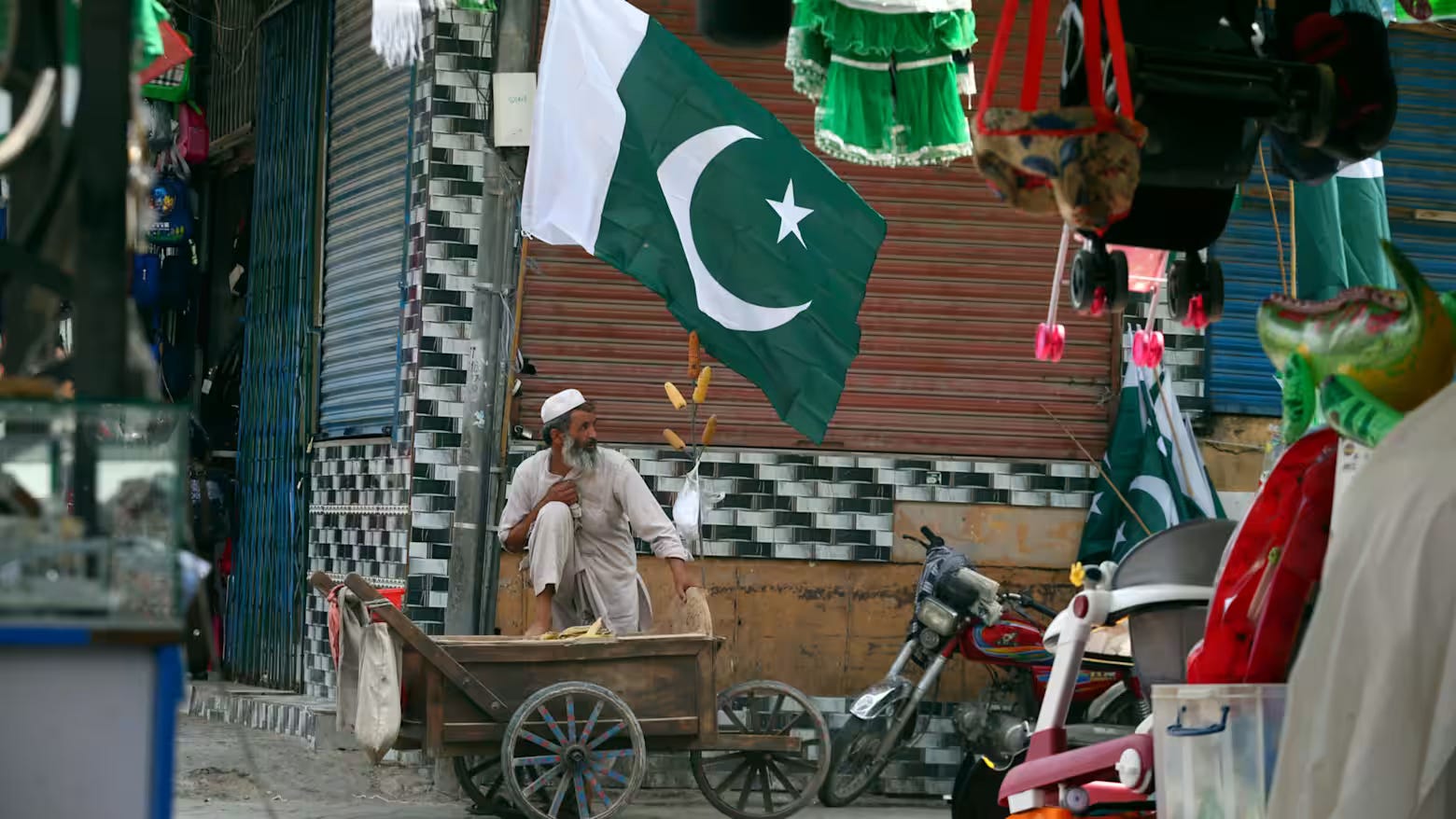
On June 20, Fazian Rehman stood outside the third closed petrol station he had visited in Muzaffarabad, holding an empty bottle. His motorcycle had run out of fuel while he was taking his wife to hospital. Markets had been shut, public transport was off the roads, internet service remained suspended, and a political dispute over twelve legislative seats had entered the ordinary machinery of a family trying to reach a doctor.
That bottle was June’s most accurate economic indicator.
Pakistan’s federal government presented a Rs17.1 trillion budget built around 4.1 percent growth and 8.2 percent inflation. The stock exchange ended a powerful fiscal year. Remittances again supplied the foreign currency that domestic production did not. Yet consumer prices in June were 11.1 percent higher than a year earlier, terrorism killed civilians and security personnel from Peshawar to Karachi, and Azad Jammu and Kashmir spent much of the month under a communications blackout after its government classified a mass civic movement as a terrorist organisation.
The government described these files separately: fiscal consolidation, public order, counterterrorism, migration management and climate preparedness. Pakistanis encountered them together. A higher petroleum levy enters the same household that pays a larger electricity bill. A communications shutdown stops the same trader whose taxes the budget intends to document. A security operation and a militant attack close the same road. A 51°C day arrives in the same country whose finance ministry says one average natural disaster could add 1.5 percent of GDP to the fiscal deficit.
June was not a collection of sixty unrelated headlines. It was one governing system meeting the consequences of its own choices.
