


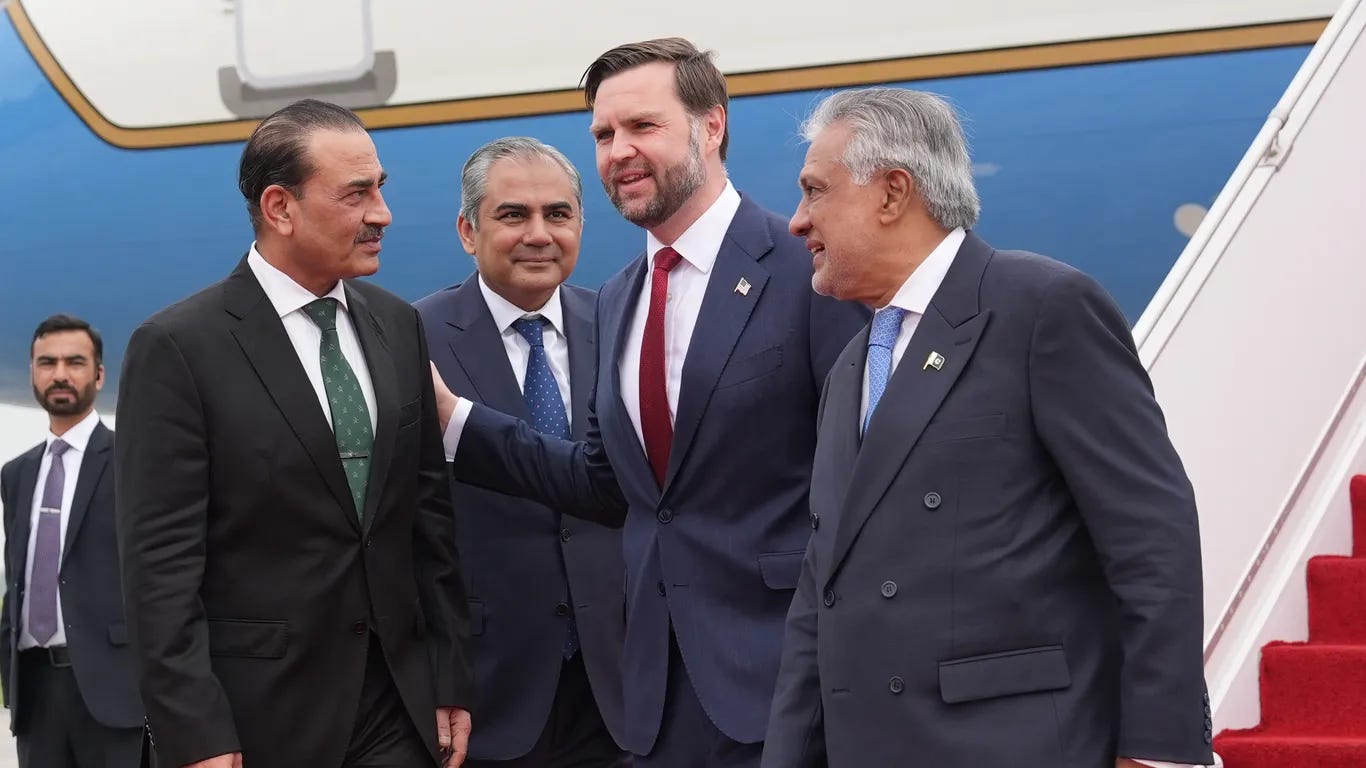
April 2026 was the month Pakistan appeared on the front pages of every newspaper in the world, and the month in which that appearance changed nothing for the people who live here. For three weeks Islamabad was the return address on documents being passed between Washington and Tehran. For three weeks the city was locked down, the roads were sealed, the fruit trucks waited outside the perimeter with their perishable cargo. The world watched Pakistan. Pakistan, meanwhile, was absorbing its worst inflation shock in two years, its first interest rate hike in three, the highest fuel prices in its history, and the full first-wave impact of a global energy crisis whose instrument is the Strait of Hormuz — not a diplomatic inconvenience but an act of sustained economic war against every country that moves fuel through it, which is most of the world. The diplomatic role ended the month unconsummated: no second round of talks, the ceasefire fragile, the Strait barely moving, and the structural damage already running through the food supply chain and into the flour price. The Baloch Yakjehti Committee submitted documented evidence of 1,481 enforced disappearances to the Government of Balochistan. The government received the list and did not respond publicly. The VBMP protest camp outside the Quetta Press Club passed its 6,150th day. The month ended the way every month ends in Pakistan: with the official register describing stability and the lived register describing the approach of something worse.
