


Pakistan entered a wheat emergency while fourteen newborns died at PIMS, a murder inquiry failed its first forensic test, and public institutions retreated behind debt, force and denial.
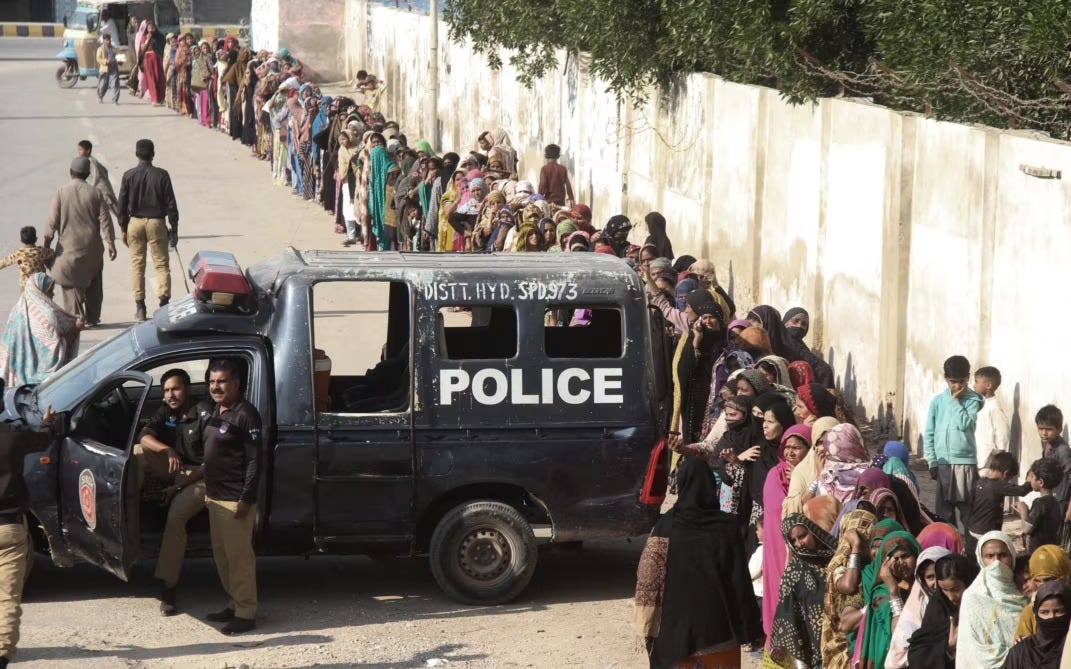
Seven and a half million Pakistanis entered August without reliable access to enough food. Of them, 1.25 million were already living under Emergency conditions, one step below famine, while the government prepared to import wheat only three months after describing the harvest as sufficient. Every later story, from an electricity tariff to a closed school, enters a home through the same household budget.
Fourteen newborns then died inside a burning federal hospital nursery with no alarm or sprinkler. A young Karachi businessman’s death remained a possible suicide in the police record until a second autopsy found that a bullet had entered his back and passed through his heart. An internal federal memorandum showed the state preparing to build the water-storage portion of Diamer-Bhasha while deferring the 4,500MW power project sold with it. Pakistan’s leadership spent the same month signing regional defence agreements and carrying messages between foreign capitals, and yet citizens at home kept paying twice: first through taxes, bills and debt, then through the private cost of replacing the public service that failed. The dates run from August 1 through August 31, with disaster totals taken from the National Disaster Management Authority’s dashboard on September 1.
