
Islamabad: The Blood That Screams in Silence
The Tarlai Imambargah Massacre and the Unequal Cost of Violence
On February 6, 2026, 32 men were slaughtered while praying in a working-class neighborhood on Islamabad’s margins. No cabinet ministers died that day. No generals. No industrialists or feudal landlords. No one whose death would necessitate a state funeral or international condolences. Just working people in Tarlai Kalan, a densely packed suburb where the capital’s carefully manicured facade crumbles into the reality most Pakistanis inhabit.
The Khadijatul Kubra Imambargah sits in a neighborhood the powerful drive through but never stop in. Its congregants were men who work with their hands, who count their rupees, who ride public buses and know the weight of economic precarity. University students from COMSATS Institute trying to study their way out of poverty. A 52-year-old from Gilgit-Baltistan who had migrated seeking survival. Mosque caretakers. Daily wage laborers. Small shopkeepers. The kind of Pakistanis whose names appear in casualty lists but rarely in history books. Tarlai Kalan exists in the shadow geography of Pakistani power. It sprawls on Islamabad’s southeastern periphery where the planned city dissolves into informal settlements housing migrants from Punjab and Khyber Pakhtunkhwa. These are families of four to eight children crammed into modest dwellings, sustained by irregular employment, small-scale commerce, and the perpetual hustle required when the state offers nothing resembling a safety net.
This is not F-6 or F-7, those leafy sectors where diplomats sip imported coffee and the Pakistani elite fortress themselves behind high walls and private security. This is not where convoys of black SUVs transport the untouchable class to climate-controlled offices and expense-account restaurants. Tarlai Kalan is where the people who clean those offices and cook those meals return each night, to neighborhoods the state has barely acknowledged let alone protected. The area exhibits what development economists politely term “limited infrastructure investment.” Translation: the state cannot be bothered. Semi-literacy is common. Malnutrition is endemic. The jobs are irregular and underpaid. The schools are substandard. The healthcare is rudimentary when it exists at all. These are the economic realities for people whose labor builds and maintains the capital but who will never afford to truly live in it.
Walk through Islamabad’s diplomatic enclave and count the checkpoints. Count the armed guards, the blast barriers, the surveillance systems. Calculate the millions of rupees spent ensuring that the powerful can move through their days unmolested by the violence that haunts the rest of the country. Then visit Tarlai Kalan and count the same. The mathematics will clarify exactly whose life the Pakistani state considers worth protecting. The men who gathered for Friday prayers on February 6 had no security detail. No threat assessment teams. No blast walls or metal detectors or multiple redundant screening protocols. They had what working Pakistanis have always had: their faith, their community, and a foolish assumption that praying should not require military-grade security infrastructure.
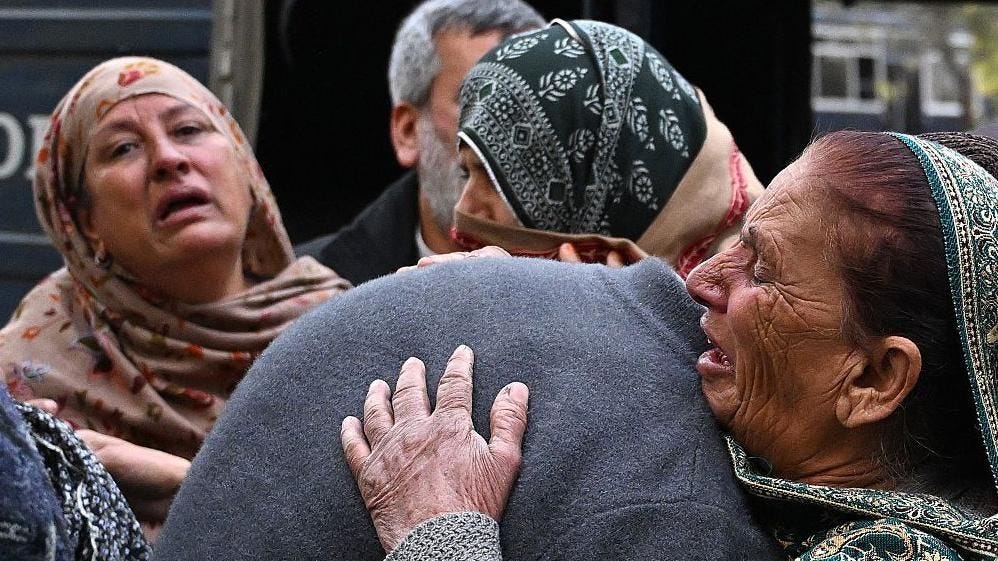
A suicide bomber walked into their place of worship and detonated. Bodies in prayer position were torn apart. Limbs severed. The elderly and the young, the caretakers and the students, transformed in an instant from human beings into casualties. Neighbors pulled neighbors from the rubble. Men wept over friends whose faces they could barely recognize. The chaos and carnage that comes when violence visits places where people cannot afford to hire their survival.
This is not the first massacre in a working-class neighborhood. It will not be the last. From Quetta’s Hazara community to Peshawar’s bazaars to Karachi’s bus stops, the pattern repeats with numbing regularity. Violence in Pakistan gravitates toward the vulnerable, concentrates in spaces where the poor congregate, targets communities without the resources to purchase protection. Shia communities in working-class settlements face systematic persecution without the fortified compounds and political connections that shield the privileged. Markets frequented by the poor become bombing sites. Buses carrying laborers become targets. Shrines visited by common people become killing grounds. Meanwhile, the neighborhoods where Pakistan’s elite reside remain remarkably untouched by the sectarian violence and terrorism that supposedly threatens the entire nation.
This is not coincidence. This is structure. This is the Pakistani state making explicit through its security allocations what its rhetoric attempts to obscure: some lives matter, others are simply tallied.
Tarlai Kalan’s residents work in Islamabad but inhabit its margins. They are economically essential and politically expendable. They drive the cars, guard the gates, clean the homes, cook the meals, build the roads, and maintain the infrastructure that allows Pakistan’s protected class to live in bubble-wrapped comfort. Then they return to neighborhoods where their own security is an afterthought. When bombs explode in working neighborhoods, the official response follows a predictable script. Condemnations are issued. Investigations are promised. Condolence payments are announced. Then the news cycle moves forward and nothing fundamental changes because nothing fundamental was ever meant to change.
The 32 dead in Tarlai Kalan join the thousands of working-class Pakistanis who have paid with their lives for security failures that never seem to affect those who actually make security policy. The students who will never complete their degrees. The fathers who will never return home. The community members whose absence will be felt in a hundred small ways by people who lack the luxury of hiring grief counselors or taking trauma leave.
Their families will bury them according to religious rites. Their neighbors will mourn them. Their community will absorb the loss the way working communities always do, with resilience born of necessity rather than choice. Life will continue in Tarlai Kalan because life must continue when you lack the option of stopping.
Meanwhile, in the fortified sectors of Islamabad, the powerful will attend meetings about national security, draft statements about standing united against terrorism, and return to homes guarded by the security apparatus that working neighborhoods will never see. The dead of Tarlai Kalan will become statistics in reports, names on lists, evidence of a terrorism problem that somehow never manifests in neighborhoods where it might actually threaten power. This is the unspoken truth of violence in Pakistan: it is not distributed equally. It concentrates where the poor gather, where the state’s protection ends, where lives are lived without the buffers of wealth and connection. The powerful discuss terrorism in conference rooms ringed by armed guards while the powerless absorb its consequences in neighborhoods that lack basic security infrastructure.
Thirty-two men prayed on February 6 and never rose. Their crime was poverty disguised as geography, the misfortune of worshipping in a place where their lives were worth less than the cost of protecting them. They died so others could maintain the fiction that Pakistan’s security crisis affects everyone equally, when the truth written in blood across working neighborhoods tells a different story entirely.


