Balochistan’s Information Black Hole
The War Pakistan Is Not Allowed to See
This article aims to document independent press reporting on provincial events that remain largely unknown to the Pakistani public and mainstream news media as well as investigative journalists.
Independent reporters and human-rights investigators have assembled a record of disappearances, proxy allegations, insurgent expansion and state coercion that Pakistan’s national news system still does not show its citizens whole.
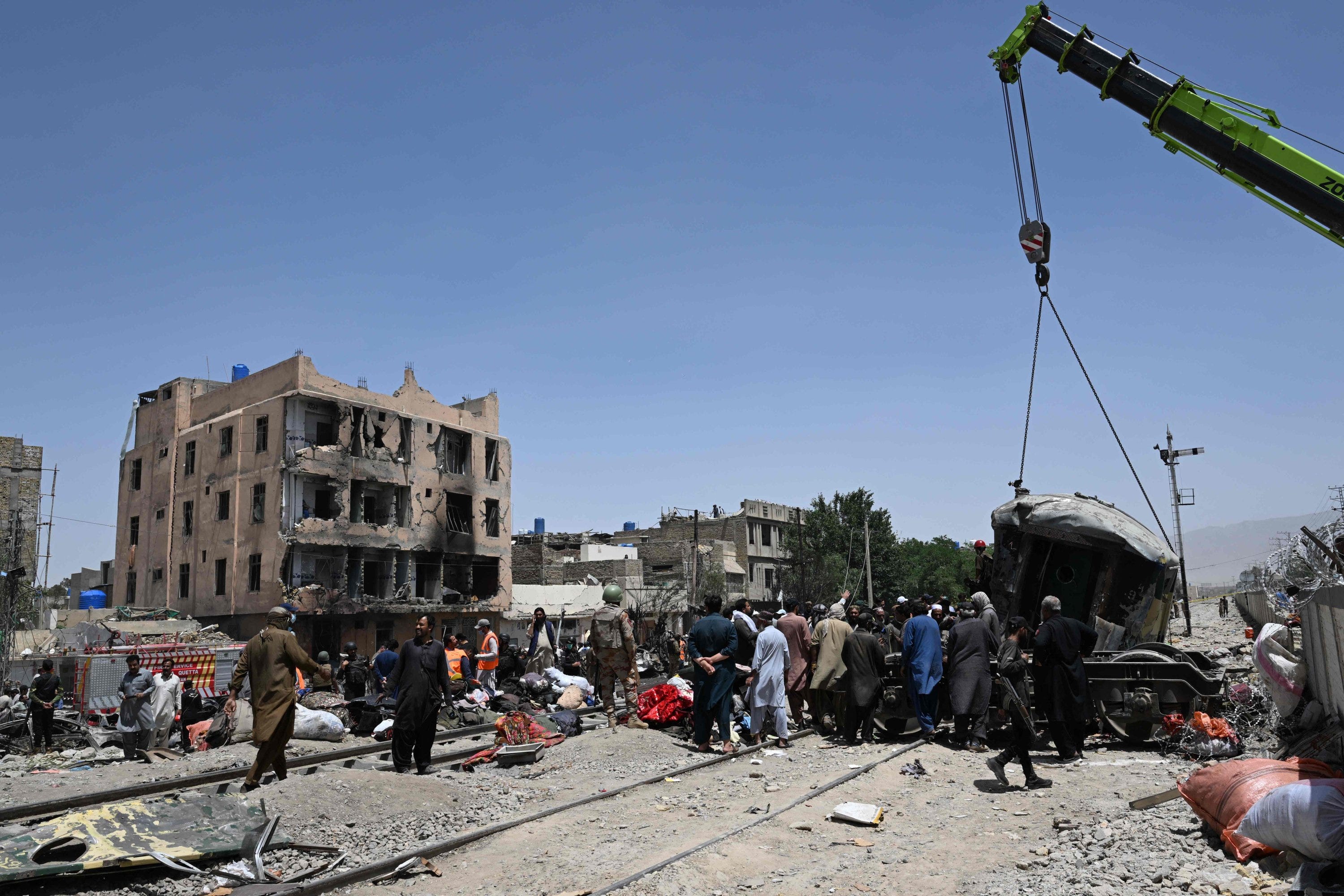
On July 9, 2026, relatives of police officers killed in Balochistan sat in Quetta beside about two dozen bodies and demanded that the authorities bring the killers to justice. The protest followed a four-day sequence of attacks in which the Baloch Liberation Army, or BLA, killed at least forty-two people, most of them police officers and soldiers. Nine policemen died when militants attacked a post in Ziarat. Eighteen more officers, abducted in the same assault, were later shot dead. Eleven soldiers were killed in a separate ambush. The prime minister flew to Quetta, chaired a security meeting and promised that military operations would continue until the last terrorist had been eliminated. By July 10, the state said its forces had killed seventy-five insurgents. Those numbers and that promise were carried by the Associated Press, and they gave Pakistan a legible story: an atrocity, a visit, a vow and a retaliatory body count.
The national citizen received the violence as an interruption. Balochistan entered the television frame because men had been murdered and a senior meeting had been convened, and yet the province vanished again behind the same vocabulary that has accompanied nearly every major episode of the conflict: foreign sponsorship, Afghan sanctuary, Indian interference, clearance operations, national resolve. The dead police officers were real victims, their families’ demand was elementary, and the BLA’s execution of captives requires no euphemism. But a country cannot understand a war from a casualty bulletin issued by one of its belligerents. It cannot understand why armed groups have acquired the ability to halt trains, occupy roads, strike several districts at once and replenish their ranks. It cannot know which state claims are documented, which independent allegations are credible, and which remain unproved. Above all, it cannot know what it has been prevented from seeing.
This article has a narrower purpose than a verdict and a more urgent one than commentary. It preserves the record being assembled across independent Pakistani outlets, international newsrooms, human-rights missions, regional publications and exile reporting while much of Pakistan’s national media continues to present Balochistan as a sequence of official statements. Some parts of that record are firmly documented. Others are allegations that deserve reporting but have not earned acceptance as fact. The distinction matters because Balochistan’s information crisis does not consist only of censorship. It consists of a public trapped between the state’s monopoly on access and the inevitable growth of claims that no functioning newsroom is free to verify.
A province that appears when it explodes
In December 2025, Freedom Network published the most useful anatomy of the system. Its report, Journalism in Balochistan, drew on interviews and focus groups with reporters, editors and media workers across the province. The findings are not a complaint about insufficient airtime. They describe a news infrastructure that has been made incapable of sustained observation.
National television channels and newspapers have reduced their bureaus in Quetta, and outside the provincial capital their reporting presence is thin or nonexistent. Balochistan has no terrestrial current-affairs television channel of its own. Private FM stations are generally restricted to a radius of roughly thirty-five to forty kilometres, a licensing arrangement applied to a province whose settlements are divided by mountains, desert and hundreds of kilometres of road. Of more than 120 periodicals on the provincial government’s advertising list, Freedom Network found that only about a dozen dailies had a real readership. Some existed primarily to collect government advertising. Local newspapers that did conduct journalism had lost about half their staff in two years.
The digital substitute is equally compromised. At the start of 2025, internet penetration in Balochistan stood at about fifteen per cent, according to the report, while sixty per cent of the province lacked fibre connectivity. Panjgur endured a shutdown beginning in May 2025 that lasted for months; Khuzdar experienced post-attack blackouts; other districts lost connectivity for ten to fifteen days at a time. Investigative work became rare because it was expensive and dangerous, and districts including Turbat, Awaran, Panjgur, Zhob, Dalbandin and Sherani remained chronically under-covered. Even Quetta, the report noted, tended to enter the national news only through spectacular violence. The nation sees the explosion because the explosion is easy to distribute. It does not see the weeks before it, the operation after it, or the household that spends years waiting for a missing son.
Geography explains the expense but not the silence. Journalists told Freedom Network that security and intelligence agencies, separatist organisations, tribal and political elites and mobs all exerted pressure on their work. An armed group might call a district reporter and demand publication of an attack claim. A security agency might then order the same reporter to identify the caller or keep the line open for tracing. The journalist who cooperated could be threatened by militants; the journalist who refused could be detained by the state. One reporter described being picked up after receiving calls from a banned organisation, questioned by intelligence personnel and released, only to receive a threat from that organisation the next day. This is the machinery behind the clean national headline. The local reporter carries every danger, and the national desk carries the official handout.
Freedom Network counted nearly forty journalists killed in Balochistan over two decades, roughly thirty of them in targeted attacks, without a conviction for any journalist’s murder. Khuzdar, where separatist groups, state forces and pro-state militias all operate, was described as a place where objective reporting was close to impossible. The report documented editorial instructions to rely on versions approved by the military’s public-relations apparatus rather than correspondents. It also recorded a proposed diversion of three hundred million rupees in public advertising from independent media towards state-controlled digital units. Pakistan’s citizens are not clueless because Balochistan produces no reporters. They are clueless because the people closest to the evidence are underpaid, watched, threatened, blocked from the network and overruled by editors who face pressures of their own.
The war behind the arithmetic
The official account begins with terrorism, as though the insurgency arrived without a political history. The independent record begins earlier. Baloch resistance to incorporation into Pakistan dates to the accession of Kalat in March 1948 and the revolt led by Agha Abdul Karim. Further insurgencies followed in 1958, the 1960s and the 1970s. The present phase took shape around demands for provincial autonomy, control of natural resources, political representation and accountability for enforced disappearances. None of that history excuses attacks on civilians, migrant workers, police posts or railway passengers, and yet a counterinsurgency narrative that deletes the history cannot explain the insurgency it is supposed to defeat.
The armed movement itself has changed. An April 2025 study by the Combating Terrorism Center at West Point described factions capable of coordinated assaults, suicide bombings, intelligence collection, sabotage and temporary territorial seizure. The BLA’s Jeeyand faction, the Balochistan Liberation Front and allied groups have developed specialised units and umbrella formations. The March 2025 hijacking of the Jaffar Express in the Bolan Pass showed an organisation able to halt a passenger train, separate captives, hold off a rescue operation and dominate the information cycle for two days. Official and insurgent accounts differed over passenger numbers, casualties and the identity of those held. That discrepancy was itself evidence of the reporting failure: journalists could not reach the site freely, communications were restricted, the state and the BLA issued incompatible versions, and the citizen was expected to choose a narrator rather than examine a record.
By early 2026, the escalation was unmistakable. Coordinated BLA attacks across multiple locations produced a week of military operations in which the state claimed to have killed 216 militants. In July, another chain of assaults killed forty-two police and military personnel before the government announced its new retaliatory toll. These are no longer isolated raids by men descending from a hill and disappearing before dawn. They are campaigns designed to interrupt roads, railways, security installations and the state’s claim to territorial control. Armed groups have also targeted Chinese citizens and projects associated with the China-Pakistan Economic Corridor, treating CPEC as an extraction and security arrangement imposed upon Baloch land. The state answers by protecting the corridor, expanding surveillance and assigning more force to the province. The political questions that animate recruitment are returned to the public as security problems, and yet every security-only answer has coincided with a more capable insurgency.
There is another part of the record that national television rarely holds beside the attacks: Baloch armed organisations have killed civilians, ethnic Punjabi labourers, teachers, barbers, drivers and passengers. They have coerced local reporters and attempted to dictate how their communiqués are published. Any account that treats the insurgency’s violence as a romantic extension of grievance cheats its victims and damages the truth it claims to defend. But Pakistan’s official discourse commits the equal and opposite fraud when it uses those crimes to place every protester, missing student, rights worker and critical reporter inside the same category as an armed fighter. A citizen can condemn the BLA’s killing of captives and still demand an answer for a person taken without charge. The information system works hard to prevent that sentence from being spoken whole.
The disappeared become the archive
In August 2025, the Human Rights Commission of Pakistan published Balochistan’s Crisis of Trust, based on a fact-finding mission that met officials, political actors, civil-society groups, families and journalists. Its police data covered only the part of Balochistan under ordinary police jurisdiction, less than one-fifth of the province, and even within that narrow area 192 of 356 reported disappearance cases remained unresolved. Police registered forty-six new cases in 2025. Officials told the mission that about 1,300 people from a list of 5,000 submitted by a Baloch political leader had been recovered, but many other entries could not be verified. The limitations were not a footnote. They showed that even the official record is built over most of the province without a complete ledger.
At the Quetta Press Club, journalists told the HRCP mission that covering demonstrations by families of the disappeared was virtually impossible without harassment or reprisal. Survivors and relatives often refused to speak because they feared being punished again. Editors received informal instructions through security officials or intermediaries about people and subjects that could not safely be covered. The chief minister described disappearances as a complex and contested matter and invoked the possibility of “self-disappearance.” The governor said disappearances happen when insurgencies take place, converting an alleged constitutional violation into an atmospheric consequence of conflict. Meanwhile, the Anti-Terrorism (Balochistan Amendment) Act 2025 authorised detention without charge or warrant for up to ninety days on reasonable suspicion or credible information, with interrogation in internment centres and Frontier Corps security outside.
The families therefore perform work that should belong to police stations, courts and newsrooms. They retain names, dates, identity cards, photographs, witness accounts, petitions and the last known location. They sit outside press clubs and government buildings because the domestic institution with the greatest incentive to remember is the household from which someone was taken. Human-rights groups then compile those household records, international organisations cite the compilations, and officials challenge the figures because the records were not produced by the state that failed to record the detention. This is how an information black hole sustains itself: the absence of a state ledger becomes the state’s reason to doubt the family ledger.
The HRCP did not ignore insurgent violence. Its report condemned increasing attacks on civilians and security personnel and warned that killings of non-Baloch settlers and migrant workers could provoke ethnic reprisals elsewhere in Pakistan. It still concluded that detention without judicial oversight, opaque security measures and the failure to address resource control and political representation would deepen the conflict. That conjunction is precisely what the national debate avoids. One can document militant crimes and state abuses in the same article because the victim does not acquire or lose rights according to the identity of the gunman.
The name in the independent file
On June 11, 2026, Afghan researcher Ajmal Sohail published an intelligence-style briefing titled “Pakistani Military’s Narco-Militias Collide with Baloch Insurgency”. It centred on Farid Helmandwal, whom Sohail described as a former commander in the Afghan National Police and Afghan Local Police. According to the briefing, Helmandwal was killed with four associates while fighting the BLA inside Balochistan. Sohail alleged that Pakistan’s security establishment had recruited former Afghan police commanders into militias, placed them under military coordination, rewarded them through land for opium cultivation and access to heroin and methamphetamine production, and used the resulting network against Baloch insurgents and across the Afghan border.
Those are high-impact allegations. They are also uncorroborated. No Pakistani court filing, parliamentary record, official casualty list or independently reported field account examined for this article confirms that Helmandwal commanded a pro-state unit in Balochistan. Social-media and professional-network posts that repeat Sohail’s account do not constitute separate verification; most appear downstream of the same briefing. The claims about narcotics laboratories, land grants, Islamic State integration and operations in northern Afghanistan are presented without public documents in the material available outside the briefing’s paywall. Repetition cannot turn one source into several.
The responsible conclusion is not that the Helmandwal story has been proved. Nor is it that the story should be discarded because GHQ has not confirmed a covert programme. The briefing belongs in the public record with its evidentiary status attached to every claim. It names a person, proposes a recruitment mechanism and identifies alleged financial incentives. Each element can be tested by field interviews, Afghan service records, burial evidence, land registries, narcotics seizures, telephone data, militia rosters and testimony from former Afghan personnel. That work requires the kind of protected, well-funded reporting operation that Balochistan does not possess. The allegation survives in the space created by the absence of journalism capable of confirming or disproving it.
There is limited evidence around the edges. On January 25, 2025, ARY News reported that authorities had arrested seven former members of the Afghan forces in Qilla Abdullah after a raid prompted by a Levies tip. The deputy commissioner said the men were suspected of terrorism, robbery and theft, and that weapons and narcotics had been recovered. That report establishes an official allegation that armed former Afghan personnel were present in Balochistan and associated with drugs, but it establishes neither membership in a pro-state militia nor Helmandwal’s identity, death or role. It can support the proposition that displaced Afghan security personnel form part of the borderland’s armed population, and yet using it as proof of Sohail’s entire account would be an abuse of the source.
Pakistan’s own briefings have added another layer. Officials increasingly identify Afghan nationals among militants killed in Balochistan and Karachi, and Islamabad accuses the Afghan Taliban of tolerating or supporting networks that attack Pakistan. Kabul rejects such allegations and accuses Pakistan of violating Afghan sovereignty. The collapse of the relationship that Islamabad once expected to enjoy with the post-2021 Taliban government has created obvious incentives for proxy activity on both sides of the border, and yet an incentive is not evidence that a specific programme exists. The difference between structural plausibility and documentary proof is where an investigation begins.
The border produces deniability
Former members of the Afghan Republic’s security forces present an obvious recruitment pool for many actors. After August 2021, thousands were left without salaries, legal protection or a safe route home. Some had combat experience, local intelligence networks and knowledge of both formal policing and irregular war. Pakistan contains large Afghan refugee and exile populations, while Balochistan’s border districts connect Afghanistan to Iran, Karachi and the Arabian Sea through formal crossings and smuggling routes. Militants, criminal organisations, intelligence services and local power brokers all have reasons to seek such men.
That context supports investigation of the recruitment allegation, but it does not identify the recruiter. The seven men arrested in Qilla Abdullah may have been an independent criminal group, members of an anti-state organisation or something else entirely. A former Afghan officer found with narcotics may be evidence of postwar displacement colliding with a criminal economy; he is not automatically evidence of a state-run narcotics militia. Likewise, an Afghan citizen killed during an attack in Pakistan may have belonged to the TTP, a Baloch organisation, a criminal cell or another formation. Nationality is not command structure.
Pakistan’s history makes questions about irregular forces legitimate. GHQ and intelligence agencies have repeatedly worked through armed non-state formations in Afghanistan and within Pakistan, while provincial counterinsurgencies have involved tribal auxiliaries, peace committees and alleged pro-state groups. The state’s former support for the Afghan Taliban was documented long before Kabul fell in 2021. Baloch activists have for years described armed groups that target nationalists and enjoy protection from parts of the state. Armed organisations themselves refer to “death squads” among their targets. Yet this historical record still cannot substitute for evidence about a particular current unit, commander or drug route.
The test is simple and mostly unmet. Who recruited whom, on what date and through which intermediary? Where was the unit based? Who supplied its weapons? Which official knew of it? What land changed hands? Which narcotics seizure, laboratory or convoy can be tied to the alleged arrangement? Where are Helmandwal’s Afghan service documents and evidence of his death? The independent briefing supplies a hypothesis and a name. Pakistan’s crippled information environment supplies the darkness around them.
The business model of silence
Censorship in Balochistan is effective because it does not rely on a single written prohibition. The structure distributes pressure until compliance becomes a survival decision. Government advertising keeps small newspapers alive and can be delayed or redirected. A district correspondent may earn only a few thousand rupees after months of waiting. Editors in Karachi or Islamabad have neither the budget nor the appetite to send a team across several hundred kilometres of insecure road. Mobile service disappears after an attack. A source fears detention. A reporter fears both the agency asking about his source and the armed group that supplied the claim. The national channel fills the gap with a military briefing because the briefing is available, legally safer and already edited.
In April 2025, the Quetta administration required organisations and political parties to obtain prior permission before holding events at the press club. The Balochistan High Court suspended the directive after journalists’ unions and petitioners challenged it, but Freedom Network recorded something more consequential than the order: much of the press and political class had initially accepted the restriction as normal. The prohibited subject no longer needs to be named once every participant understands the cost of naming it.
Digital publication does not provide an exit. Journalists told Freedom Network that authorities warned them against posting stories on forbidden subjects even when those stories appeared on outlets’ own online platforms. The Prevention of Electronic Crimes Act hangs over reporting without needing to produce a Balochistan prosecution in every case. Internet shutdowns then accomplish what the law and phone call do not: they prevent footage from leaving, make sources unreachable and break the timeline required for verification. Amnesty International documented how a province-wide mobile shutdown disrupted protests planned for August 30, 2025, the International Day of the Victims of Enforced Disappearance, despite court orders against arbitrary restrictions.
Reporters are also made into examples. In March 2025, the Committee to Protect Journalists reported that journalist Asif Karim Khehtran had disappeared from Barkhan. His whereabouts were unknown at the time of CPJ’s statement. The organisation placed his case within a broader national media crackdown and called on the authorities to account for him. A reporter does not have to be convicted to educate every other reporter. Disappearance carries its own editorial guidance.
Armed groups impose a parallel censorship. Separatist organisations demand that their statements be carried, threaten journalists they consider sympathetic to the state and punish coverage they dislike. This coercion matters for more than balance. It means that independent reporting cannot be restored simply by removing state pressure. Journalists need protection from every armed actor and the freedom to report militant abuses without being treated by officials as participants in a propaganda war. The press is caught between institutions that disagree about sovereignty but share an interest in controlling the account.
What Pakistan knows, and what it is not told
Pakistan’s citizen is not wholly ignorant of Balochistan. He knows that soldiers die there, that the BLA hijacked a train, that Chinese workers have been attacked, that officials blame India and Afghanistan, and that every few months the state announces another successful operation. These facts are repeatedly broadcast because they fit an authorised grammar. What he does not receive is the connective record.
He is rarely shown, in one place, that the insurgency has advanced in operational capacity while the political settlement has receded; that official disappearance data cover less than a fifth of the province; that families and rights groups maintain records the state disputes; that a law now permits ninety-day detention without ordinary charge or warrant; and that district reporters can be coerced by security officials and insurgents in the same week. Prolonged shutdowns make casualty verification impossible, local papers depend on advertising controlled by the government they cover, and allegations as serious as the recruitment of former Afghan officers into narcotics-funded militias circulate internationally without a domestic newsroom able to test them.
The result benefits every powerful actor. The state retains the authority of the first announcement. Armed groups exploit the credibility gap and distribute their own casualty claims through diaspora networks. Political parties visit after mass death and avoid the constitutional questions that precede it. Foreign governments discuss CPEC security, mineral access and border militancy without having to confront a Baloch public represented by independent institutions. Rumour acquires the emotional force of suppressed truth, while verified fact is treated as one more factional statement. Pakistan is left with more information than ever and less shared knowledge.
An investigative press would not guarantee agreement. It would produce competing accounts supported by named evidence, correction, right of reply and visible uncertainty. It would send reporters to Qilla Abdullah to identify the seven former Afghan personnel and follow their cases through court. It would seek Helmandwal’s service history and family testimony. It would map detention centres authorised under the 2025 law, reconcile lists of missing people, examine land transfers in border districts and compare military casualty releases with hospital and burial records. It would ask the BLA to account for civilians it has killed and ask GHQ to account for people held outside ordinary process. None of those questions requires sympathy for an insurgency. They require a country that considers Balochistan part of its public.
The open question is no longer why Pakistanis fail to understand the province. The record shows how that failure is produced, financed and enforced. The question is what else has become possible inside a war that the nation encounters only after the bodies arrive.
Sources
Associated Press: Pakistani prime minister vows to press fight against militants, July 9, 2026
Associated Press: Pakistani forces say they killed 75 insurgents, July 10, 2026
Human Rights Commission of Pakistan: Balochistan’s Crisis of Trust, 2025
Combating Terrorism Center at West Point: The Baloch Insurgency in Pakistan, April 2025
Amnesty International: Internet shutdowns in Balochistan, September 4, 2025
ARY News: Seven former Afghan personnel arrested in Balochistan, January 25, 2025
Ajmal Sohail: Pakistani Military’s Narco-Militias Collide with Baloch Insurgency, June 11, 2026


