


I.
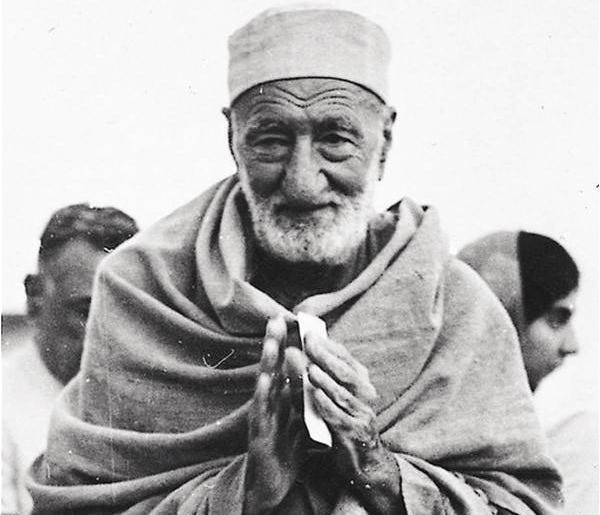
On the morning of March 5, 1948, the Constituent Assembly of Pakistan was seven months old and still working out what kind of country it had been elected to build. It met in Karachi, in a capital improvised from colonial offices, and that day it was debating a budget. Midway through, a tall man in homespun rose from the benches. Khan Abdul Ghaffar Khan was fifty-eight. To the Pashtuns of the Peshawar valley he had been Bacha Khan, the king of chiefs, for most of his adult life, and to almost everyone else in the chamber he was the man who had opposed their country’s creation.
He did not apologize for that. He told the members that the argument over Partition was finished and that he meant to serve the state it had produced. Then he described the state he hoped it would become. The legislature should be sovereign, and government by ordinance should end. Pakistan should belong to its people in common, and no party, community or single man should own it. The provinces should be recognized for what they were. A poor country, he said, could not afford a ruling class that lived like viceroys. Answering the whispers that he wanted Pakistan undone, he called himself, in words preserved in the Assembly’s own transcript, “not a man of destruction, but of construction.”
Fifteen weeks later he was in prison. By August the police had fired on his followers at a village called Babrra, and by September his movement had been declared unlawful. It had outlasted British gunfire, village raids, floggings and martial law. It did not outlast the first year of a Muslim state that it had publicly sworn to defend.
Pakistan’s schoolbooks have an explanation, and it is short. Bacha Khan opposed Partition, kept company with the Indian National Congress and talked about Pakhtunistan, a cause Afghanistan later turned into a weapon. So he was never loyal. The explanation holds only if the events are shuffled out of order. Restore the sequence and a different man appears: one who accepted the verdict of 1947, pledged his movement to the new state, took its oath, sought out its founder, and stood in its parliament to say that the Pashtuns belonged inside Pakistan and nowhere else.
What he asked of Pakistan was harder to forgive than anything he had said against it. He wanted the country to dismantle the machinery the British had left behind, the rule from the center, the favored intermediaries, the special laws for suspect populations, the habit of calling an opponent a security threat. He wanted every province and every people to have a hand in governing. Those demands threatened the men who held power in 1948, and the state they ran found it easier to change his name than to answer him. This is an account of how a man who swore loyalty to Pakistan was turned into its most famous traitor.
II.
The nickname “Frontier Gandhi” has done him a quiet injury. It introduces a Pashtun Muslim reformer as a regional edition of someone else, and it suggests that his ideas arrived by post from Gujarat. The friendship with Gandhi was real and it mattered. But the work began years earlier, in the villages around Peshawar, with problems no one in Delhi was thinking about: children who could not read, families ruined by blood feuds, landlords who owned the peasants along with the land, and a province the British preferred to keep politically asleep.
He was born in 1890 in Utmanzai, in the Charsadda plain, into a landowning family. The frontier he grew up in was administered as a military buffer. Security came first; representative government came, when it came at all, a long way second. The British governed through tribal intermediaries and compliant khans, and through the standing threat of collective punishment. An unlettered, divided frontier suited that arrangement very well.
Bacha Khan’s first answer to it was a school. He worked with the cleric Haji Sahib of Turangzai and, in 1921, founded the Anjuman-i-Islah-ul-Afaghina, the Society for the Reform of the Afghans, which tied literacy to a broader repair of Pashtun society: an end to ruinous feuds and extravagant weddings, pride in Pashto, religious teaching alongside arithmetic and trades. Research drawing on Pakistani archives and school records credits the society with a network of Azad schools that numbered somewhere between seventy and more than a hundred. Admirers like the larger figure. The honest version is that the network was wide, locally paid for and independent of the colonial government, and a study published by the University of Balochistan shows why that independence unsettled officials.
In May 1928 he started a Pashto journal called Pakhtun, which carried essays on religion, politics, women and Pashtun identity until the British banned it. The order of his projects tells you how he thought. First the school, then the language, then the reform society and the journal, and only then mass politics. A people taught to distrust their own tongue and their own abilities could be governed without anyone bothering to ask for their consent. The journal, as it happens, outlived the ban. Hayat Roghani still edits it in Peshawar.
The Khudai Khidmatgars, the Servants of God, followed in 1929. Their oath, as a Cambridge study of his thought renders it, rested on the idea that God needs no service and that serving His creation is how one serves Him. Members swore not to take revenge, to oppose oppression, to live plainly and to work for their neighbors. Syed Minhaj ul Hassan’s research at the University of the Punjab describes a pledge built on service and sacrifice, with nothing passive about it.
The volunteers wore uniforms, held ranks and drilled in formation, which allowed British officials to describe a nonviolent movement as a private army. Scholars at the International Center on Nonviolent Conflict warn against imagining every recruit as a philosopher of peace. For some, nonviolence was a faith. For others it was the only tactic that did not invite the burning of their villages. Either way, a movement persuaded thousands of men from a culture of honor and the rifle to stand in front of soldiers and refuse to strike back. Its restraint drew on Islamic teaching about patience and forgiveness and on a Pashtun sense that the power to forgive could carry more honor than the power to avenge, a point developed in Peace & Change and in the ISIM Newsletter at Leiden. Gandhi sharpened something that was already there.
III.
On April 23, 1930, after the arrest of movement leaders in Peshawar, British troops opened fire on a crowd in the Qissa Khwani Bazaar, the old storytellers’ market. The colonial count of the dead was small. Local accounts ran into the hundreds. The Friday Times has reconstructed a day in which the shooting went on for hours against people who did not shoot back, and on that point the sources agree.
What followed was a season of martial law. Volunteers were flogged, stripped and driven through lines of soldiers, punishments chosen, as records studied by the ICNC suggest, to break a man’s sense of honor along with his body. The Danish Peace Academy records a British air raid on a village in 1932 and the arrest of Bacha Khan with more than four thousand of his volunteers. None of it worked. The movement’s own figures, which should be read as claims, have its membership swelling from a few hundred to several hundred thousand within a year; more cautious estimates still run to tens of thousands. Bacha Khan later said, in a remark The News on Sunday recalled on Babrra’s anniversary, that the British feared a nonviolent Pashtun more than an armed one, because their picture of the frontier had no room for him.
The alliance with the Indian National Congress came out of that season, formalized in 1931, and it is usually told either as betrayal or as sainthood. It was a bargain. Bacha Khan had looked elsewhere for allies against British repression and found none willing. Congress gave his movement protection, publicity and a seat in all-India politics. In return Congress gained a mass Muslim movement in a Muslim-majority province at the very moment the Muslim League was calling it a Hindu party. The Khudai Khidmatgars kept their own organization, their own base and their own quarrels with Congress, and when the end came they concluded that their allies had sold them cheaply.
Pakistani official history tends to open the story here, with Bacha Khan already on the wrong side. It seldom pauses to ask why a man who had organized Muslims through Islamic ideas of service, built schools for Muslim children and spent years in British jails would reject the Muslim League’s demand. His reasons were political. He believed that dividing India by religion would produce slaughter and flight and a hostility that would outlive everyone alive. He feared that a centralized Pakistan would hand British power to a new elite and leave the smaller nationalities exposed. The massacres of 1947 vindicated the first fear within months. Pakistan’s constitutional history would take longer to vindicate the second.
IV.
By the time the Pakistan demand reached its climax, the North-West Frontier Province had already voted. In the provincial election of 1946, the ministry led by Bacha Khan’s elder brother, a physician everyone called Dr. Khan Sahib, won thirty of fifty seats. As the Express Tribune has tallied them, Congress took nineteen Muslim seats to the League’s seventeen. Even among Muslim voters, the Muslim League had not displaced the Servants of God.
The League declined to accept the result. In February 1947 it launched a civil-disobedience campaign against the elected ministry, and the agitation ran, as a journal of Pakistan’s National Institute of Historical and Cultural Research confirms, until the Partition plan of June 3rd offered the province a referendum. The ballot would ask voters to choose India or Pakistan. A Pashtun homeland, autonomous or independent, was not on it. On June 21st a jirga at Bannu, convened by Bacha Khan and his allies, demanded that it be added; a study from Nihon University reads the Bannu declaration as a call for independence or, failing that, wide autonomy.
It is easy, at this distance, to treat the request as a technicality. To the men who made it, it was a question of whether the election they had just won meant anything. Their own preferred arrangement had been struck off the ballot, and Congress, the ally they had stood beside through a decade and a half of jail and gunfire, had agreed to the terms. Bacha Khan’s famous line, that Congress had thrown his people to the wolves, was spoken in that summer and aimed at Congress. Only later was it pressed into service as evidence against him in Pakistan.
The Khudai Khidmatgars boycotted the vote. Of 572,798 registered voters, 289,244 chose Pakistan and 2,874 chose India, figures recorded in a paper in Heidelberg University’s Internationales Asienforum. Pakistan won overwhelmingly among those who voted, and roughly half the electorate stayed home. Both facts belong in the story. To call the referendum meaningless is to dismiss nearly three hundred thousand people who wanted Pakistan. To call it a free and complete act of self-determination is to forget the narrowed ballot, the boycott and the elected ministry still sitting in Peshawar. Bacha Khan lost the argument over Partition, fairly or otherwise. Losing an argument is a different thing from treason.
V.
Pakistan came into being on August 14, 1947. Eight days later the governor, Sir George Cunningham, acting on instructions from Governor-General Jinnah, dismissed Dr. Khan Sahib’s ministry and installed the Muslim League’s Abdul Qayyum Khan in his place. The ministry had not lost a vote in the assembly. According to The Friday Times, the assembly was then left unsummoned for months, because the dismissed party still commanded it, and the new government proved its majority only after defections had done their work, a sequence research at the University of the Punjab also traces.
The British were uneasy about it. Citing a file in Pakistan’s National Archives, the same Friday Times report quotes the acting governor, Rob Lockhart, warning Lord Mountbatten that August that the League wanted the ministry gone before independence and that he would resist a step he thought harmful to Pakistan. Mountbatten, it reports, passed on to Liaquat Ali Khan the Secretary of State’s view that dismissal would be undemocratic and unconstitutional. These letters have their own imperial interests, but they are not the testimony of Bacha Khan’s partisans, and they show that the decision was contested inside the very government that took it.
The dismissal has defenders, and they deserve a hearing. Writing in Daily Times, the lawyer Yasser Latif Hamdani argues that once the non-Muslim members left for India, Dr. Khan Sahib held nineteen seats in a house of thirty-nine, a minority, and that the governor acted lawfully under the adapted Government of India Act. Part of his case rests on police intelligence reports of rumored civil disobedience, which is to say on the same apparatus that would soon be locking up the movement’s leaders. Even on his arithmetic, a confidence vote or a fresh election was available, as Criterion Quarterly points out. The center chose to remove the government first and assemble a majority afterward. It was the first time Pakistan removed an elected provincial government, and the method would be used again in 1975, 1994 and 1999.
Bacha Khan’s response is the part of the story the schoolbooks leave out. On September 3rd and 4th, 1947, the Khudai Khidmatgars met at their headquarters in Sardaryab, on the Swat River, and passed three resolutions, which The Friday Times has reprinted. They declared Pakistan their own country and pledged to strengthen and safeguard it. They called the dismissal of the ministry undemocratic but promised to do nothing that would trouble either government while the country was in crisis. And they cut their ties with the Indian National Congress, lowering its tricolour and raising their own red flag.
On February 23, 1948, Bacha Khan took the oath as a member of Pakistan’s Constituent Assembly. Two weeks later he gave the budget speech. The transcript is an official document, and it is valuable for a reason the officials who kept it did not intend. It preserves, in his own words, the case of a man already being called an enemy of the state in the bazaars outside. He had opposed Partition, he told the members, but “now that it is done, the dispute is over.”
Then he explained what he meant by Pakhtunistan, the word that would follow him to his grave. Sindh carried the name of the Sindhis, Punjab of the Punjabis, Bengal of the Bengalis. The Pashtuns wanted a province that carried theirs, one that would gather the Pashtuns on Pakistan’s side of the Durand Line. When a member asked about Afghanistan, he answered, “We can only join you and not Afghanistan.” A Pashtun province, he argued, would make Pakistan stronger.
The word was elastic, and honesty requires saying so. Before Partition, at Bannu, Pakhtunistan could mean an independent state. In the Assembly in 1948 it meant a province inside Pakistan. In his Afghan exile, decades later, his language grew harder, and Kabul made Pakhtunistan an instrument of its foreign policy. A serious history keeps all three meanings in view and declines to choose whichever one best suits the prosecution or the shrine.
The rest of the speech was about power. He attacked government by ordinance and said Parliament should rule. He warned the Muslim League that, having won Pakistan, it should not confuse itself with Pakistan. He objected to the spending of a governing class in a country of hungry people, and to a government that still ran on colonial habits. Pakistan, he said, must be governed by its people and must not fall into the hands of one man or one community. The flag had changed, in other words, and the relationship between ruler and ruled had not. Dissenters were being asked to prove loyalty to a government when their citizenship in the state should have been enough.
VI.
Bacha Khan also went looking for Jinnah. The accounts of their encounters differ, and they should not be blended into a story of a friendship spoiled by a single villain. What is reasonably firm is this sequence. Bacha Khan pledged allegiance, met the Governor-General, invited him to come and meet the Khudai Khidmatgars, and turned down the one thing Jinnah asked of him. In Wali Khan’s later account, which Dawn has reported, Jinnah came to Peshawar in 1948 and asked Bacha Khan and his colleagues to join the Muslim League. Bacha Khan put the proposal to his executive committee, and the committee said no.
For Bacha Khan, joining would have meant folding an independent movement into the party that now ran the center and had just unseated his brother. For Jinnah, a disciplined mass organization with a Congress past and its own provincial base looked like a rival authority at a moment of national emergency. The disagreement was about the structure of power before it was ever personal.
The man with the most to gain from keeping them apart was Abdul Qayyum Khan. He had himself been a Khudai Khidmatgar until around 1945, and his hold on the province depended on breaking or absorbing his old comrades. Later accounts, including one in Dawn’s Herald magazine, say he warned Jinnah that a visit to Sardaryab might cost him his life. That story rests largely on partisan memory and cannot be treated as proven. What can be said is that the meeting never took place, the Khudai Khidmatgars stayed out of the League, and the provincial government moved quickly from hostility to force.
On June 15, 1948, during his annual tour of the province, Bacha Khan was arrested at Bahadur Khel, in Kohat. He was not tried. He was held for three years under Section 40 of the Frontier Crimes Regulation, as Minhaj ul Hassan’s research records and The Friday Times recounts, a colonial clause that allowed an official to demand security for good behavior and to imprison a man who could not provide it. The British had written the regulation so that the frontier could be governed without courts. The new state used it on a sitting member of its own Constituent Assembly, three and a half months after he had promised that assembly his service.
The accusation that circulated was that he had been conspiring with the Faqir of Ipi, the guerrilla leader in Waziristan, and paying for his campaigns. The movement’s reply is worth pausing over. A provincial jirga of the Khudai Khidmatgars asked the government to publish how much Bacha Khan had supposedly paid, along with the receipts. It promised that if a court proved the charge, the movement would disown him. It asked, too, for elections, and reminded the League of its promise of an Islamic order. No court ever heard the case. The accused had asked to be tried, and the government declined to try him.
That summer the province acquired the NWFP Public Safety Ordinance. Later accounts in The News on Sunday and Daily Pakistan describe a law that let the government detain people indefinitely and seize their property without giving reasons, and that barred the detained from challenging their arrest in court. The objections did not come only from Pashtun nationalists. On July 11, 1948, The Pakistan Times in Lahore warned that the new powers went so far that “parliamentary rule becomes a mockery and the rule of law a mere fiction.”
The logic was colonial and it proved durable. The International Commission of Jurists describes preventive detention as an instrument Pakistan inherited from the British and made routine after independence, trading rights for the vocabulary of security and public peace. Bacha Khan later said that Pakistan had treated his movement more cruelly than the British ever had. That is testimony, and the British record was brutal enough to make the comparison hard to settle. His charge was moral rather than arithmetical. A state founded in the name of India’s Muslims had taken over the machinery of the foreign government it replaced and turned it on Muslims who questioned the center.
The government did not need to prove that any Khudai Khidmatgar was plotting violence. It needed the public to accept that what they were made them dangerous: former Congress allies, Pashtun nationalists, opponents of Partition, critics of the League. Once those categories had been fused into a single word, anti-state, disagreement itself could be offered as evidence of conspiracy.
VII.
With their leader in prison and thousands of members in custody, the Khudai Khidmatgars called a protest for August 12, 1948. The marchers were to walk from Utmanzai, Bacha Khan’s village, to the open ground at Babrra, near Charsadda. Dr. Sohail Khan, a Pashto scholar at Wali Khan University, told The Friday Times that the decision to go ahead fell to Salar Amin Jan, who led the column that morning. The day before, the government had sealed off the area and made more arrests.
As the marchers approached, police and militia fired on them from the rooftops. Even a study published under the auspices of Pakistan’s National Institute of Historical and Cultural Research, a work broadly sympathetic to Qayyum Khan and summarized by The Frontier Voice, records that the firing came without warning and was loose enough to strike women. The same study concedes that no one agrees on the toll. The government counted about fifteen dead and fifty wounded. Morning News, writing at the time, put the dead near three hundred and the wounded at four or five hundred. The movement’s own accounts speak of more than six hundred dead, and the figure its political heirs repeat today is six hundred and eleven.
It would be convenient to pick a number. Fifteen has the authority of the state, and six hundred and eleven has the authority of grief, and neither is enough. What can be said is that armed forces of the state fired on a political procession, that the official and unofficial counts differ by hundreds, and that the state never permitted an inquiry that could have closed the gap. The uncertainty is itself a record of power. The government controlled the police, the hospitals, what the newspapers could see, and the files. The dead belonged to an organization whose leaders were in jail. The one document the state is known to have produced points the same way: the police registered a case against the marchers, First Information Report No. 184 of August 12, 1948, at the Prang police station.
Even the legal footing of the shooting is disputed. Qayyum Khan’s government said the marchers had defied an order under Section 144 banning assembly. Wali Khan later wrote that the deputy commissioner of Charsadda at the time, Hidayatullah Khan Toru, told him he had never been asked to impose the order and never imposed it. Later writers, among them Khan Shehram Eusufzye in The News on Sunday, quote Qayyum Khan telling the provincial assembly that September that the crowd “were lucky that the police had finished ammunition.” The line has become a fixture of Pashtun commemoration, and it ought to be checked against the printed debates before anyone treats it as settled.
Other memories of the day carry the same caution. Dr. Sohail Khan has written that more than two hundred and sixty-five bodies were thrown into the river. Hayat Roghani says the hospitals were told not to treat the wounded. A farmer’s son, Murad Ali, recalls his father, Sultan Kaka, saying he buried six men in a single grave because officials were charging fifty rupees a grave. Jehanzeb Niaz’s Pashto memoir remembers women tearing their shawls into bandages. These accounts, gathered by The Friday Times and the Express Tribune, may well preserve what happened. They are testimony, and they deserve to be kept, tested and believed as far as the evidence will carry them.
The shooting itself is not in serious doubt, and the country understood it at the time. In July 1950 Huseyn Shaheed Suhrawardy, later a prime minister, told a rally in Dacca that Babrra was worse than Jallianwala Bagh. On September 15, 1948, a month after the march, the provincial government declared the Khudai Khidmatgars and their youth wing unlawful, according to the NIHCR’s own history of the period. A punitive police force was quartered on Charsadda. The movement’s headquarters at Sardaryab was blown up. And the Red Shirts were fined, fifty thousand rupees by Afrasiab Khattak’s account, to pay for the force that had been used against them. The British had a name for that practice. They called it collective punishment, and the governed paid for their own subjugation.
VIII.
Bacha Khan came out of prison in 1954 and went straight back to the Assembly. On March 20th, in the budget session, he reminded the members of what he had told them six years earlier: that Pakistan was his country and its defense his duty. He said he still meant it. Since some of them still doubted him, he proposed a tribunal, one that would examine his loyalty and, in the same hearing, the killings, burnings and looting at Charsadda, the treatment of women, children and old men, and what had been done to his colleagues in prison. The News on Sunday printed his words on Babrra’s seventieth anniversary. Men who are hiding treason do not usually ask to be tried for it. The tribunal was never convened.
He soon found a new fight. One Unit, introduced in 1955, merged Punjab, Sindh, the Frontier, Balochistan and the princely states into a single province of West Pakistan, in the name of administrative tidiness and parity with the East. To the smaller provinces it meant that power would be further concentrated and their names erased, an argument laid out in the Pukhtunkhwa Journal. Bacha Khan opposed it, and his opposition shows why his quarrel with the state can’t be reduced to 1947. By the mid-fifties no one serious was debating whether Pakistan should exist. The question was whether its provinces and peoples would hold real power inside it.
His own family showed him the other road. Dr. Khan Sahib accepted the system, served as a federal minister and, in 1955, became chief minister of One Unit itself. Bacha Khan declined that bargain, and the state kept arresting him. He was jailed in June 1956, detained again after the coup of 1958 and released in 1959, and, according to Dawn’s Herald, turned down a ministry offered by Ayub Khan’s government. He was arrested again in 1961, charged with stirring disaffection against the government. In 1962, Amnesty International, then barely a year old, made him its Prisoner of the Year, a distinction Qantara.de recalled on the twentieth anniversary of his death. His health broke in prison. Released in 1964, he left for treatment abroad and settled in Afghanistan.
Those years in Kabul and Jalalabad are the part of his life his admirers prefer to skip, and they shouldn’t. Kabul rejected the Durand Line, championed Pakhtunistan and kept up a running feud with Pakistan. Bacha Khan spoke from Afghan soil, criticized Pakistan, and used language that could easily be presented to a Pakistani audience as alignment with a hostile neighbor. Exile made the government’s case easier to sell. It did not make the case true. Sher Zaman Taizi, who watched him in those years, writes in a memoir that his public demand was autonomy for the Pashtun province and that he did not call for a separate state, and that before 1971 he urged negotiation, not force, in East Pakistan. Afghanistan gave him refuge because Pakistan kept imprisoning him, and Afghanistan had its own uses for him. Both are true. Exile cost him control of how his words were used. It could not reach back and turn his speeches of 1948 and 1954 into treason.
He came home in December 1972, after coalitions of the National Awami Party and the Jamiat Ulema-e-Islam took office in the Frontier and Balochistan. Zulfikar Ali Bhutto’s elected government did no better by him than the generals had. In February 1973 Bhutto removed both provinces’ governors, accusing the NAP of working against the country’s integrity, and later that year Bacha Khan was arrested again, in Multan, as the Express Tribune and the Herald record. Two years later the NAP itself was banned, the Supreme Court upheld the ban on the ground that the party sought an independent Pakhtunistan, and his son Wali Khan was tried for treason before a special tribunal in Hyderabad. Wali Khan, Dawn recalls, asked the court to supply the water of life so that the accused, the judges and Bhutto might all survive long enough to hear a verdict. General Zia ul Haq closed the tribunal on New Year’s Day, 1978.
Tally the governments that locked Bacha Khan up and the list becomes its own argument. The Muslim League did it. The bureaucrats of One Unit did it. Ayub’s army did it. Bhutto’s elected government did it. Each applied the same test of patriotism, which was acceptance of the order set by the center. In 1948 Bacha Khan had warned that rule by ordinance would hollow out the legislature and that a country denied representative government would court upheaval. Within a decade the first constitution had been abrogated and the army was in charge. In 1971, after the refusal to honor an election won in the East, the country broke in two.
IX.
A fair portrait of Bacha Khan keeps its shadows. His faith in disciplined leadership could curdle into paternalism, and the movement he built joined village councils to military ranks and expected a good deal of obedience. The Congress alliance cost him more than he admitted. The boycott of 1947 handed the field to the Muslim League and allowed its supporters to claim a near-unanimous result among the votes that were cast, a point the ICNC’s history of the movement makes without flinching.
He never defined Pakhtunistan with the same precision twice. Over the years it stood for independence, for autonomy, for redrawn borders, for cultural recognition and for the union of Pashtun lands, and the Cambridge study calls his hopes for it ambiguous and still argued over. Pakistan’s rulers exploited that looseness. They did not invent it. And after enough years of prison and exile his denunciations of Pakistan could be sweeping and unforgiving.
Nor can his nonviolence be credited to every man who wore the red shirt. For some it was faith. For others it was discipline, or simply the only course that did not end with their villages on fire. A movement of tens of thousands holds more motives than its founder’s philosophy can account for.
None of this rescues the state’s conduct. A political mistake does not justify imprisonment without trial. A loose definition of nationalism does not justify shooting into a procession. Declining to join the ruling party does not make a movement unlawful. Words spoken in Kabul in the nineteen-seventies do not unsay words spoken in Karachi in 1948. If anything, the flaws make him more interesting. He was a politician, and he organized, bargained, chose allies, misjudged, lost, hardened and carried on. What did not change was his refusal to accept that Pakistan’s unity required the Pashtuns to give up their name, their province or their right to oppose the government of the day.
X.
The case against Bacha Khan was assembled in 1947 and 1948 out of five charges, and each of them comes apart when it is laid beside the record.
He was called an agent of India and of the Congress. At Sardaryab, three weeks after independence, his movement broke with the Congress and lowered its flag, and the bitterest thing he said in 1947 was said about the Congress. He was called an agent of Afghanistan and a separatist. In the Constituent Assembly he said the Pashtuns could join Pakistan and only Pakistan, and asked for a province inside it. He was said to be plotting with the Faqir of Ipi. The charge never reached a courtroom, and his own movement asked for the receipts and promised to abandon him if a judge convicted him. He was called an enemy of the state. He took its oath, pledged his movement to it, and six years later asked for a tribunal to examine his own loyalty. And he was whispered about as Gandhi’s man, something less than a proper Muslim, though his movement’s oath described service to people as service to God and his schools taught the Quran alongside arithmetic.
What made him dangerous was his idea of who should hold power inside Pakistan. In 1948 he led the largest disciplined mass organization in the province, by one estimate a hundred thousand trained volunteers, as The Friday Times notes, and it answered neither to the Muslim League nor to the civil service. His program, set out in the 1948 speech, called for a sovereign legislature, an end to rule by ordinance, provinces with names and powers of their own, no permanent ruling party, and rulers who lived as modestly as the people they governed. He imagined Pakistan as a partnership of Bengalis, Punjabis, Sindhis, Baloch and Pashtuns in which every citizen had a share in the government.
Every clause of that program took power from someone. Rule by ordinance belonged to the Governor-General. Executive discretion belonged to the bureaucracy and to the political officers of the frontier. The claim to embody the nation belonged to the League. For a century the province had been run through favored khans and intermediaries, and the Khudai Khidmatgars had organized the villages out from under them. A man with that program and that following was difficult to defeat in argument, so the state changed his name.
It is tempting to lay all of this at the door of the army, and the army did inherit the work. But the label was minted before the soldiers ran the country. In 1948 it was fashioned by the civilian center, by Qayyum Khan’s provincial government, by the governor and the frontier bureaucracy, with colonial laws. After the coup of 1958 the army took possession of the state and the label came with it. Ayub Khan’s regime jailed Bacha Khan, offered him a ministry and jailed him again. Bhutto’s elected government reached for the same instrument in 1973. It passed from one government to the next because it belonged to the permanent state, the civil and military bureaucracy that outlives every cabinet.
The method has had a long career. In the presidential election of 1965, Ayub Khan’s campaign questioned the patriotism of Fatima Jinnah, the founder’s own sister. In 1968 Sheikh Mujibur Rahman was charged in the Agartala Conspiracy Case with plotting the breakup of the country with India; two years later he won a national majority, and the refusal to let him govern broke the country in half. Wali Khan and the leaders of the NAP were tried for treason in Hyderabad. Each of them commanded a popular following, and each had asked for a larger share of power, and each time an accusation of treason did the work an argument should have done. Bacha Khan was the method’s first great target and its longest-running one, from the arrest at Bahadur Khel in 1948 to his death under house arrest forty years later.
His memory is safer now. He can be praised as an apostle of peace, a companion of Gandhi, the name on a university gate. Peace can be admired at a distance from the governments that imprisoned him, and nonviolence celebrated without mention of the police who fired on nonviolent men at Babrra. The question he put to Pakistan has outlived all of them. He asked whether a citizen could accuse the state of injustice and still be counted a citizen, and the state answered him for forty years with prisons.
XI.
Bacha Khan died in Peshawar on January 20, 1988, under house arrest. He was ninety-seven. He had asked to be buried in Jalalabad, across the border in Afghanistan, and the request was honored. Tens of thousands of mourners crossed the Khyber Pass behind the coffin, and the Afghan government and the mujahideen, then deep in their war, held their fire for the burial, as America magazine and Qantara.de have recalled.
The grave is usually entered as the last exhibit for the prosecution, proof that his heart had always been on the other side of the line. The reading requires forgetting the ninety-seven years that came before it. He was born before Pakistan existed, before the Durand Line had hardened into a frontier, among a people who lived on both sides of it. Pakistan imprisoned him for most of the years he lived in it. Afghanistan took him in. The choice of Jalalabad was a political act, and it confessed nothing.
On the day of the funeral, Pashtuns crossed an international border without being asked which side they belonged to, and men on both sides of a war laid down their guns for a man who had spent his life arguing that courage did not require one. In 1954 he had asked Pakistan for a tribunal that would judge his loyalty and its conduct at Babrra in the same room. Thirty-four years later he was buried in another country, and the tribunal had still not been convened.